


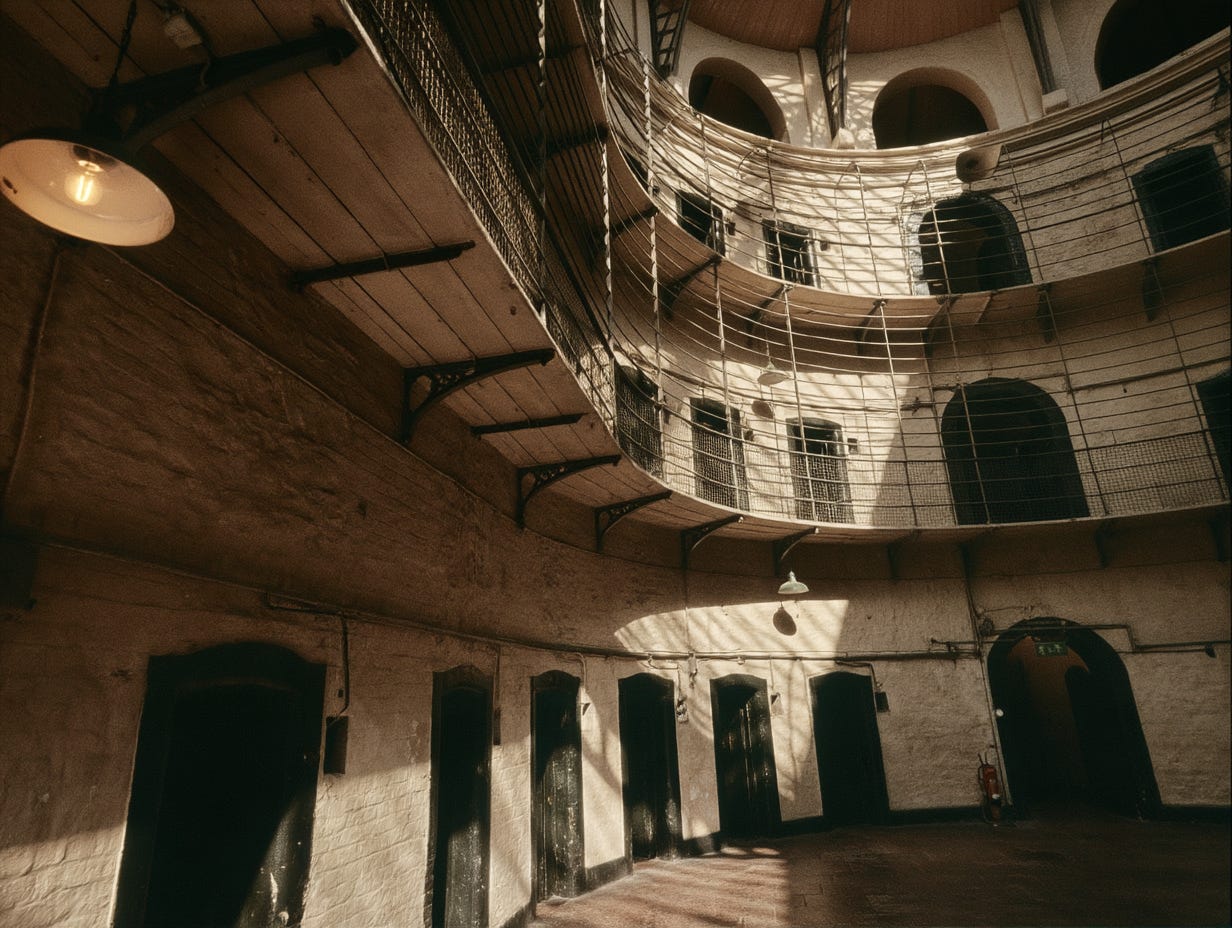
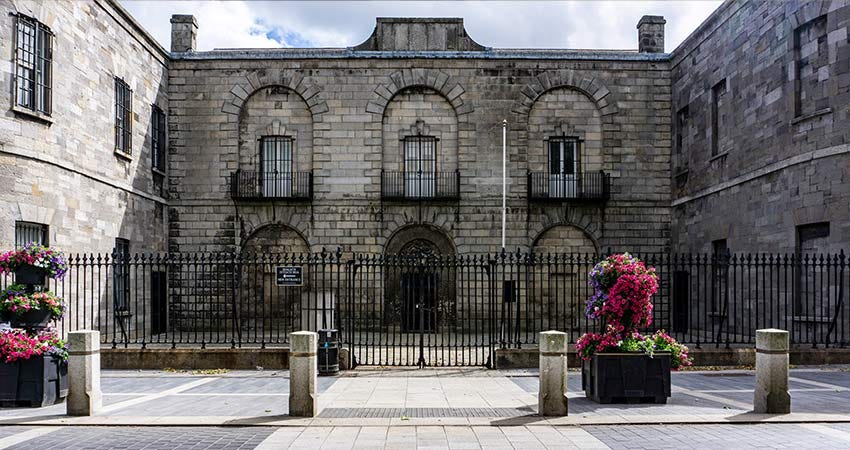
On the western edge of Dublin, behind heavy stone walls and an iron entrance gate, stands one of Ireland's most imposing historical landmarks. For more than two centuries, Kilmainham Gaol has housed ordinary citizens, hardened criminals, political activists, and revolutionaries who shaped Ireland's future.1
The prison witnessed some of the most painful moments in Irish history. Behind its cold stone walls, prisoners faced harsh conditions, families were separated, and many condemned rebels spent their final hours knowing they would never leave alive.
Kilmainham Gaol was more than a prison; it was a symbol of suffering, sacrifice, and national identity. Every cell, corridor, and courtyard carries the memory of those who walked Ireland’s long path from British rule toward independence.
The Birth of Kilmainham Gaol
In the late 18th century, Dublin was changing rapidly. Ireland was under British rule, and the city was experiencing major social and political tension. Poverty was widespread, crime was a growing concern, and the authorities believed the existing prison system needed reform.
Before Kilmainham Gaol was built, Dublin’s main prison was the old county gaol, whose conditions were considered unacceptable even by the standards of the day. It was overcrowded, poorly managed, and designed for punishment rather than reform. By the 1780s, Dublin officials had resolved to replace it.
In 1786, officials decided to build Kilmainham Gaol, with plans drawn up for a new prison west of the city center. The project was funded by the Grand Jury of the County of Dublin, which invested approximately £22,000, which was a significant sum at the time. The building was completed in 1796 and opened as the County of Dublin Gaol, though it was commonly called the “New Gaol” to distinguish it from the prison it replaced.2
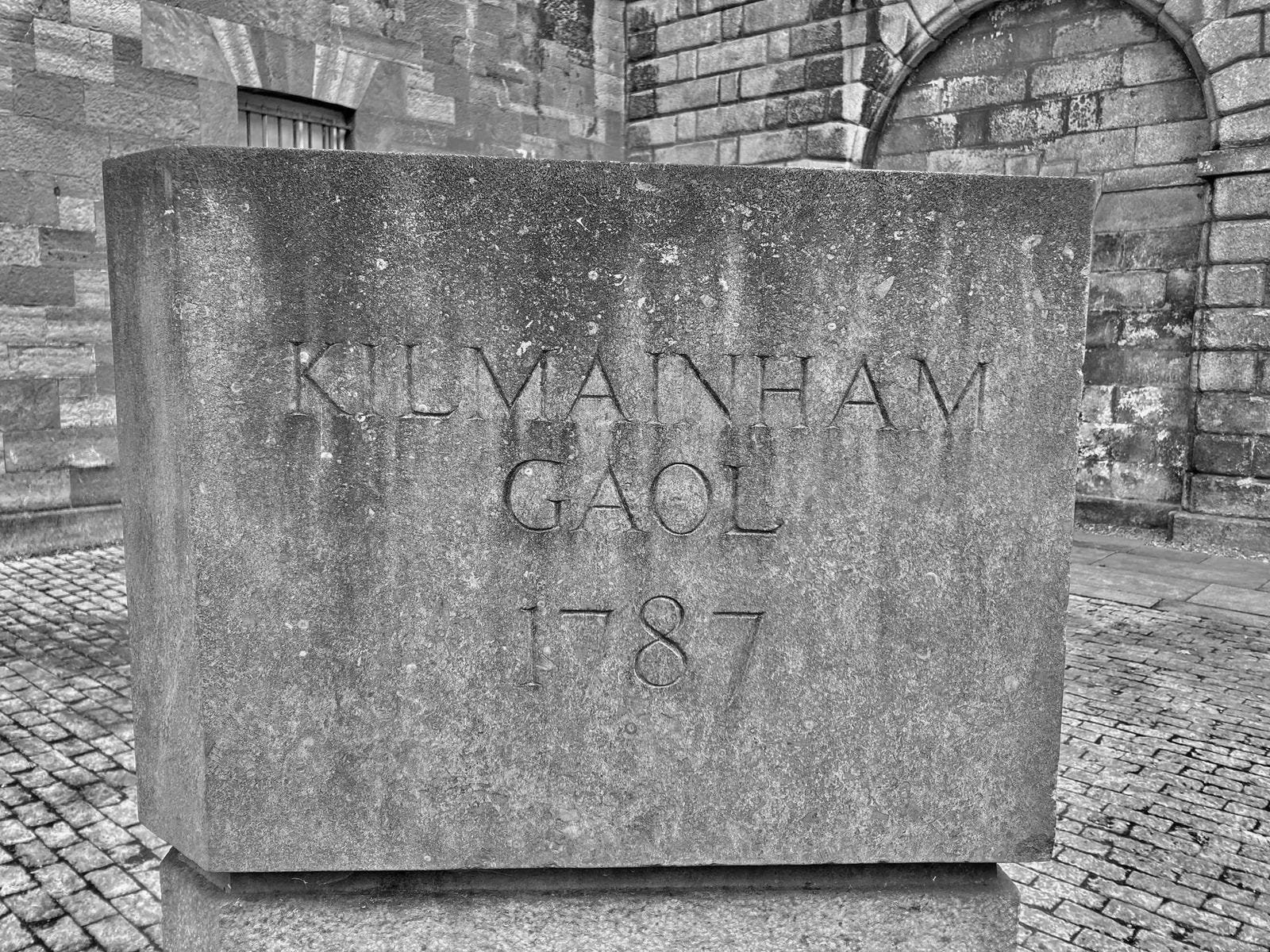
When it opened, Kilmainham was considered one of the most advanced prisons in Ireland: strong stone walls, individual cells, exercise yards, high boundary walls, and restricted entrances, all reflecting the era’s belief that strict organization and discipline could control prisoner behavior.
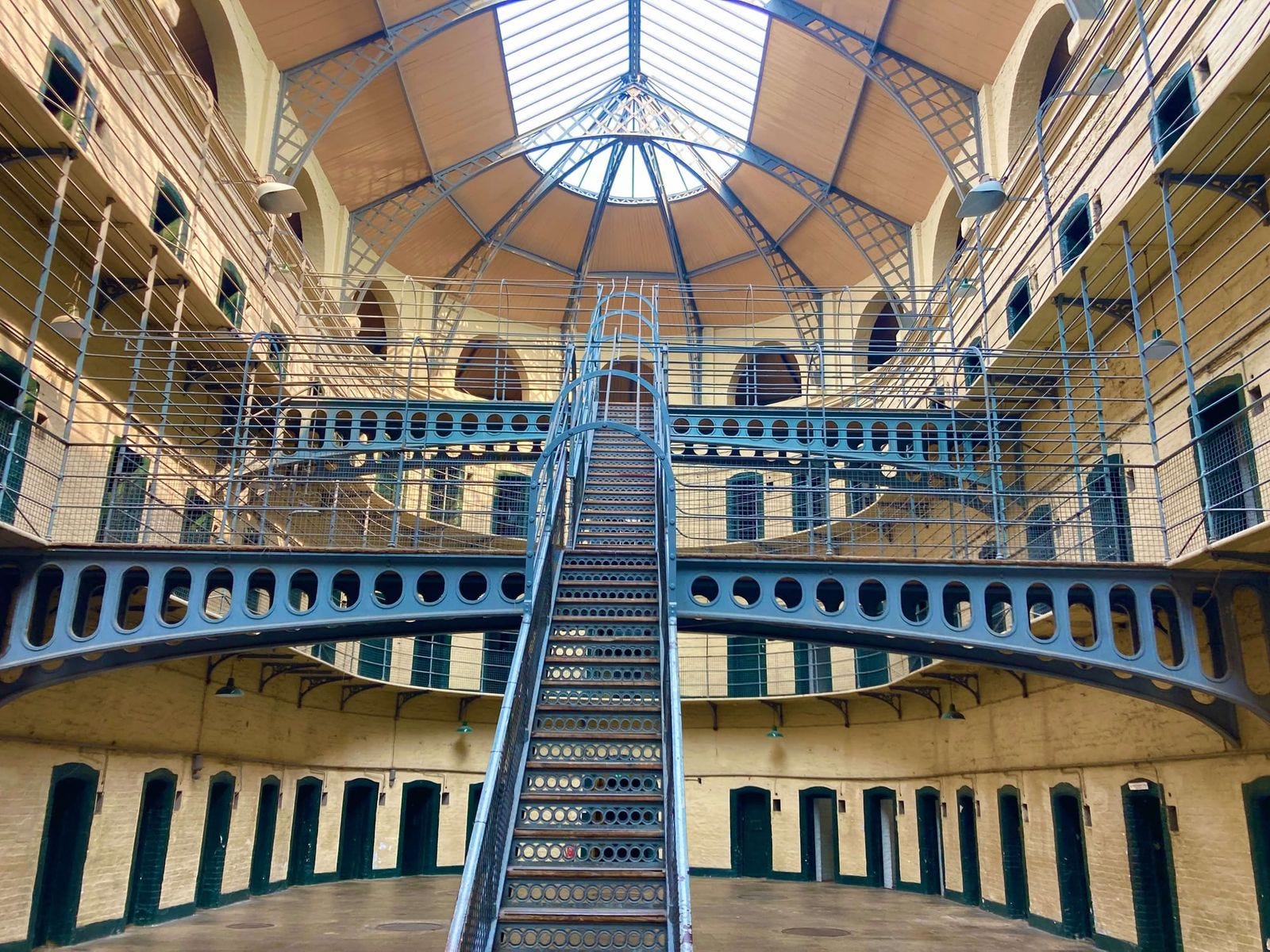
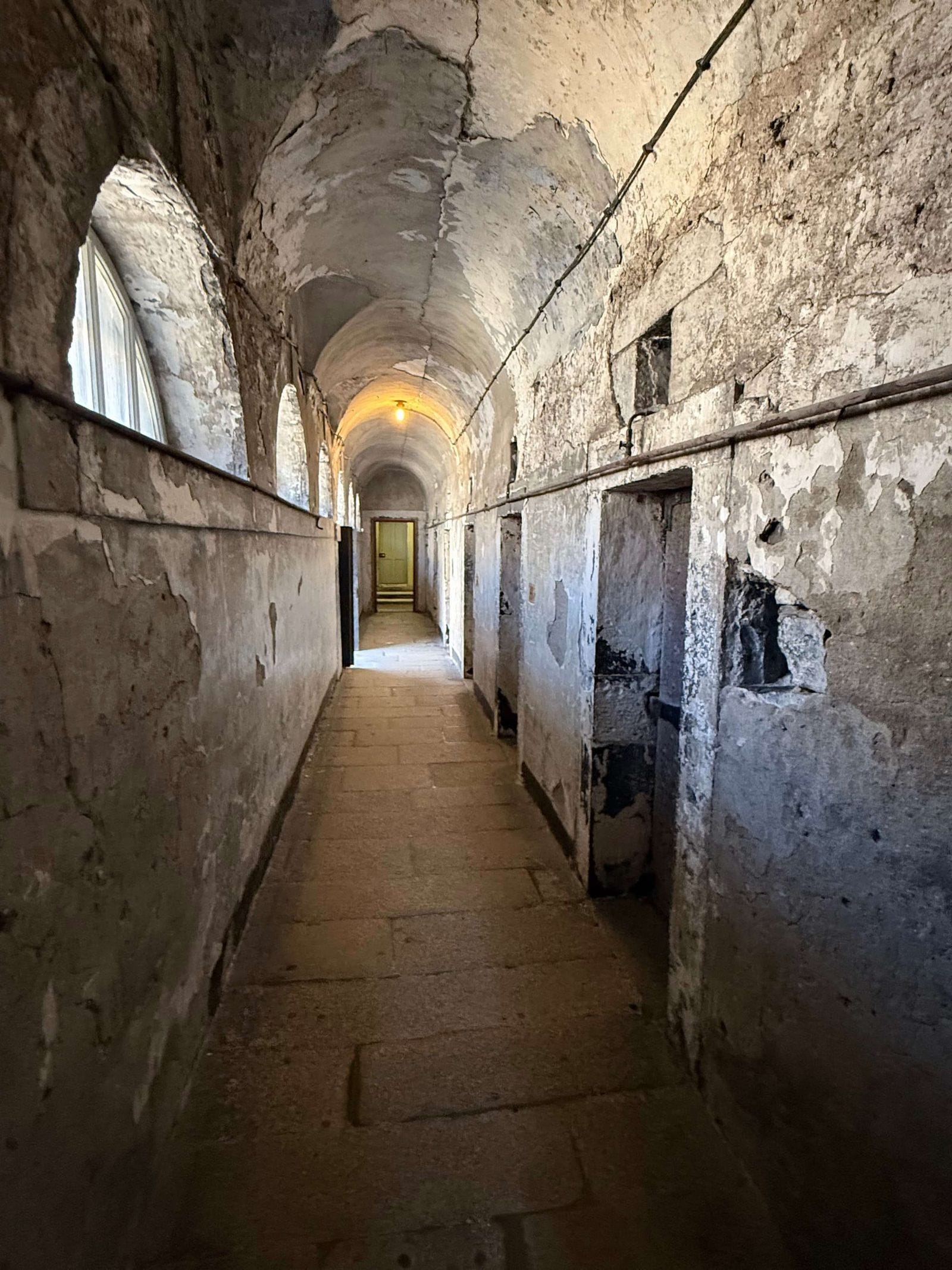
As prison design developed through the nineteenth century, the gaol was expanded. The most famous addition was the Victorian East Wing, completed in 1862. It was a large, light-filled hall with tiers of cells arranged around central walkways, built so guards could easily watch prisoners and create an atmosphere of constant supervision.
Behind the impressive architecture, though, lay a cold reality. It was a place where criminals, political prisoners, debtors, and the desperately poor were held side by side.
Life Inside the Early Prison
Life inside Kilmainham Gaol was punishing. The prison was built when punishment, not rehabilitation, was considered the purpose of imprisonment, and the idea of prisoner welfare was far from modern standards.
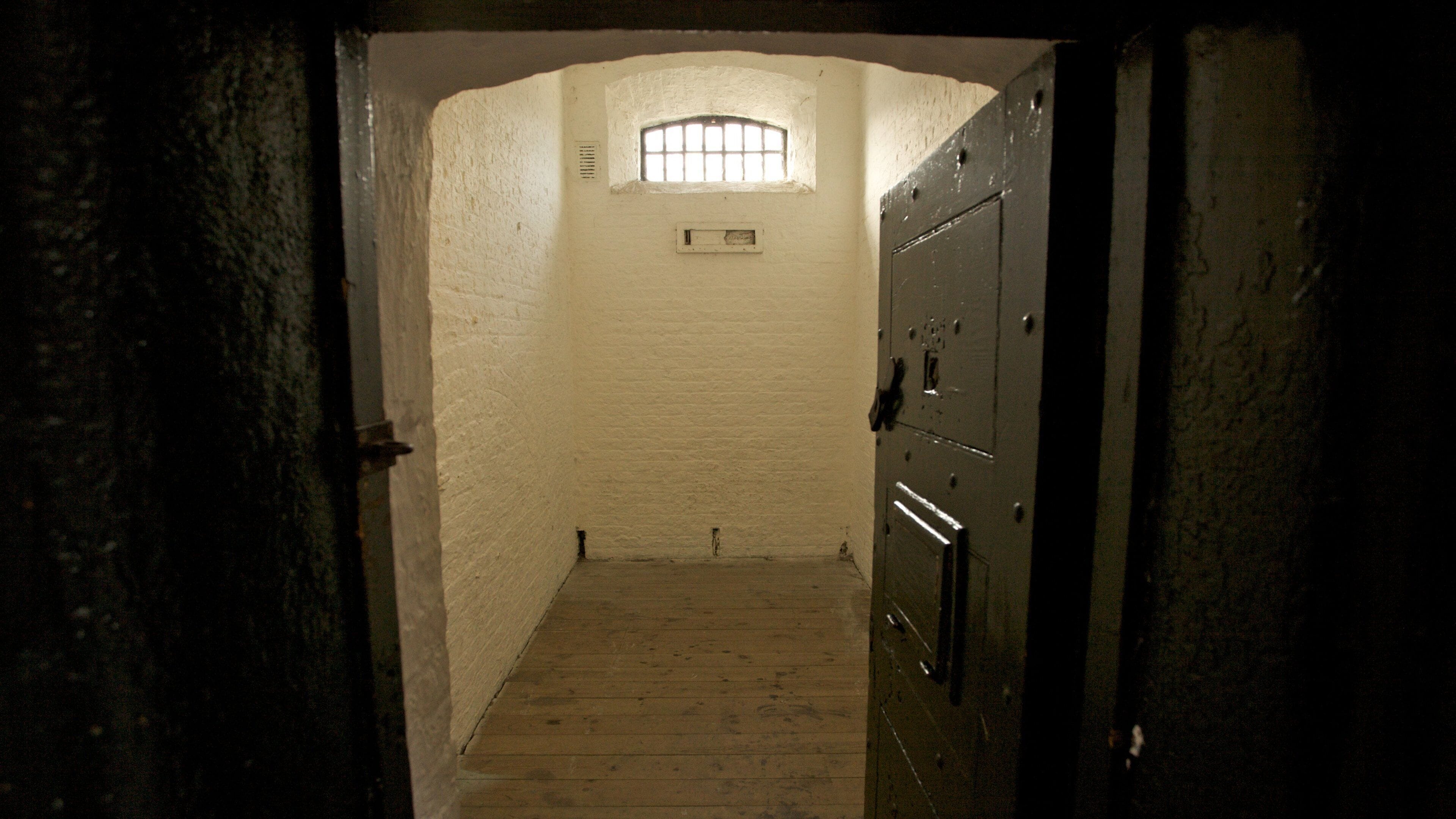
Cells were cold and dark. A cell built for one prisoner could hold as many as five at a time.3 Men, women, and children were confined within the same system, with little segregation. Food was scarce, and disease spread easily through poor sanitation and overcrowding.
Children could be imprisoned for minor offenses, including stealing food to survive, and were exposed to harsh conditions at a very young age. The youngest prisoner on record was a five-year-old boy. Records also show an eight-year-old girl served time for stealing a woman’s cloak.4
Punishment was not limited to confinement. In the prison’s early years, public executions were carried out outside the front entrance, where crowds gathered to watch. By the early 1890s, executions had moved indoors to a purpose-built hanging cell.
Women prisoners faced particularly difficult conditions. An inspector’s report of 1809 found that men slept on iron bedsteads while women lay on straw on the stone floors of the cells and halls; thirty more cells for women were later added in 1840.5 Through the middle of the nineteenth century, the women's section in the west wing remained overcrowded and poorly equipped.
The Great Famine and a Prison Filled With Desperation
One of Kilmainham's darkest periods came during the Great Famine of 1845–1852. Ireland’s population depended heavily on the potato; when the crop failed repeatedly, millions faced starvation, disease, homelessness, and death. Families who had survived by farming suddenly lost everything.
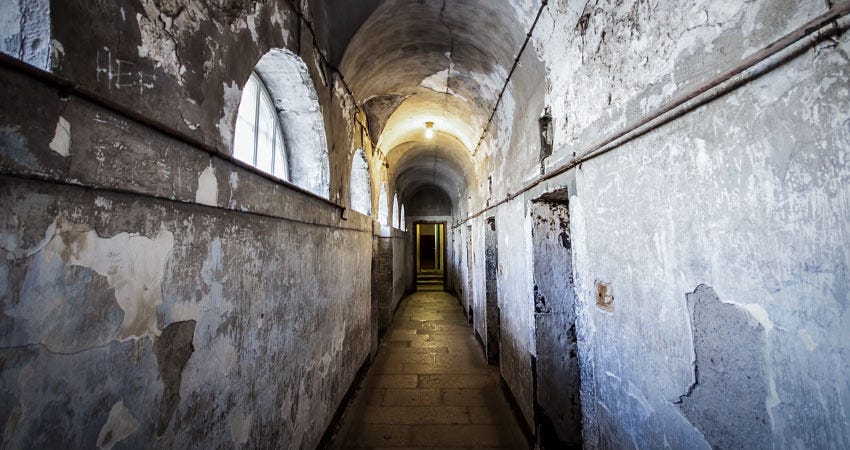
The suffering outside the walls was mirrored within them. During the famine years, some desperate people committed minor crimes deliberately, because prison could mean food and shelter. Many offenses — begging, or taking potatoes or bread — were acts of survival. For people who had lost their homes and any reliable meal, a prison sentence could mean a basic ration and a place to sleep.6
The Rise of Irish Nationalism and the Age of Political Conflict
As the nineteenth century wore on, Kilmainham became increasingly linked with Ireland’s political struggles. Ireland had been under British rule for centuries, and during the 1800s more and more Irish people demanded change.—political rights, land reform, and eventually self-government.
One of the main sources of conflict was land. Many Irish farmers worked land they did not own, renting small holdings from landlords — many of whom lived in Britain — and faced eviction when they could not pay.
In the late 1870s, falling agricultural prices put thousands of tenant farmers under extreme pressure, and anger spread through rural Ireland. These hardships fueled movements demanding fair rents and land reform. As those movements grew, British authorities arrested many activists, and Kilmainham became one of the main places they were held. Among the most important figures of this period was Charles Stewart Parnell.
Charles Stewart Parnell
Charles Stewart Parnell was born on June 27, 1846, in County Wicklow to a wealthy Protestant landowning family. He might have been expected to defend the existing order; instead, he became one of the strongest voices for Irish nationalism and land reform. In 1875, he entered the British House of Commons as a Member of Parliament for County Meath.7
Parnell believed Irish grievances had to be pressed directly in Parliament. He became a leader of the Irish Parliamentary Party and used political pressure to force change. His influence grew quickly during the agricultural crisis of the late 1870s, the period that became known as the Land War.
In 1879, Parnell founded the Irish National Land League and became its president. The league demanded fair rents, security for tenants, and the right to own land. British authorities saw the movement as a threat and began arresting Land League figures. Eventually Parnell himself became a target.
Parnell in Kilmainham Gaol
On October 13, 1881, Parnell was arrested and taken to Kilmainham Gaol under the Coercion Act (formally the Protection of Person and Property Act 1881), which allowed the government to imprison those suspected of encouraging unrest.
His arrest created a political crisis. Rather than weakening the Land League, it deepened sympathy for Parnell and the cause. Even inside the gaol, he continued to negotiate, and his imprisonment led to talks with the government of Prime Minister William Gladstone that produced what became known as the Kilmainham Treaty.
The Kilmainham Treaty
The agreement was reached in April 1882. Parnell agreed to use his influence to reduce tension between tenants and landlords; in return, the government released him and other imprisoned Land League leaders. On May 2, 1882, after several months inside Kilmainham, Parnell walked free.
The deal eased the immediate conflict of the Land War but left Ireland’s larger question unanswered. Many nationalists wanted far more than land reform — they wanted self-governance. The same prison that had held Parnell would soon hold a new generation of revolutionaries who believed negotiation alone would never win independence.
A New Generation of Revolutionaries
By the turn of the twentieth century, Irish nationalism entered a new phase. Younger activists, frustrated by slow progress, believed Britain would never willingly grant independence.
Secret organizations such as the Irish Republican Brotherhood (IRB) began preparing for armed rebellion, gaining influence within the Irish Volunteers and cooperating with James Connolly’s Irish Citizen Army. When the First World War broke out in 1914, some Irish leaders saw Britain’s distraction as their opportunity. The result was the Easter Rising of 1916.
The Easter Rising of 1916
On Easter Monday, April 24, 1916, a group of Irish republicans launched an armed rebellion in Dublin.8 The rebels seized key buildings, including the General Post Office (GPO) on Sackville Street (now O’Connell Street), which became the headquarters of the uprising. From there, the leaders proclaimed an Irish Republic.
The Rising became a violent battle as British troops moved to retake the city. Sackville Street, the Four Courts, Boland’s Mills, and Jacob’s Factory became centers of fighting, and British artillery caused severe damage to central Dublin.
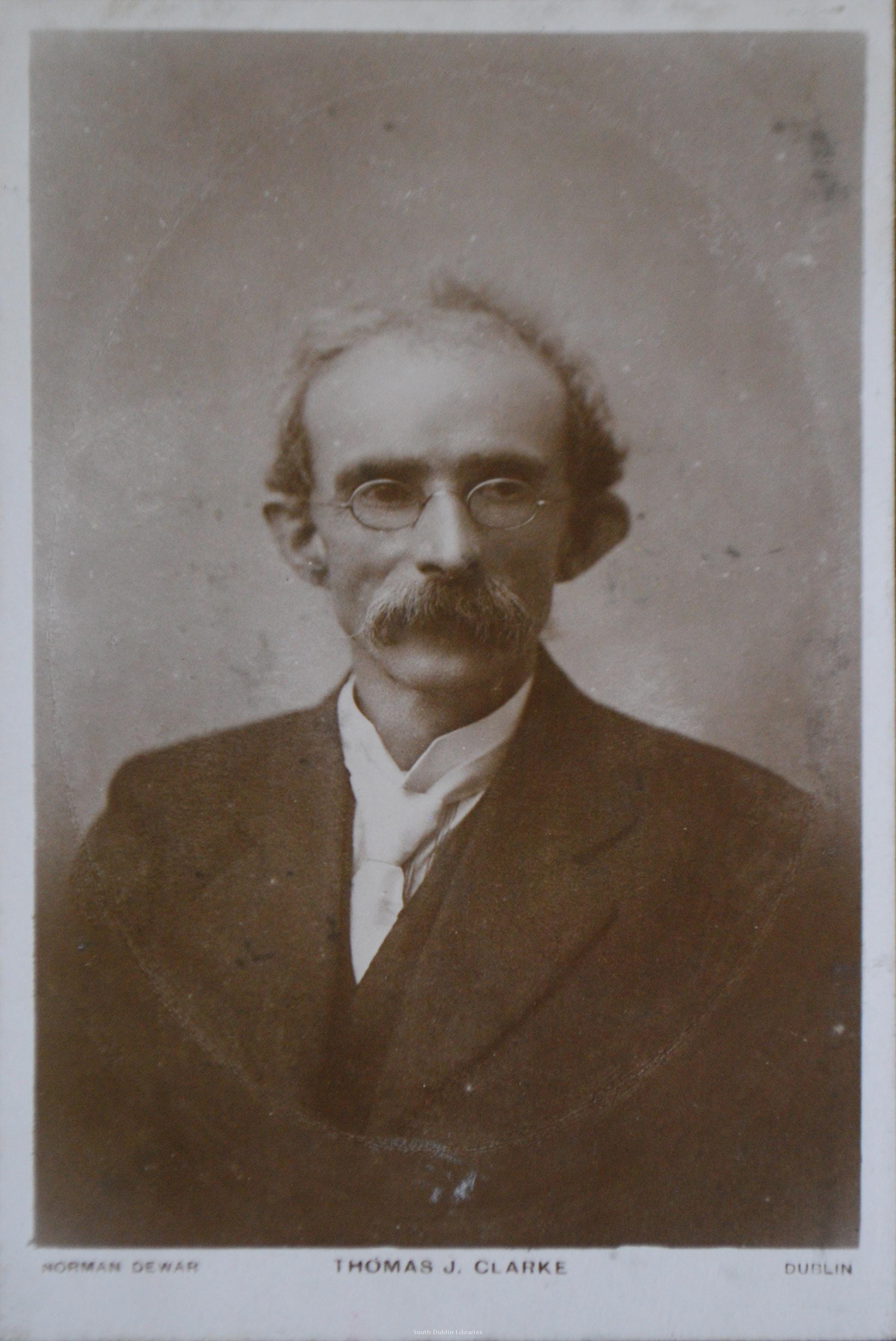
The rebellion was led by figures from across the nationalist movement. Patrick Pearse, a teacher and writer who became its public face; James Connolly, commander of the Irish Citizen Army; Thomas Clarke, a veteran IRB organizer; Thomas MacDonagh, a poet and educator; Joseph Plunkett, a writer and military planner in poor health; Éamonn Ceannt, a founding Volunteer; and Seán Mac Diarmada, a key IRB organizer.
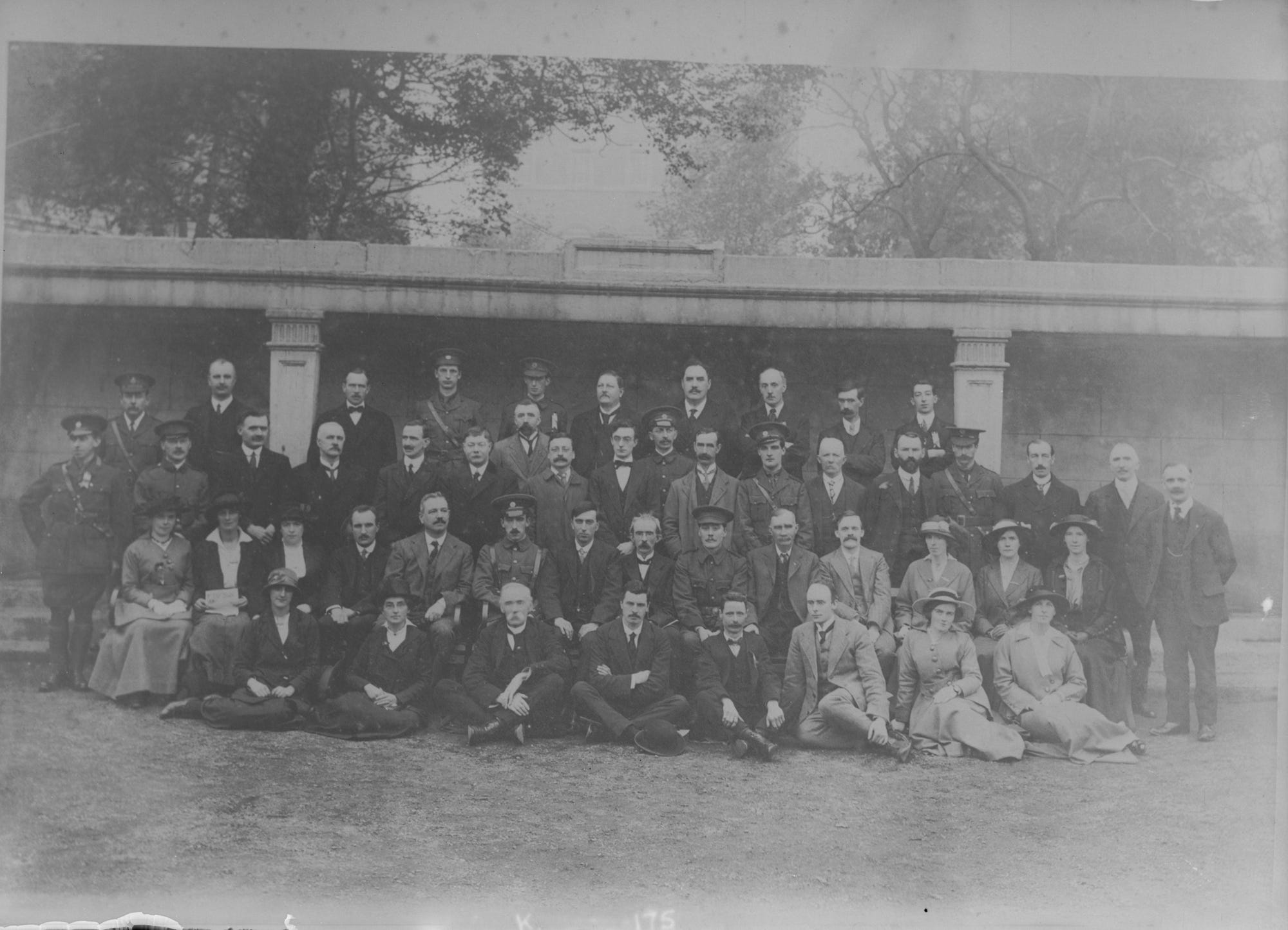
The fighting lasted six days. About 485 people were killed. Rebels, British soldiers, police, and civilians were caught in the crossfire, and hundreds more were wounded. On April 29, 1916, the leaders surrendered to prevent further loss of life. British forces arrested thousands. The leaders were court-martialled at Richmond Barracks and, once sentenced to death, moved to Kilmainham Gaol.9
At the time, many Dubliners were angry; the fighting had wrecked parts of the city and killed civilians, and some jeered the captured rebels. What followed would change public opinion completely.
The Executions of the Easter Rising Leaders
The condemned leaders were held inside Kilmainham in the hours before their executions. In their final hours, some wrote farewell letters; others spent the time in conversation about politics, religion, and Ireland’s future.
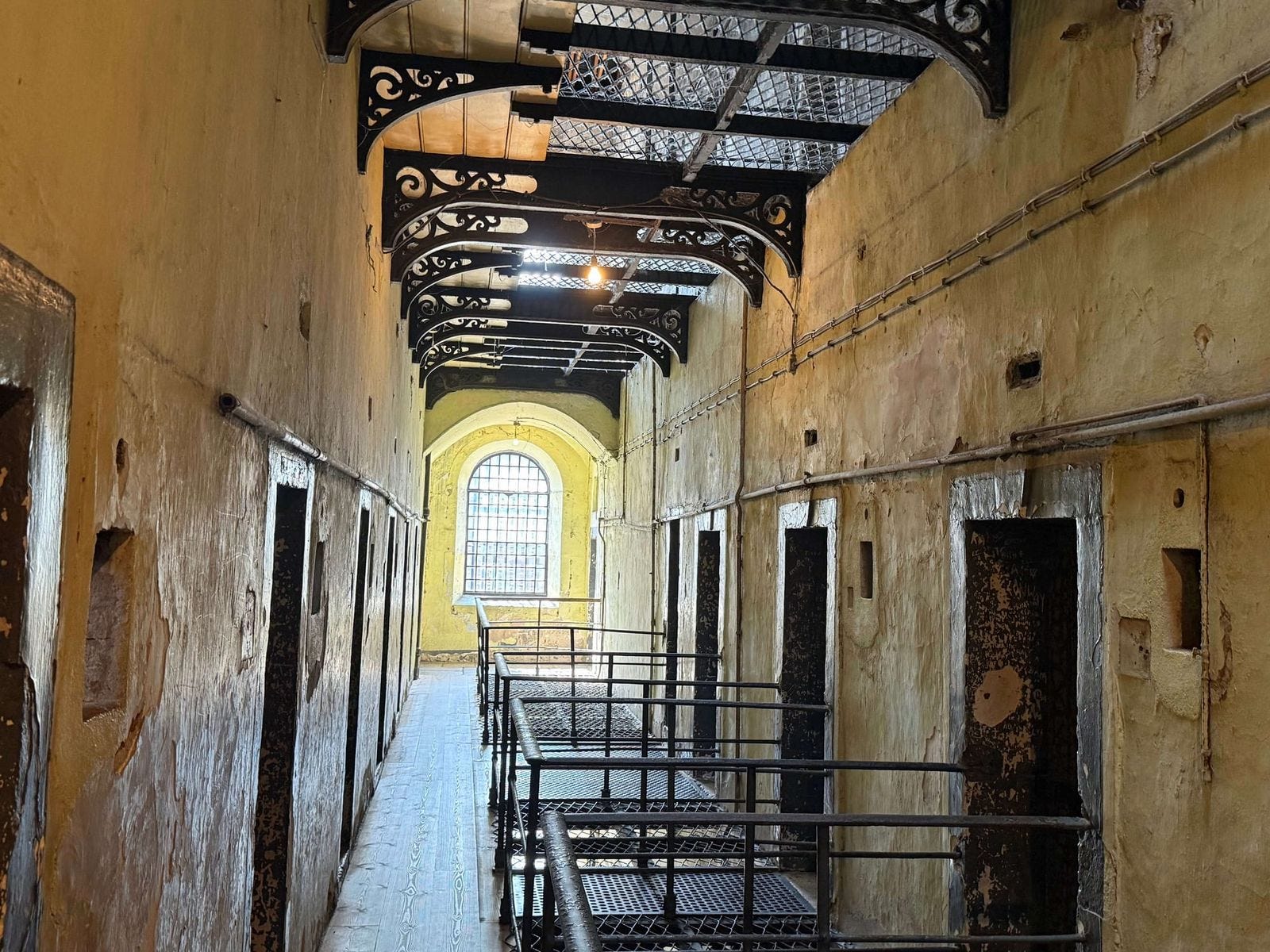
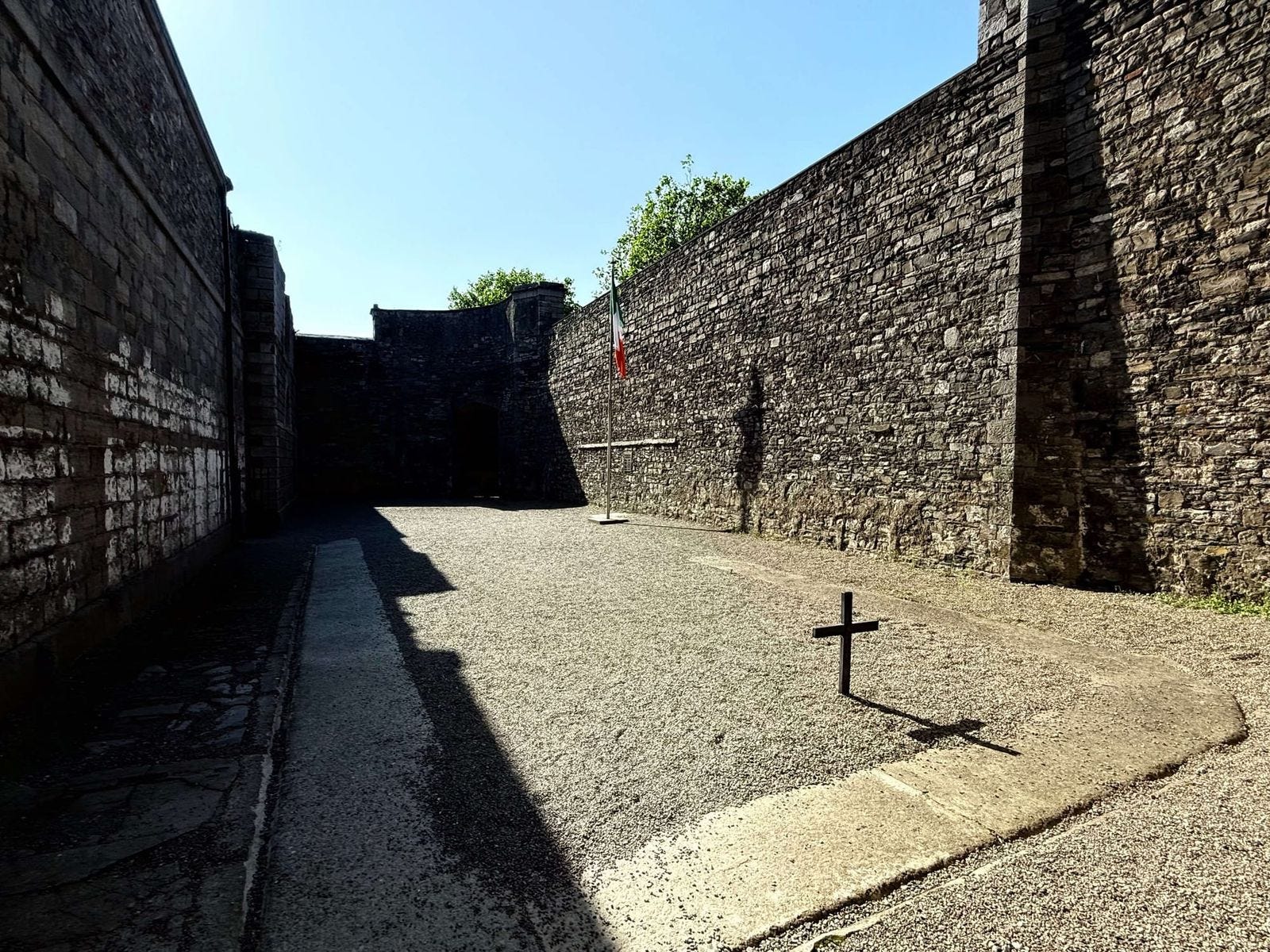
Between May 3 and 12, 1916, fourteen leaders of the Rising were executed by firing squad at Kilmainham Gaol.10 The executions took place in the Stonebreakers’ Yard at the rear of the prison; the men were taken from their cells at dawn and shot.
The first executions came on May 3, 1916: Patrick Pearse (36), Thomas MacDonagh (38), and Thomas Clarke (58). The following day, 4 May, Joseph Plunkett (28), Edward Daly (25), Michael O’Hanrahan (39), and Willie Pearse (34) were shot.
On May 5, John MacBride (47) was executed. On May 8, four more followed: Éamonn Ceannt (34), Michael Mallin (41), Con Colbert (27), and Seán Heuston (25). The final executions came on May 12, when James Connolly (47) and Seán Mac Diarmada (33) faced the firing squad.
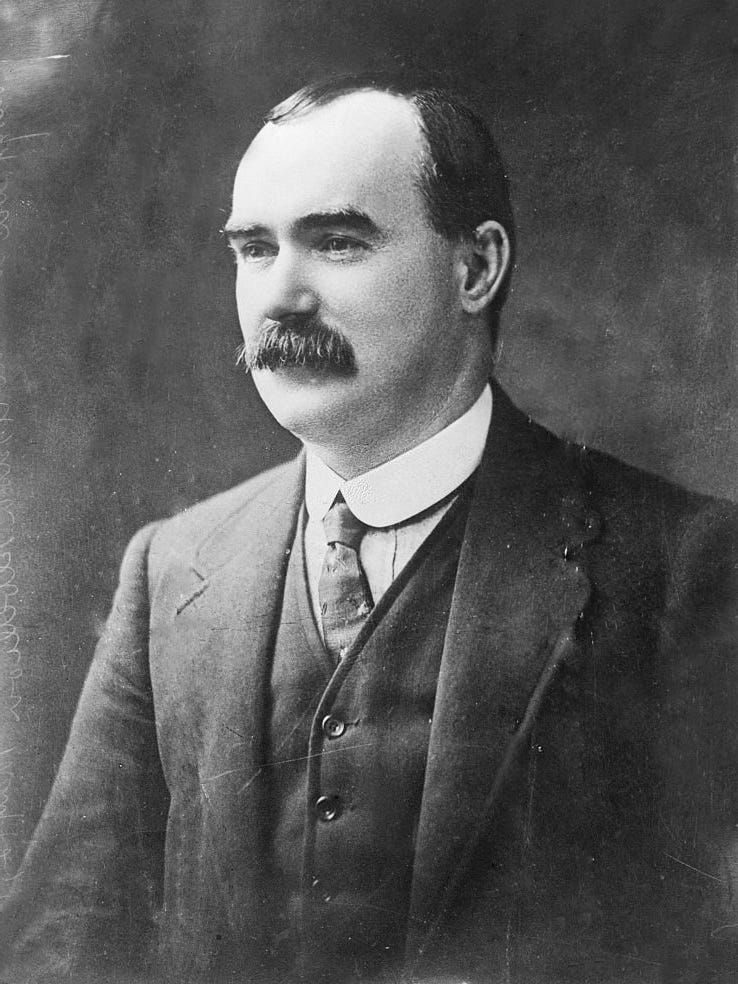
Connolly’s execution was the most notorious. He had not been held at Kilmainham at all, but at Dublin Castle, where he lay badly wounded from the fighting and unable to stand. He was carried to the yard and tied to a chair before the firing squad carried out the sentence.
The British government believed that executing the leaders would end the movement. Instead, it created sympathy and admiration. The men once dismissed by some as reckless were now seen by many as martyrs who had given their lives for Ireland.
Joseph Plunkett’s Final Hours Inside Kilmainham Gaol
Joseph Mary Plunkett was born on November 21, 1887, in Dublin, into a wealthy, educated family, and grew up immersed in Irish culture, literature, and politics. A poet, journalist, and member of the Irish Republican Brotherhood, he was one of the key planners of the Rising, though by the time it began he was gravely ill with tuberculosis and had recently undergone surgery.11
Despite his poor health, he still participated. After the surrender on April 29, 1916, he was arrested, court-martialled at Richmond Barracks, sentenced to death, and moved to Kilmainham. In his final hours, he made a request that became one of the most remembered moments in the prison’s history: he wished to marry Grace Gifford, whom he had been engaged to before the Rising.
On May 3, 1916, after Thomas MacDonagh’s execution, Grace learned that Plunkett would be shot the next morning. Determined to marry him first, she bought a wedding ring from a Dublin jeweler, sought permission to enter the gaol, and persuaded Father Eugene McCarthy of St James’s Church to perform the ceremony inside the prison chapel.12
Late on the night of May 3, Grace was brought to Kilmainham for the wedding. The ceremony took place in the prison chapel with only a handful of people present: the priest and two witnesses, both British soldiers: John Smith and Sergeant John Lockerby. They removed Plunkett’s handcuffs for the vows and put them back on afterward.
Afterward Grace was sent away. In the early hours of May 4, she was brought back to his cell for one last meeting, ten minutes, with a guard in the room counting down the time. Plunkett was taken to the yard at dawn on May 4, 1916 and shot. He was 28.
Grace Gifford, an artist and cartoonist active in nationalist circles, became one of the most recognized figures linked to the independence movement, and the story of her wedding hours before her husband’s execution endured as a symbol of love, sacrifice, and the personal cost of political conflict.
Women and Kilmainham Gaol
Although the nationalist leaders are mostly remembered as men, women played vital roles in Ireland’s revolutionary movements, and Kilmainham held many female political prisoners. During the Rising, women of organizations such as Cumann na mBan (The League of Women) carried messages, provided medical aid, and supported the rebels.
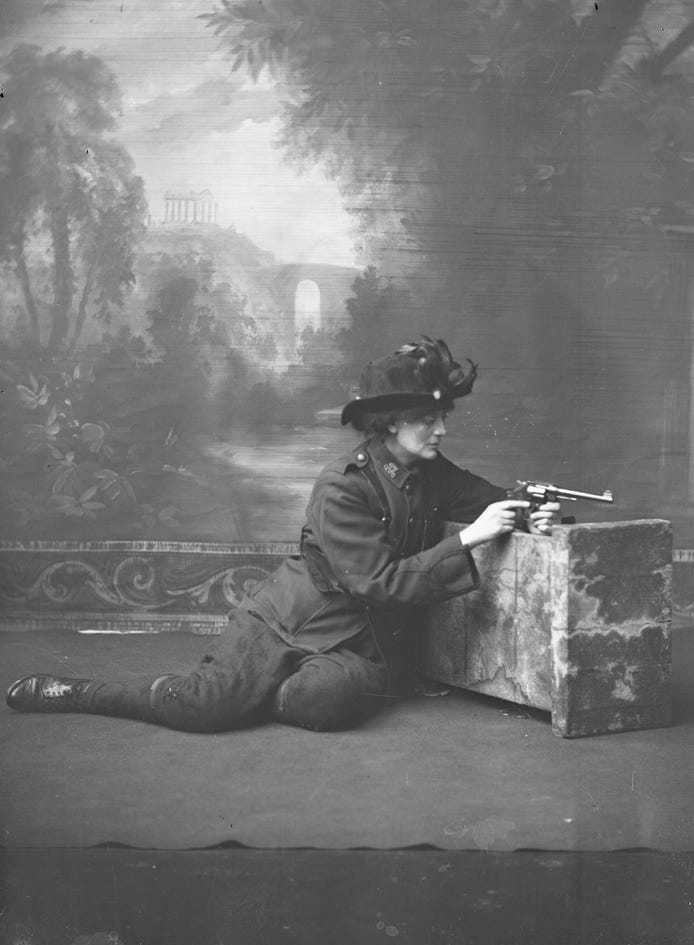
The most famous woman connected with the prison was Countess Markievicz. Constance Georgine Gore-Booth, born on February 4, 1868, into a wealthy Anglo-Irish family, became a revolutionary, politician, and a leader of the Irish Citizen Army.13
During the Rising, she fought at St Stephen's Green and the Royal College of Surgeons. After the defeat, she was sentenced to death, the only woman so sentenced after the Rising, but her sentence was commuted to life imprisonment. In 1918 she became the first woman elected to the British House of Commons, though she refused to take her seat in support of Irish independence.
Ireland After the Easter Rising
The executions changed Irish history. The British government had expected that removing the leaders would restore order; the opposite happened. Sympathy for the executed men grew rapidly, and many who had initially condemned the Rising came to see its leaders differently. Their deaths deepened a sense of national identity and swelled support for independence.
That support gathered around Sinn Féin, an Irish nationalist movement founded in 1905 by Arthur Griffith, whose name means “ourselves.”14 Although Sinn Féin had not planned the Rising, British authorities and newspapers labeled it a “Sinn Féin Rising,” and after the executions supporters of independence rallied to the party.
By the 1918 general election, Sinn Féin won 73 of Ireland’s 105 seats. Rather than sit at Westminster, its representatives established their own parliament, Dáil Éireann, in Dublin on January 21, 1919.
The Irish War of Independence (1919–1921)
Conflict soon broke out between Irish republican forces and the British government. From 1919 to 1921, the Irish Republican Army (IRA) waged a guerrilla campaign while Britain tried to suppress the independence movement. Kilmainham remained in use, holding a new generation of republican prisoners.
Negotiations eventually produced the Anglo-Irish Treaty, signed on December 6, 1921, which created the Irish Free State — a self-governing dominion within the British Empire. But the Treaty split Irish nationalists: some saw it as a vital step toward independence, others rejected it because Ireland remained tied to the Crown. That division led to the Irish Civil War.
The Irish Civil War and the Final Prisoners
The Irish Civil War began in 1922, between supporters and opponents of the Treaty, and Kilmainham once again held political prisoners — this time under Irish, not British, control. Many anti-Treaty prisoners were detained there, a painful situation in which former comrades now stood on opposite sides.
During the Civil War, the gaol also saw hunger strikes by female prisoners. In March 1923, 97 women refused food after their privileges were withdrawn. One of them, Annie “Nan” Hogan of Cumann na mBan, from Cratloe in County Clare, was released that September; her family blamed the hunger strike and prison conditions for her death not long after. She was 24.15
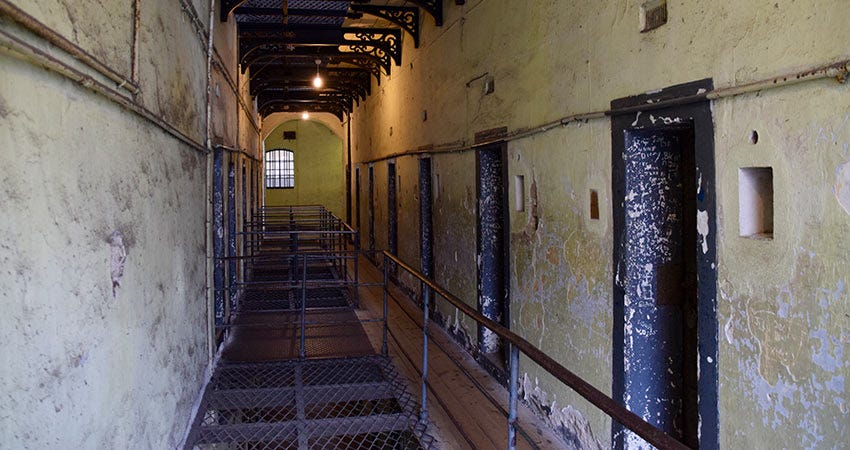
Kilmainham again became a place of executions. On November 17, 1922, four anti-Treaty prisoners, Peter Cassidy, James Fisher, John Gaffney, and Richard Twohig, were shot by firing squad. Unlike the 1916 leaders, who died in the Stonebreakers' Yard, these men were executed in the former women's exercise yard.
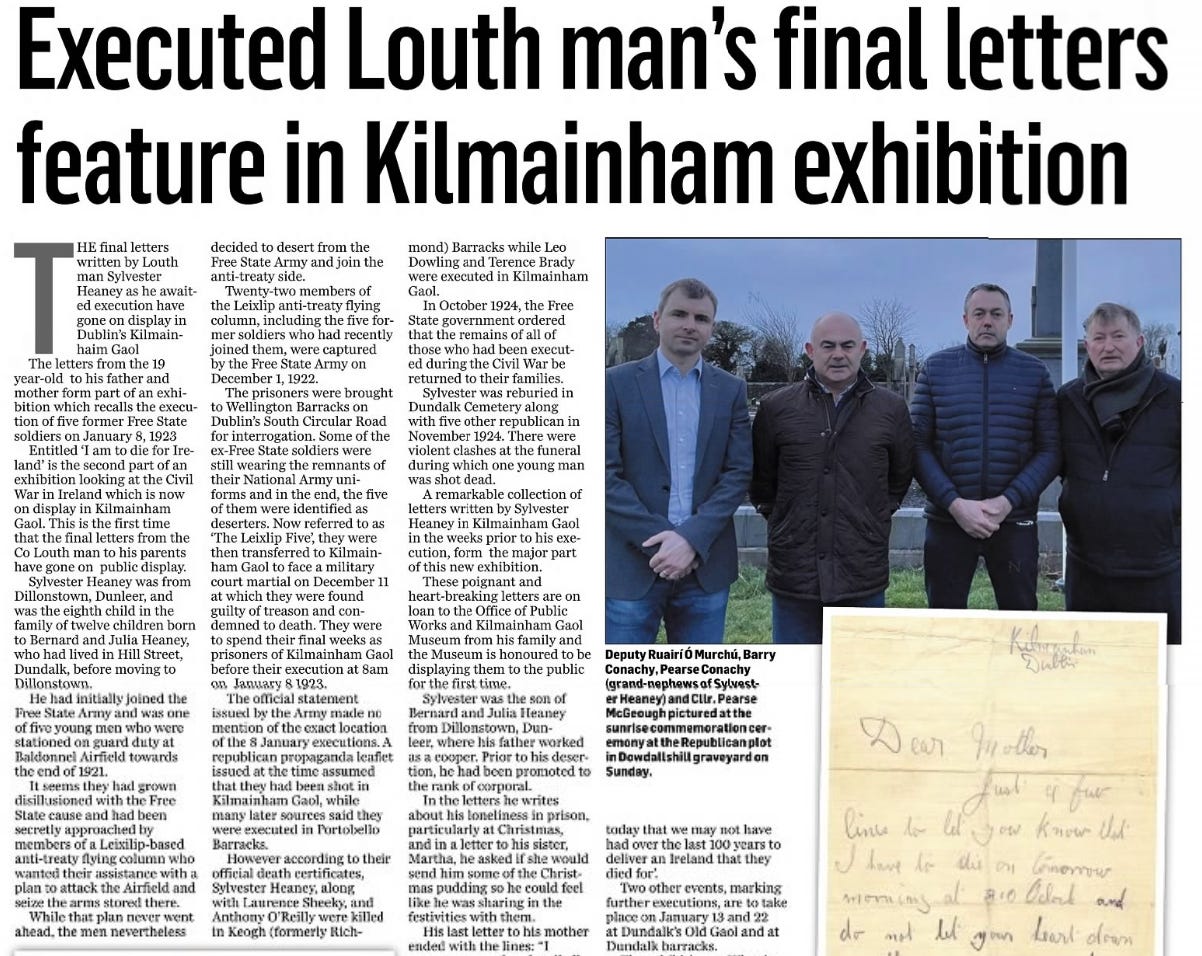
They had been arrested carrying revolvers, an offense under the emergency powers the Free State introduced during the war. James Fisher was 18, Peter Cassidy 21, John Gaffney 2016, and Richard Twohig was 22.17 They were ordinary young Volunteers from Dublin rather than senior leaders, which was a measure of how deeply the Civil War cut.
The Closure and Forgotten Years of Kilmainham Gaol
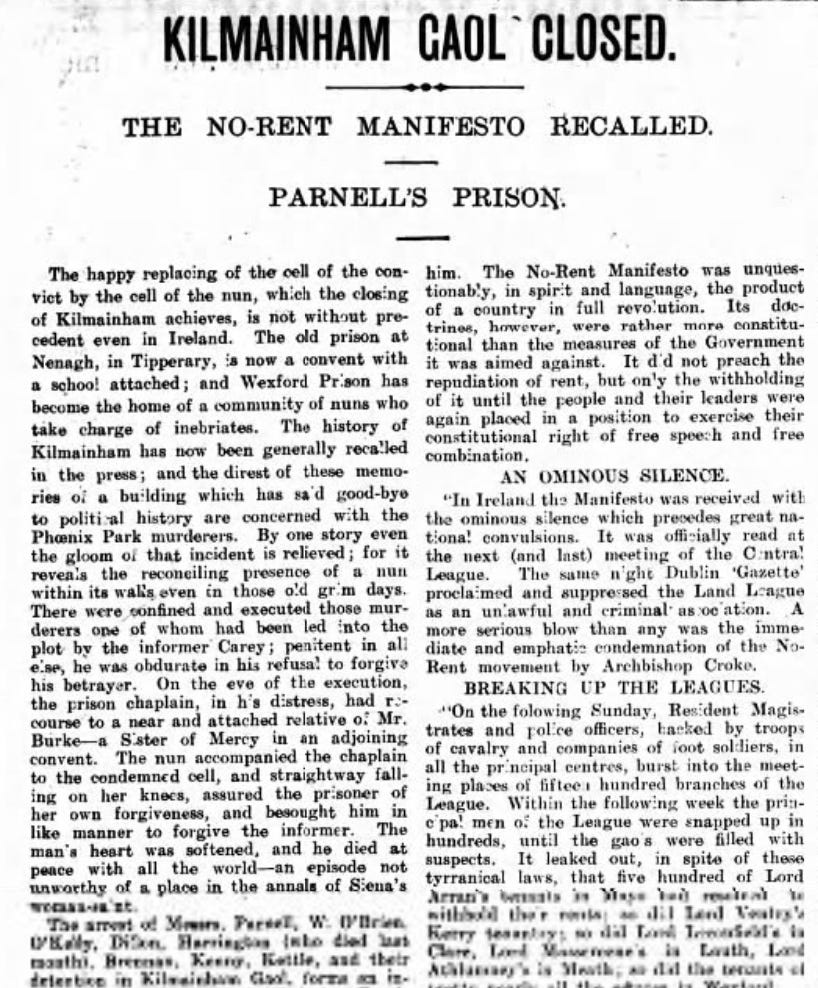
Kilmainham had already closed as an ordinary prison in 1910, reopening only to hold soldiers and political prisoners. The last of them left in 1924, more than 120 years after the gaol opened, and a closing order made it official in 1929.
In 1936 the government drew up plans to preserve the main block and demolish the rest for a public park, but the plan was never carried out.18 The newly independent state, facing the aftermath of civil war and severe economic strain, did not treat an old prison as a priority.
For some, Kilmainham represented a painful past Ireland was trying to move beyond. Others argued it was too important to lose—not for the suffering it held, but because it preserved the memory of the people and events that made modern Ireland. A growing number of historians, preservationists, and citizens began to call for its restoration.
The Fight to Save Kilmainham Gaol
By the mid-twentieth century, the campaign to preserve the gaol gathered force, driven especially by its link to the Easter Rising. In 1958, a young Dublin engineer, Lorcan C. G. Leonard, wrote with the 1916 veteran PJ Stephenson to the Association of the Old IRA, asking for support to save the building. A restoration committee followed, and in May 1960 the Kilmainham Jail Restoration Society began work, with James Brennan as its secretary.19
Many volunteers worked without pay, clearing years of damage, strengthening walls, repairing roofs, and restoring cells from historical evidence. They transformed an abandoned ruin into a place of memory.
The Ghost Stories of Kilmainham Gaol
As restoration brought the prison back to life, it also gained a reputation as one of Ireland’s most atmospheric and mysterious sites. Over the years, some workers, visitors, and guides have described unexplained footsteps in empty corridors, strange sounds from vacant cells, or the sense of a presence where no one stood.
These remain personal accounts, not proven events. There is no scientific evidence of paranormal activity inside the prison. Many historians and guides see the stories as a natural response to a building steeped in more than two centuries of suffering, conflict, and emotional memory.
The Opening of Kilmainham Gaol as a Museum
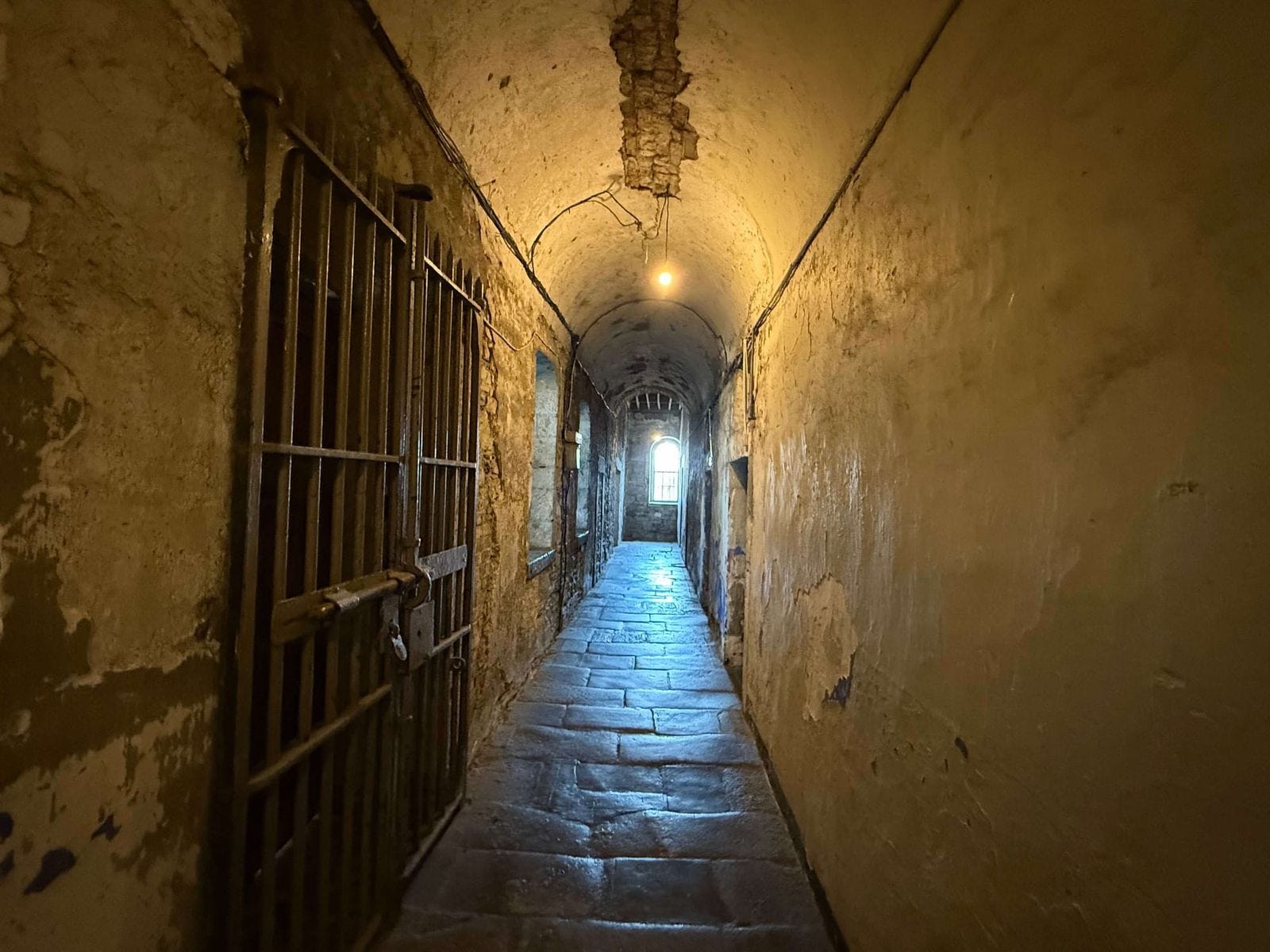
In 1966, fifty years after the Easter Rising, Kilmainham Gaol reopened to the public as a museum on 10 April. A building once defined by imprisonment and execution had become a place of education and remembrance. The opening ceremony was performed by President Éamon de Valera, who had his own connection to the gaol — imprisoned there after the Civil War and released among its last prisoners in 1924.
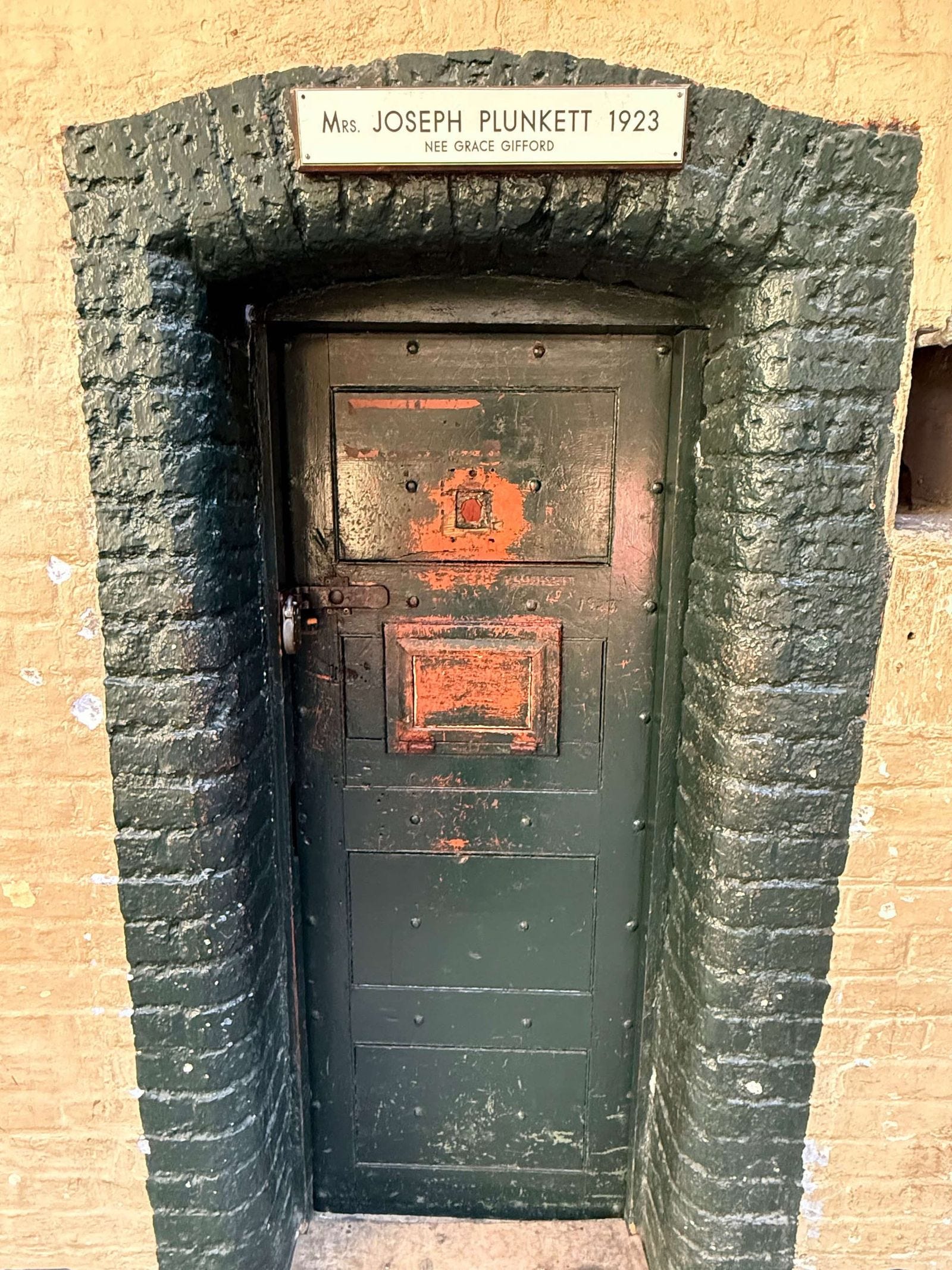
Visitors could now walk the corridors where prisoners had spent their final days and see the cells where the leaders of the Rising were held; in the “1916 Corridor,” plaques above the doors name prisoners such as Patrick Pearse, Thomas Clarke, Thomas MacDonagh, Michael Mallin, Joseph Plunkett, and William “Willie” Pearse. They could stand in the yard where fourteen men were shot in 1916.
The prisoners were not only names in history books. They were fathers, husbands, writers, teachers, and ordinary people who believed in their cause enough to risk their lives, and Kilmainham Gaol keeps their memory standing even today.
"The Building," Kilmainham Gaol Museum, accessed October 20, 2026, https://www.kilmainhamgaolmuseum.ie/the-building/.
National Inventory of Architectural Heritage, "Kilmainham Gaol, Inchicore Road, Kilmainham, Dublin 8," Buildings of Ireland, Building of the Month, May 2016, https://www.buildingsofireland.ie/building-of-the-month/kilmainham-gaol-inchicore-road-kilmainham-dublin-8/.
"Prison Life," Kilmainham Gaol Museum, accessed October 20, 2026, https://www.kilmainhamgaolmuseum.ie/prison-life.
Tony Canavan, "Museum Eye: Kilmainham Gaol," History Ireland 16, no. 6 (November/December 2008), https://historyireland.com/museum-eye-24/.
"Kilmainham Gaol," Wikipedia, accessed October 20, 2026, https://en.wikipedia.org/wiki/Kilmainham_Gaol.
Office of Public Works, Guide to Kilmainham Gaol (Kilmainham Gaol Museum, n.d.), accessed October 20, 2026, https://kilmainhamgaolmuseum.ie/wp-content/uploads/2016/02/Guide-to-Kilmainham-Gaol-English.pdf.
"Charles Stewart Parnell," Wikipedia, accessed October 20, 2026, https://en.wikipedia.org/wiki/Charles_Stewart_Parnell.
"Easter Rising," Wikipedia, accessed October 2, 2026, https://en.wikipedia.org/wiki/Easter_Rising.
"1910 – 1924," Kilmainham Gaol Museum, accessed October 20, 2026, https://www.kilmainhamgaolmuseum.ie/1910-1924/.
Department of the Taoiseach, "The Executed Leaders of the 1916 Rising," gov.ie, accessed October 2, 2026, https://www.gov.ie/en/department-of-the-taoiseach/publications/the-executed-leaders-of-the-1916-rising/.
"Joseph Plunkett," Wikipedia, accessed October 20, 2026, https://en.wikipedia.org/wiki/Joseph_Plunkett.
"Grace Gifford," Kilmainham Tales, accessed October 20, 2026, https://kilmainhamtales.ie/prisoners---grace-gifford.php.
"Constance Markievicz," Wikipedia, accessed October 2, 2026, https://en.wikipedia.org/wiki/Constance_Markievicz.
“Sinn Féin,” Wikipedia, accessed October 2, 2026, https://en.wikipedia.org/wiki/Sinn_Féin.
"Centenary: The Women Who Died for Ireland," History Ireland, accessed October 20, 2026, https://historyireland.com/centenary-the-women-who-died-for-ireland/.
"Civil War Executions — Last Letters," Kilmainham Tales, accessed October 20, 2026, https://kilmainhamtales.ie/civil-war-executions---last-letters.php.
"Twohig, Richard (Dick)," memorial notice, Irish Times, November 16, 2023, https://notices.irishtimes.com/memorial/100366/twohig-richard-dick.
Rory O'Dwyer, "'The Wilderness Years': Kilmainham Gaol, 1924–1960," History Ireland, accessed October 20, 2026, https://historyireland.com/the-wilderness-yearskilmainham-gaol-1924-1960/.
"Restoration," Kilmainham Gaol Museum, accessed October 20, 2026, https://www.kilmainhamgaolmuseum.ie/restoration/.