


Content advisory: This article discusses the residential school system, including abuse and the deaths of children. Support is available through the Indian Residential School Survivors Society crisis line at 1-800-721-0066.
Background
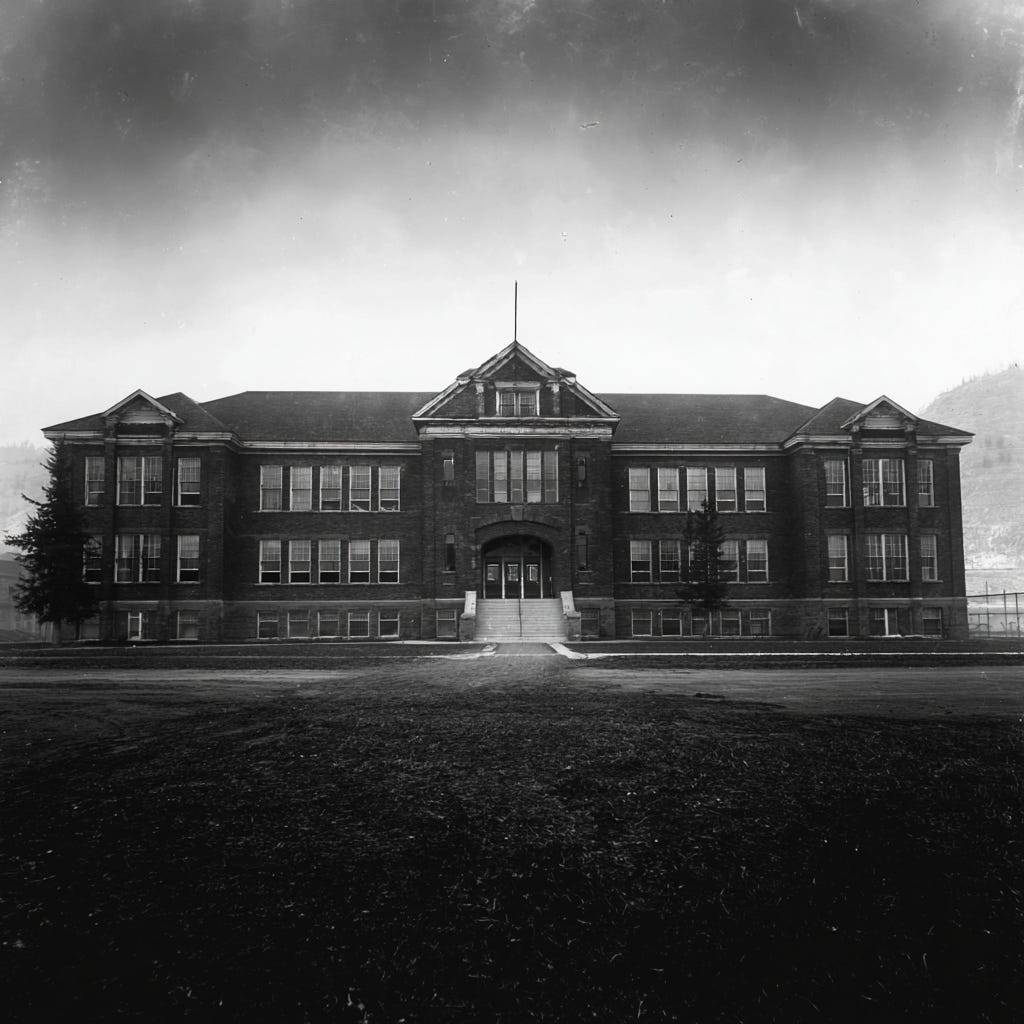
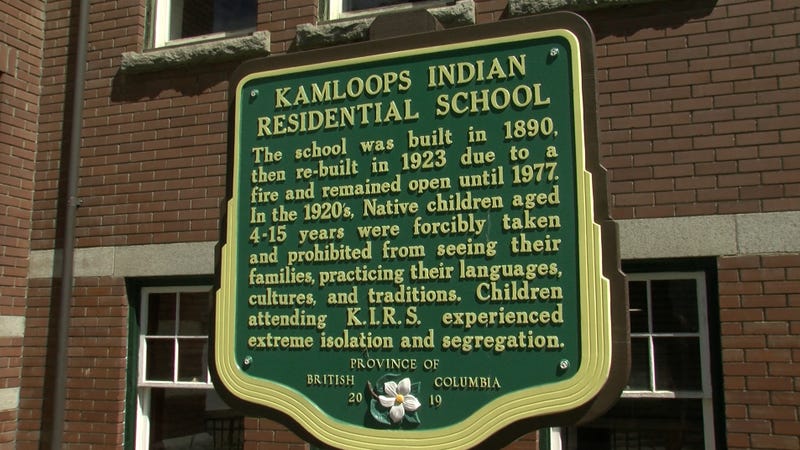
Between 1890 and 1978, thousands of Indigenous children were taken from their families and sent to the Kamloops Indian Residential School in British Columbia, separated from their homes and forced into a system designed to strip them of their language, culture, and identity1.
In 2021, ground-penetrating radar on the former school grounds brought that grim history back into the national spotlight and forced Canada to confront one of the darkest chapters in its past2.
By the 1880s, the Canadian government had adopted an official policy of funding residential schools across the country. In 1920, attendance became compulsory for Treaty-status children ages 7 to 15.
Many Indigenous families did not freely send their children away; instead, the government used law, pressure, and authority to remove them. The stated goal was assimilation; the effect was devastation across generations.
Roman Catholic congregations, including the Oblates of Mary Immaculate and the Sisters of Saint Ann, ran Kamloops Indian Residential School. Religion shaped daily life, and children were pressured to abandon not only their languages but their customs and spiritual traditions. For many Survivors, the harm was physical, emotional, cultural, and spiritual.
Kamloops Indian Residential School
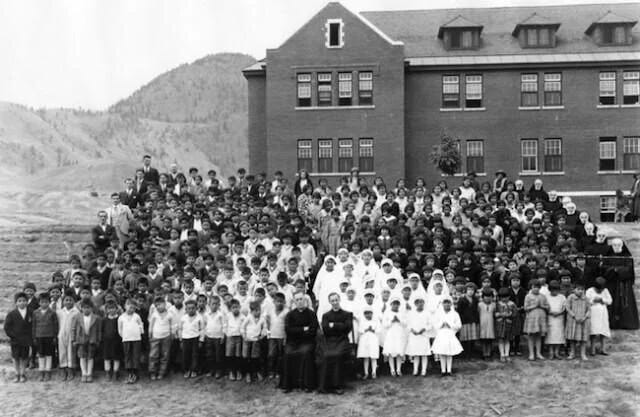
The former Kamloops Indian Residential School stands on the lands of Tk’emlúps te Secwépemc on Kamloops Indian Reserve No. 1, near the South Thompson River. It first opened in 1890 as the Kamloops Industrial School and operated until 1978. For decades, it was the largest institution of its kind in Canada, with more than 500 children enrolled during its peak.
The school was not an isolated institution. It was part of a much larger residential school system created by the Canadian government and run in cooperation with Christian churches3. The purpose of that system was not education, but rather forced assimilation. Separating Indigenous children from their families, communities, languages, and spiritual practices in an attempt to erase their identities.
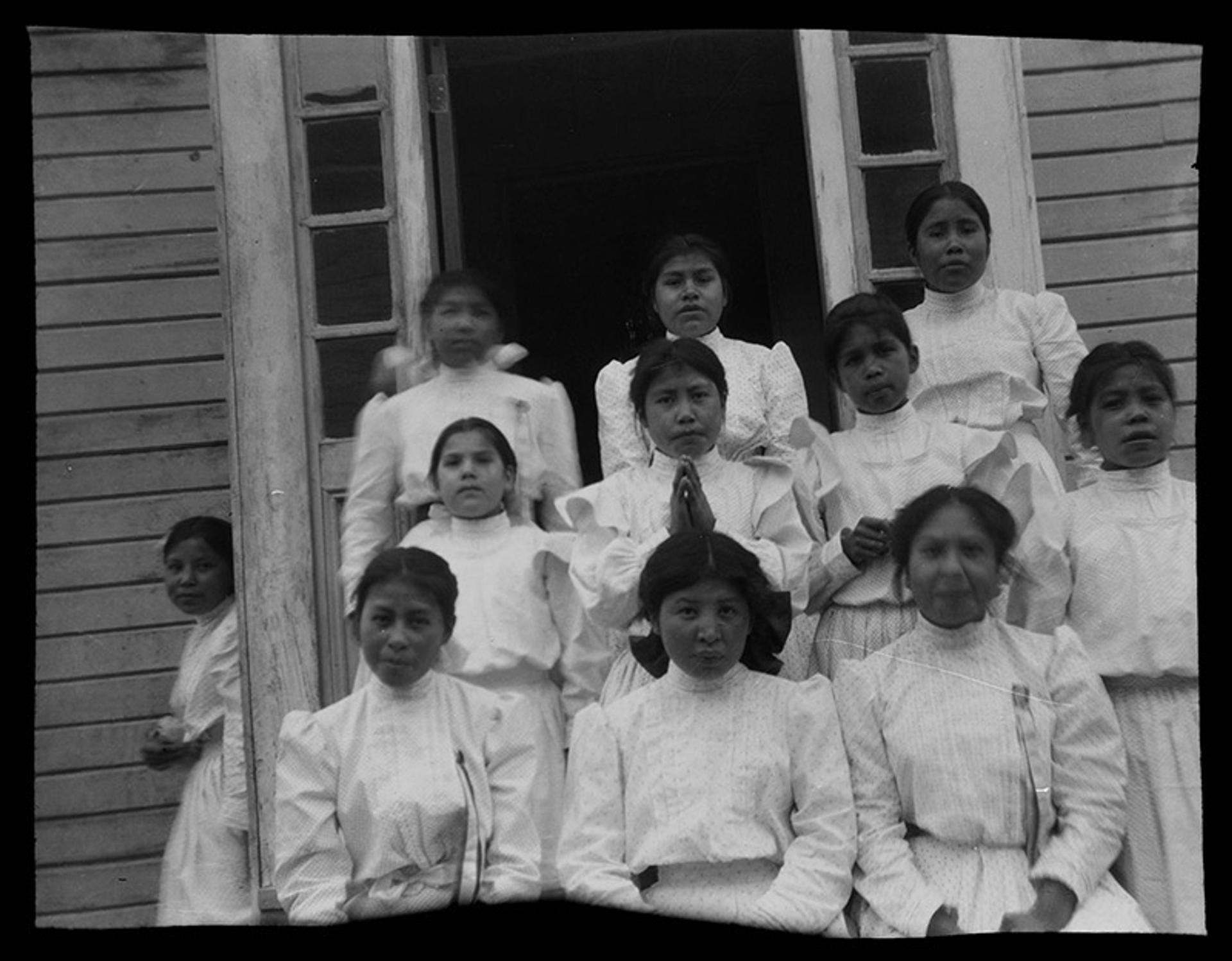
The Truth and Reconciliation Commission of Canada later described the residential school system as cultural genocide. Across the country, roughly 150,000 Indigenous children were taken from their families and sent to residential schools, where many endured hunger, disease, neglect, and physical, emotional, and sexual abuse4.
At Kamloops, children came from many Nations across British Columbia and beyond; Parks Canada records that students ranged in age from four to eighteen and came from more than 108 communities and at least 38 Indigenous Nations, including Secwépemc, Stó:lō, St’át’imc, Nłeʔkepmxc, and Syilx children.
To the government and church authorities, residential schools were presented as places of learning. In reality, the Kamloops school was part of a system designed to make Indigenous children forget who they were. Children were taken from their homes, sometimes by force, and placed in a world where their language, clothing, names, and ceremonies were treated as problems to be corrected.
Life Inside the Residential Schools
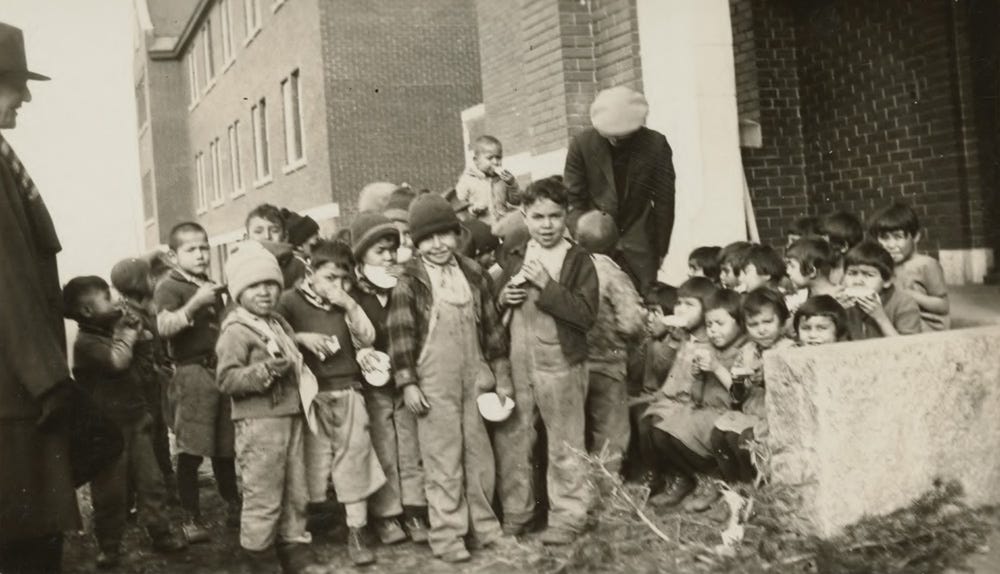
Inside the red-brick buildings, generations of children were expected to obey a system that tried to replace who they were with what Canada wanted them to become.
Before the late 1950s, Kamloops ran on a half-day system: children spent part of the day in religious instruction and performing labor that helped support the school financially, with the rest of the day spent in basic, often deficient, academic teaching.
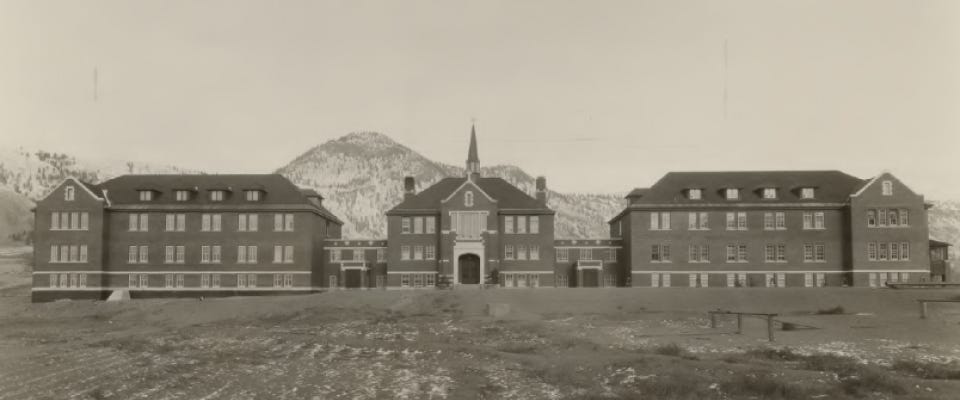
Life at Kamloops was shaped by strict control, isolation, and fear. Parks Canada's history notes that students endured mental, physical, emotional, and sexual abuse, forced labor, malnutrition, overcrowded dormitories, and high rates of infectious disease. Many children became sick, and some died and never returned home.
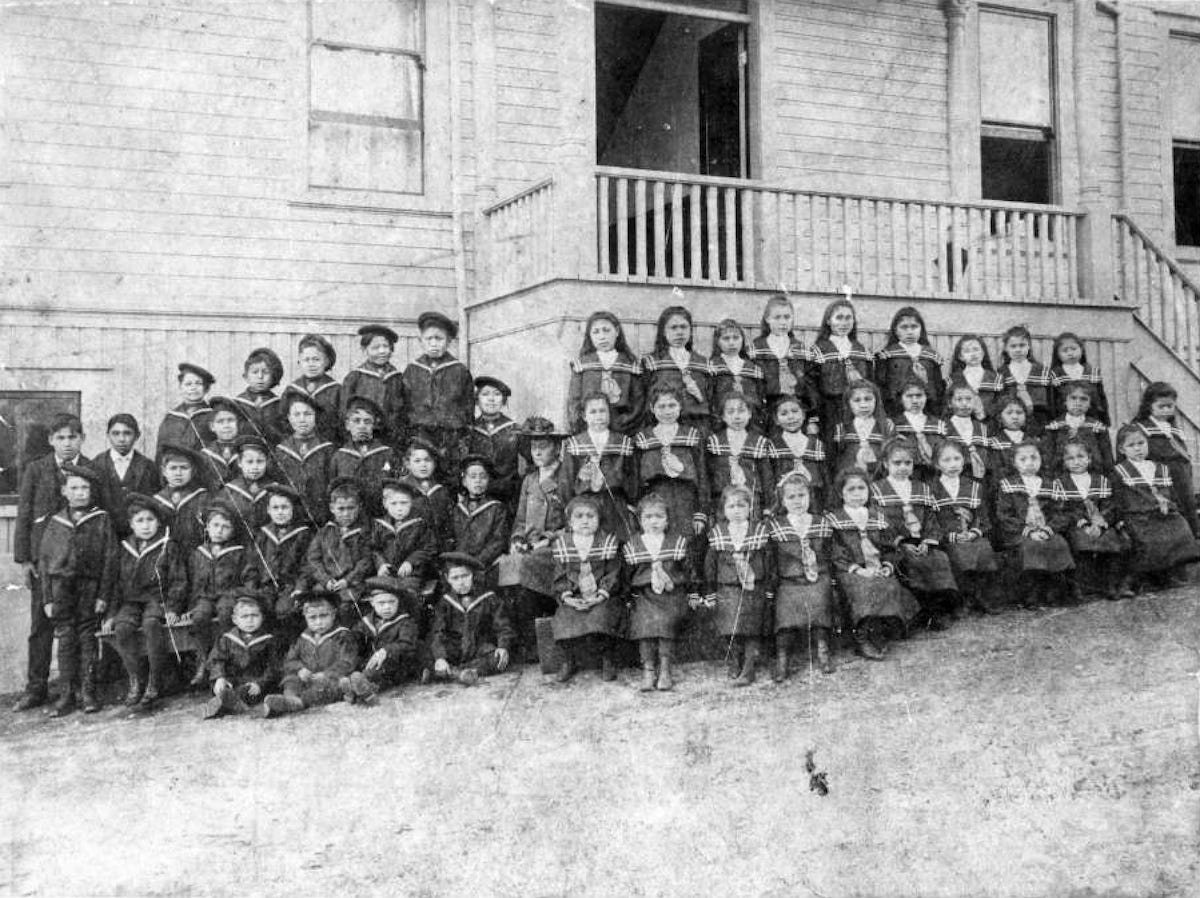
The conditions at Kamloops were not unique; they reflected a system-wide pattern documented across Canada. At the Alberni Indian Residential School in the 1930s, Principal Rev. Pitts punished children for speaking their language by beating them.
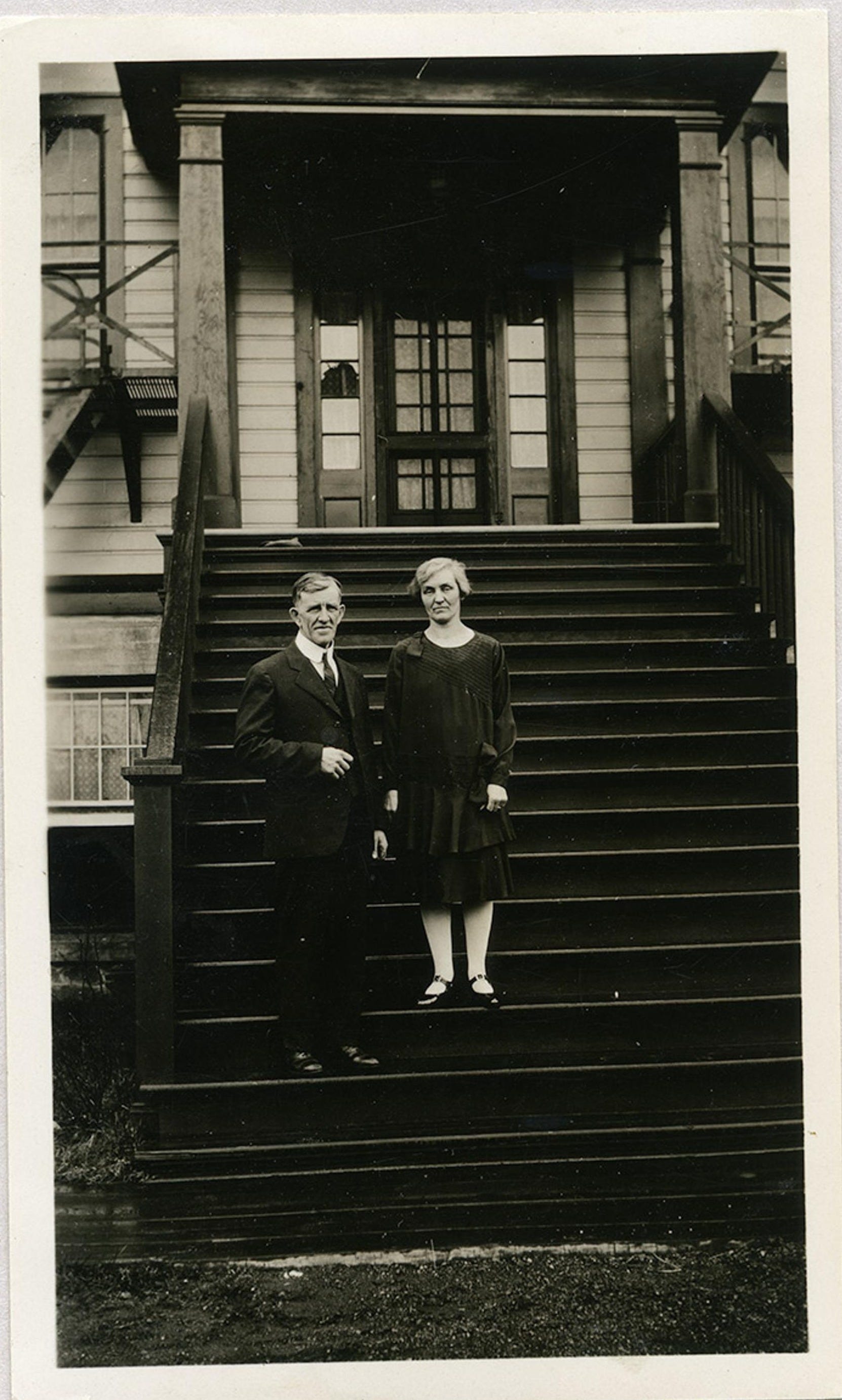
In 1938, a 15-year-old boy named Albert Gray at the Ahousaht Indian Residential School was beaten so severely by Principal Rev. Alfred E. Caldwell — reportedly for taking a prune — that he later died of his injuries after being denied medical care.
At St. Anne's Indian Residential School in Fort Albany, Ontario, during the 1950s and 1960s, staff used an improvised electric chair on children as punishment5. These accounts, drawn from other schools, illustrate the culture of abuse that Kamloops was part of.
Across Canada, more than 4,000 deaths have been recorded in residential schools, though many historians and Survivors believe the true number is far higher. Many children were buried in unmarked graves, leaving families with no knowledge of what actually happened to them6.
The damage did not end when children left. Many Survivors returned home carrying trauma they had no language to explain, or a native tongue they had lost. The system traumatized entire communities across generations.
2021 Preliminary Findings
In May 2021, Tk̓emlúps te Secwépemc announced preliminary findings from an independent ground-penetrating radar investigation of the former school grounds7. The work, led by anthropologist Sarah Beaulieu of the University of the Fraser Valley, focused on the orchard — also called the Sacred Site — and was guided by expert analysis and the oral histories of Survivors.
The announcement drew international attention. The investigation discovered roughly 200 possible unmarked graves, revised from an original estimate of 215, based on disturbances in the soil. Beaulieu noted that only a small portion of the 65-hectare site had been surveyed and that only forensic excavation could definitively confirm the presence of human remains8.
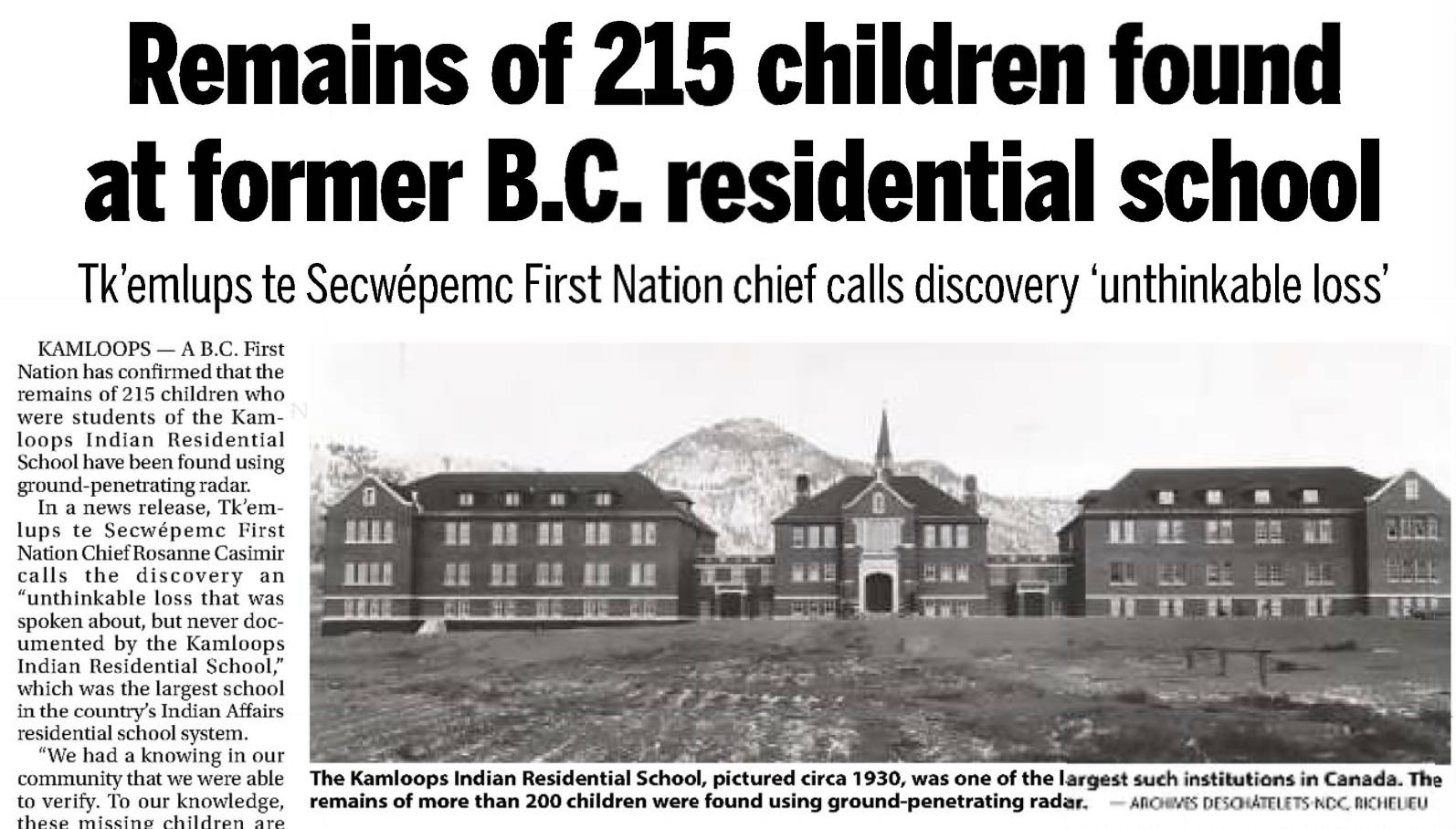
Tk̓emlúps te Secwépemc refer to the missing children as Le Estcwicwéy̓, meaning "the Missing," and have said they carry the responsibility to care for them, honor them, and seek justice for them9. Across Canada, people placed children's shoes on church steps, school grounds, and memorials — a symbol of the children who were taken and never returned.
Following the discovery, flags were lowered across the country in recognition, and memorials appeared in public spaces. The findings at Kamloops also pushed attention toward other former schools and the overall culture of systemic abuse. The National Center for Truth and Reconciliation's Missing Children and Unmarked Burials Initiative works to identify and commemorate those who died or went missing.
A Nation Forced to Look Back
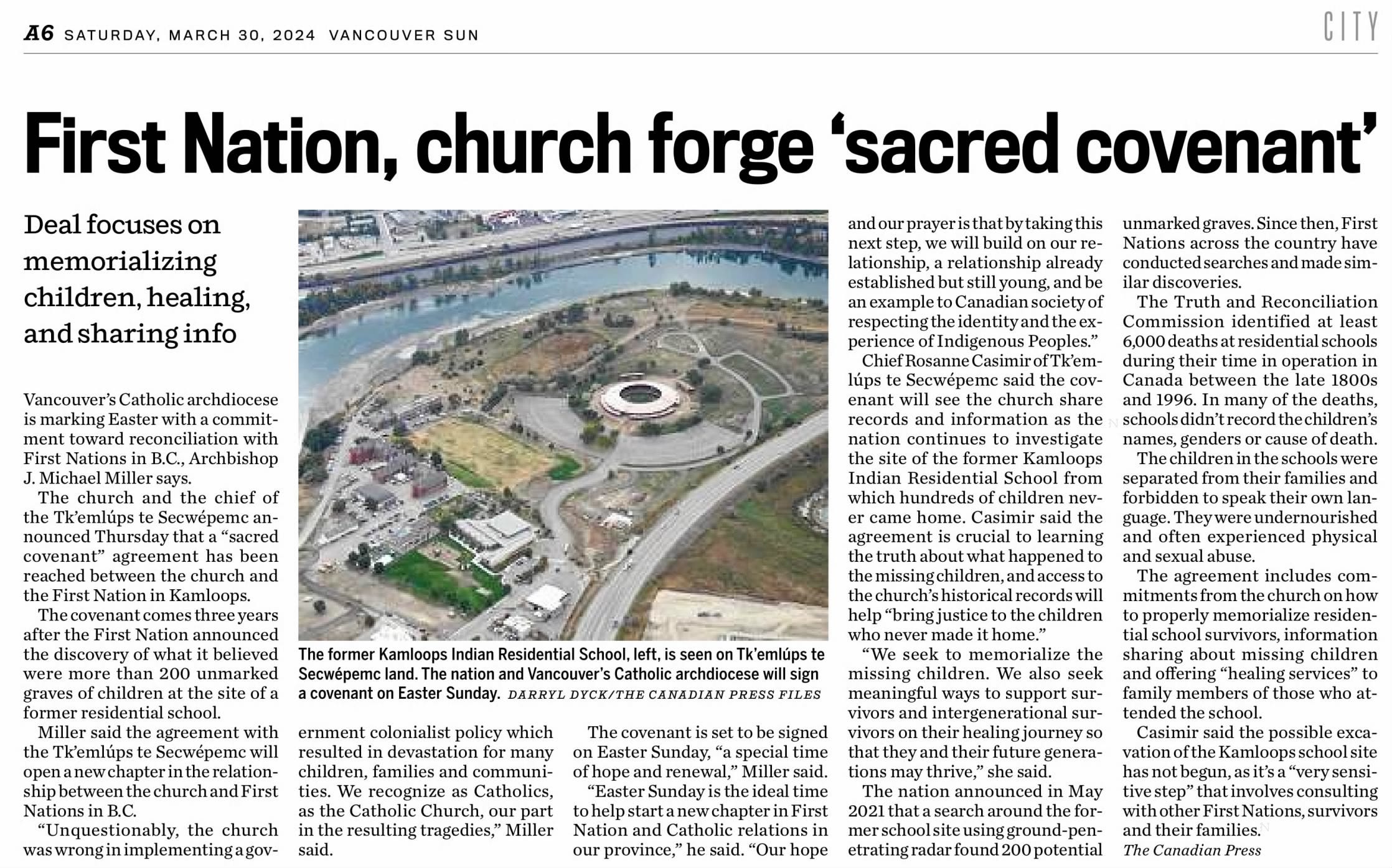
After the announcement, grief spread across Indigenous communities and beyond. Flags were lowered across the country, and memorials appeared in public spaces. Survivors were asked to revisit memories they had carried privately for decades, but for Survivors, the pain had never been historical. It was personal. The findings at Kamloops also pushed attention toward other former schools, and communities across Canada began or continued searches for missing children and unmarked burials. The National Centre for Truth and Reconciliation’s Missing Children and Unmarked Burials Initiative works to identify and commemorate those who died or went missing.
Ongoing Investigation
The work at the former Kamloops Indian Residential School did not end in 2021. From 2021 to 2025, Tk̓emlúps te Secwépemc continued with independent experts using several methods, including ground-penetrating radar, LiDAR scanning, and historic human-remains detection dogs.
In a 2026 update, the Nation said the work remained active and ongoing: data from different methods overlapped in several areas, making those zones a primary focus; some signatures resembled burials, some areas were ruled out, and others could not yet be ruled out.
The search has also been slowed by the difficulty of obtaining records from the government and the Catholic Church. Tk̓emlúps te Secwépemc has said that access to 88 years of school records is critical to identifying the children who attended, those who never returned home, and the communities to which they belonged.
A National Reckoning
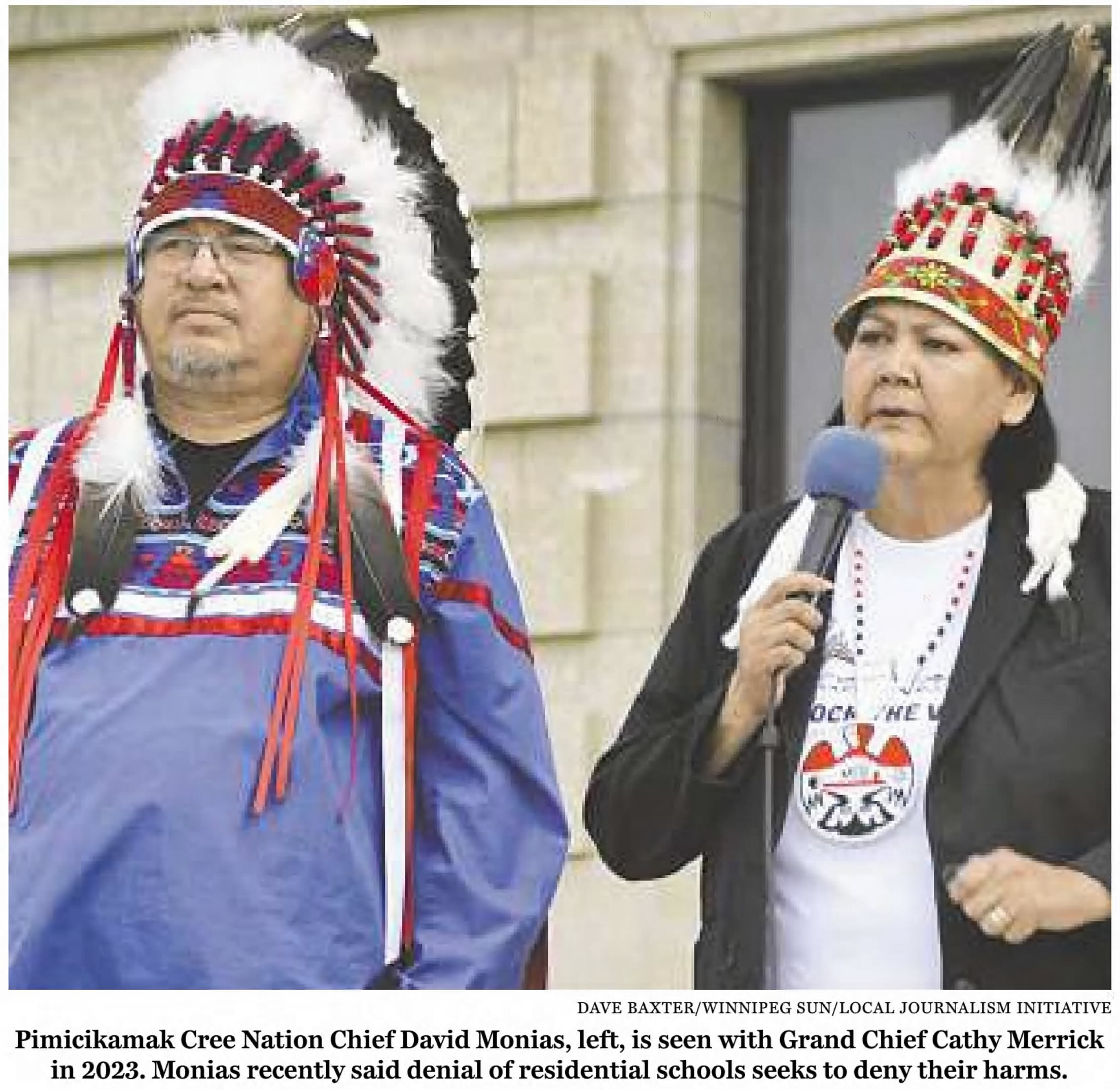
The former Kamloops Indian Residential School has become a place of remembrance, education, and healing. It is one of the few remaining residential school sites in Canada with a large group of original buildings and landscape features still intact. The site was designated a national historic site in 2024, a designation Parks Canada and Tk̓emlúps te Secwépemc marked publicly in February 202510.
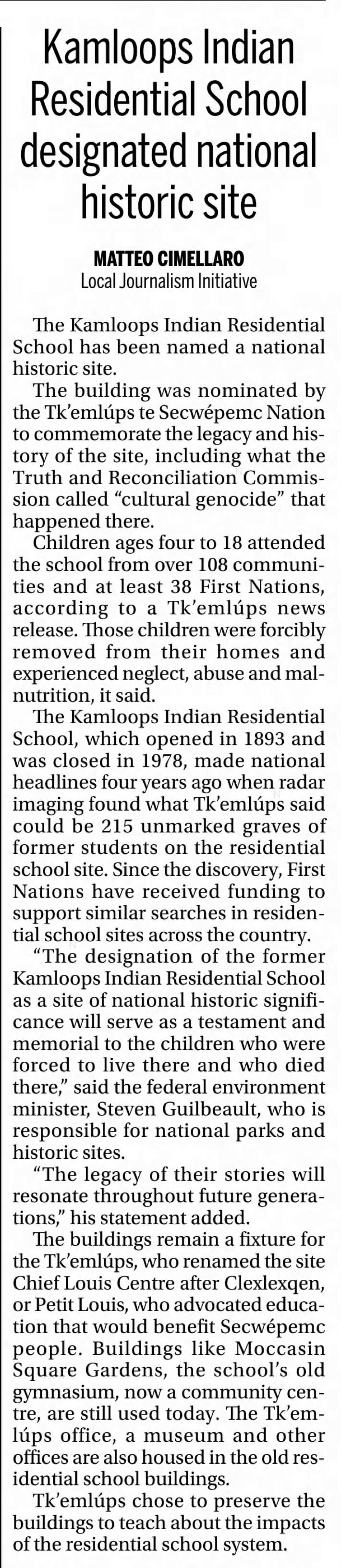
Parks Canada describes it as a place that bears witness to the experiences of generations of children who lived and died there, and to the broader history of the residential school system. The surviving buildings include the Main Building, the Gymnasium, the Workshop, and the Annex, and the grounds include the orchard where survivor testimony has indicated the presence of unmarked burials.
For Tk̓emlúps te Secwépemc, preserving the site is not about keeping a painful building frozen in time. It is about reclaiming culture, educating others, honoring survivors, remembering the children, and revitalizing Secwépemc language, history, and culture.
Parks Canada. “Survivors of the Former Kamloops Indian Residential School, Tk̓emlúps te Secwépemc, and the Government of Canada Mark the National Historic Significance.” Government of Canada news release, February 2025. https://www.canada.ca/en/parks-canada/news/2025/02/survivors-of-the-former-kamloops-indian-residential-school-tkemlups-te-secwepemc-and-the-government-of-canada-mark-the-national-historic-significan.html
"Kamloops Indian Residential School." Wikipedia. Accessed August 2026. https://en.wikipedia.org/wiki/Kamloops_Indian_Residential_School.
National Centre for Truth and Reconciliation. "Residential School History." Accessed August 2026. https://nctr.ca/education/residential-school-history/.
Truth and Reconciliation Commission of Canada. Honouring the Truth, Reconciling for the Future: Summary of the Final Report. Winnipeg: TRC, 2015. https://nctr.ca/records/reports/.
"St. Anne's Indian Residential School." Wikipedia. Accessed August 2026. https://en.wikipedia.org/wiki/St._Anne%27s_Indian_Residential_School. (St. Anne's electric chair.)
National Centre for Truth and Reconciliation. "Missing Children and Unmarked Burials Initiative." Accessed August 2026. https://nctr.ca/missing-children-and-unmarked-burials-initiative/overview/.
Canadian Broadcasting Corporation. "Remains of 215 Children Found Buried at Former B.C. Residential School, First Nation Says." CBC News, May 27, 2021. https://www.cbc.ca/news/canada/british-columbia/tk-eml%C3%BAps-te-secw%C3%A9pemc-215-children-former-kamloops-indian-residential-school-1.6043778.
The Globe and Mail. "Anthropologist Explains How She Concluded 200 Children Were Buried at the Kamloops Residential School." The Globe and Mail, 2021. https://www.theglobeandmail.com/canada/article-kamloops-residential-school-unmarked-graves-discovery-update/.
Tk̓emlúps te Secwépemc. "Investigation Update." Media release, February 17, 2026. https://tkemlups.ca/wp-content/uploads/2026/02/TteS-Media-Release-Investigation-Update-Feb-17-2026-FINAL.pdf.
Parks Canada. "Survivors of the Former Kamloops Indian Residential School, Tk̓emlúps te Secwépemc, and the Government of Canada Mark the National Historic Significance." Government of Canada news release, February 2025. https://www.canada.ca/en/parks-canada/news/2025/02/survivors-of-the-former-kamloops-indian-residential-school-tkemlups-te-secwepemc-and-the-government-of-canada-mark-the-national-historic-significan.html.