


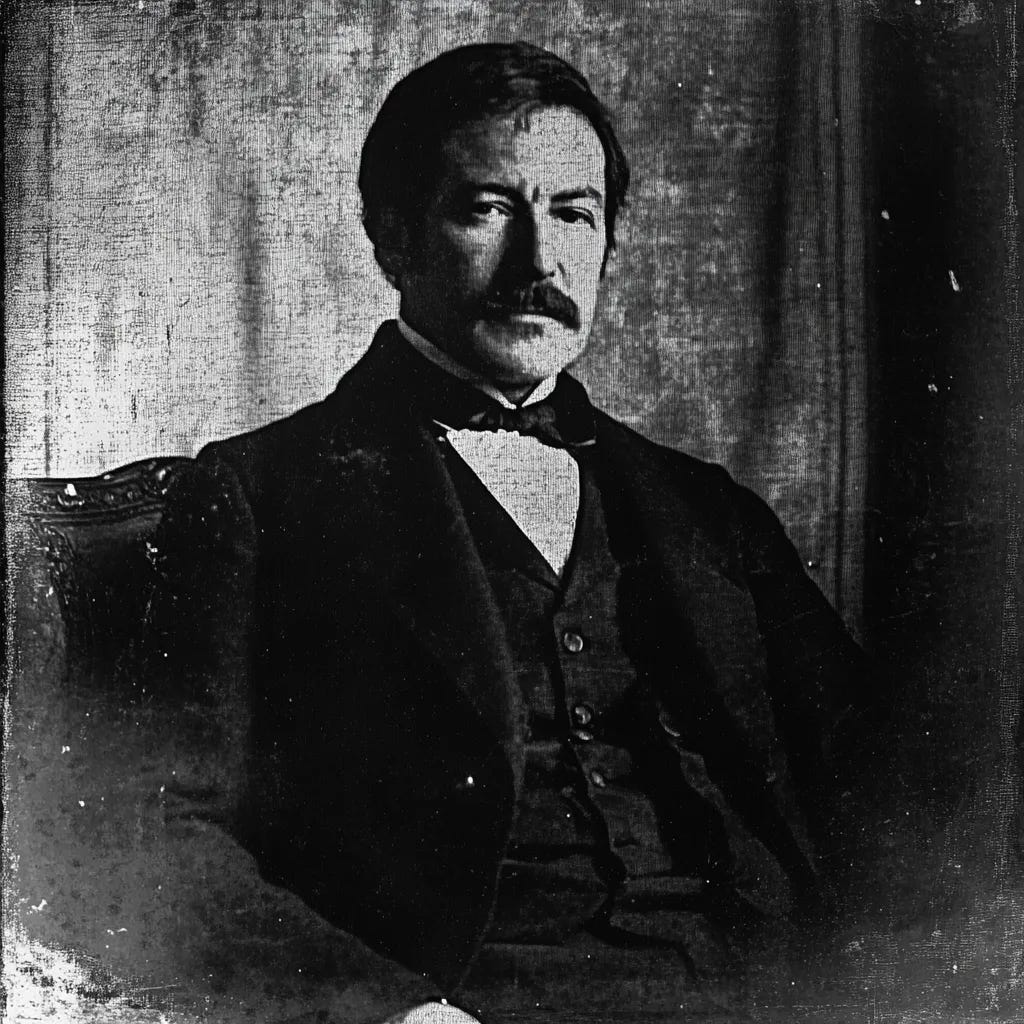
On February 14, 1845, Irish immigrant John Gordon was hanged in the yard of the Rhode Island State Prison in Providence for the New Year's Eve 1843 killing of mill owner Amasa Sprague. He was the last person Rhode Island ever executed. His trial, run by a chief justice who told jurors to trust Yankee witnesses over Irish ones, helped push the state to abolish capital punishment in 1852, and in 2011 Governor Lincoln Chafee granted Gordon a posthumous pardon.1
Who was John Gordon?
In the spring of 1844, Irish immigrants John Gordon and his brothers William and Nicholas stood trial for the brutal murder of one of Rhode Island’s most prominent citizens, a wealthy industrialist named Amasa Sprague.2
From the start, the trial and its coverage were tainted with overt anti-Irish and anti-Catholic prejudice. The jury was instructed by the judge to give more weight to Yankee witnesses than Irish witnesses.3
The judge did not attempt to mask his bias. He sustained nearly every objection raised by the prosecution and overruled almost any objection brought by the defense. Even with this sham trial, only one of the defendants, John Gordon, was found guilty.
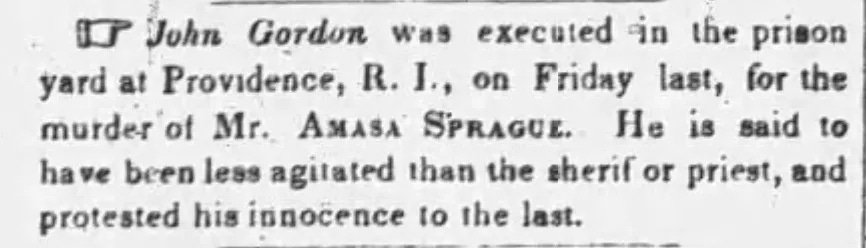
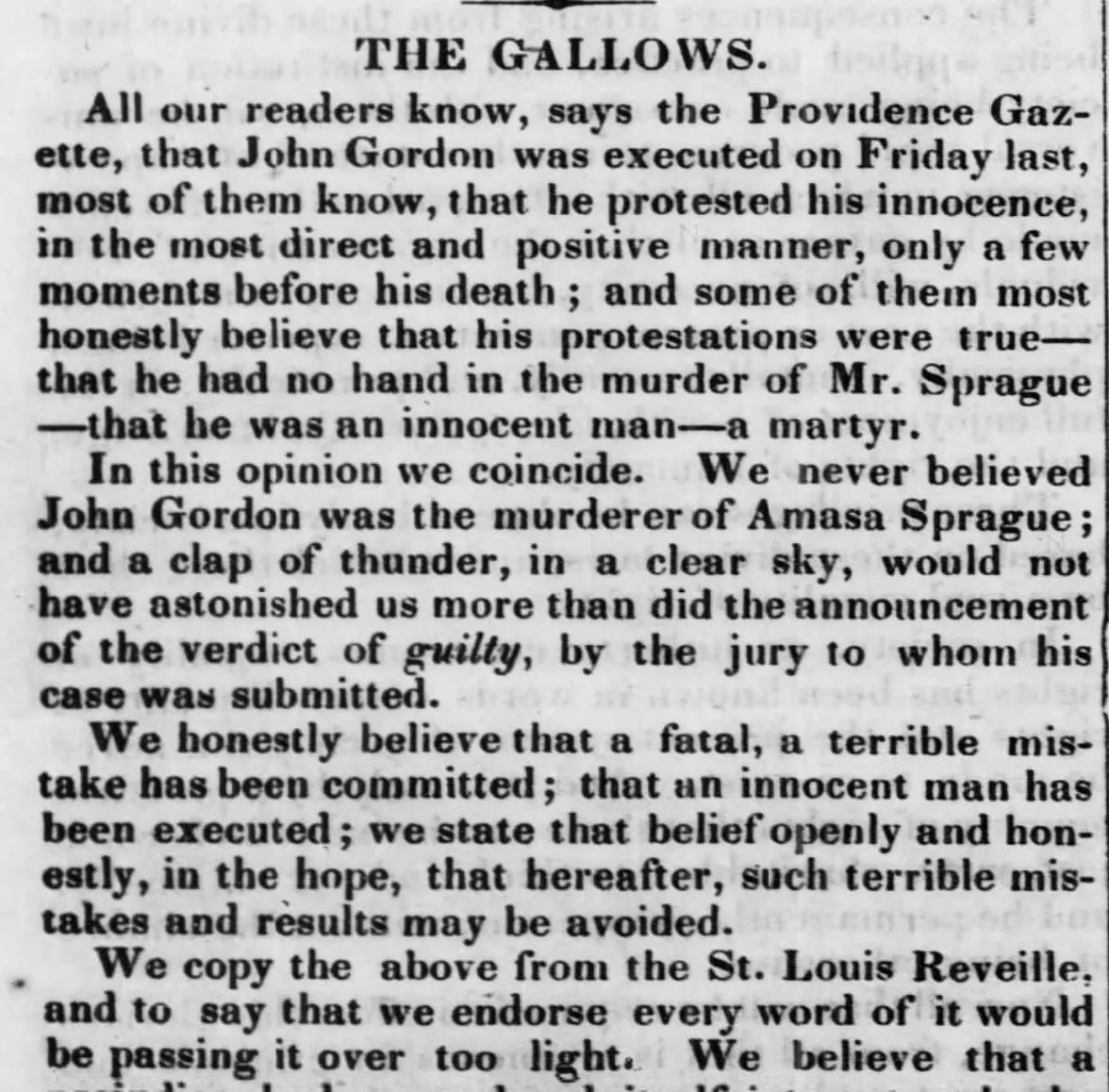
On February 14, 1845, he became the last person to be executed in the state of Rhode Island. Seven years later, in 1852, Rhode Island abolished capital punishment, due in part to the circumstances surrounding Gordon’s execution.4
Arrival in America
John Gordon’s older brother Nicholas was the first member of the family to come to America, arriving in 1836. Intent on making a better life for himself and his family, Nicholas rented space and opened a store. He used the profits to purchase some land where he built his own store along with a second-floor apartment in Spragueville.
His business increased significantly when he obtained a license to sell alcohol by the bottle. Later, he applied for and was granted a tavern license, which enabled him to sell alcohol by the glass.
The success of his business allowed Nicholas to obtain passage to America for his family back in Ireland. In June 1843, his mother, sister, niece, and three brothers joined him in Rhode Island.
The Spragues
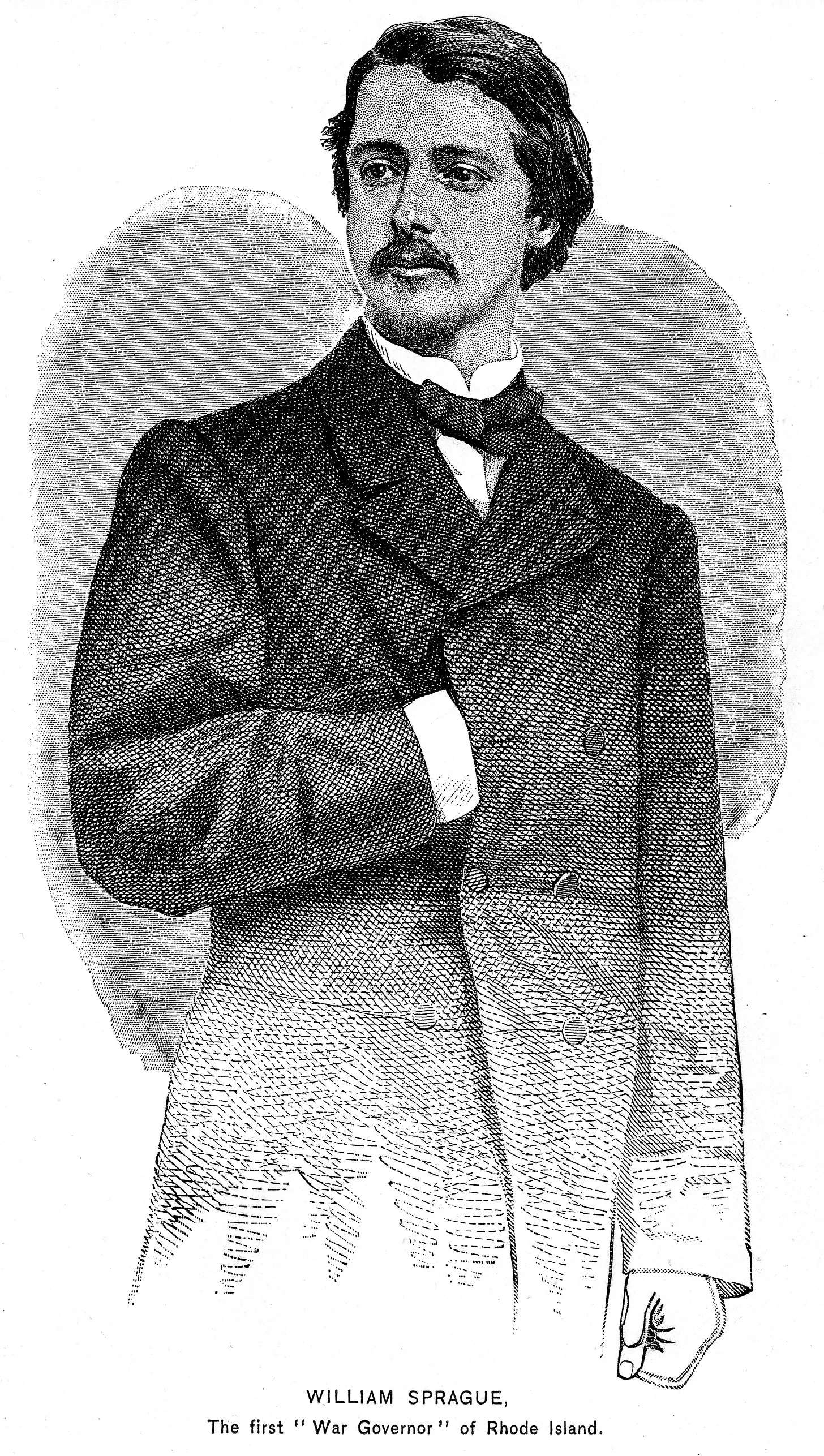
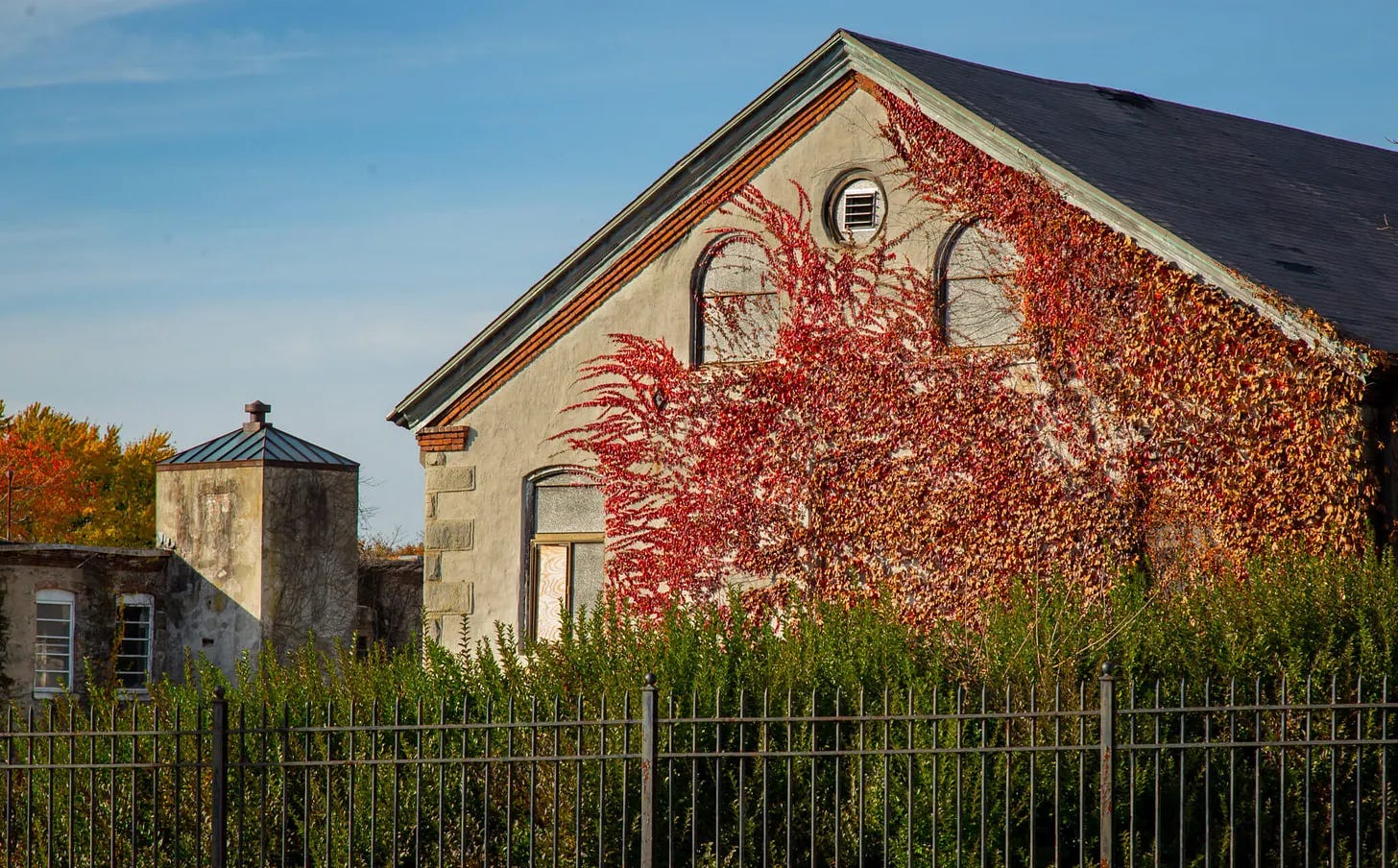
The Sprague family was one of the most prominent and influential in the state. Amasa Sprague and his brother William owned several mills, including A&W Sprague Mill in Cranston, Rhode Island, which Amasa oversaw.
William Sprague was also a U.S. Senator and former Governor. They also had other family members in the state legislature and local politics. Needless to say, the family had enormous political influence.5
Amasa’s wealth and political connections gave him free reign to run his mills as he saw fit, which meant exploiting hundreds of uneducated and impoverished Irish men, women, and children.
He owned the mill, company houses, and the company store, and paid his employees with credit that could only be used at the company store or rent for the company houses. This kept his employees indebted to the mill in a neo-feudal arrangement.
Conflict with Nicholas Gordon
Nicholas Gordon was one of the few Irishmen in the area who was not under the thumb of Amasa Sprague. However, in the summer of 1843, the two would clash.
Sprague had become irritated that many of his employees were drinking before and sometimes during work hours, which had led to an increase in accidents and a decrease in production.
He blamed Nicholas Gordon and his establishment. Sprague used his political influence to deny Gordon’s liquor license renewal, greatly reducing his income.
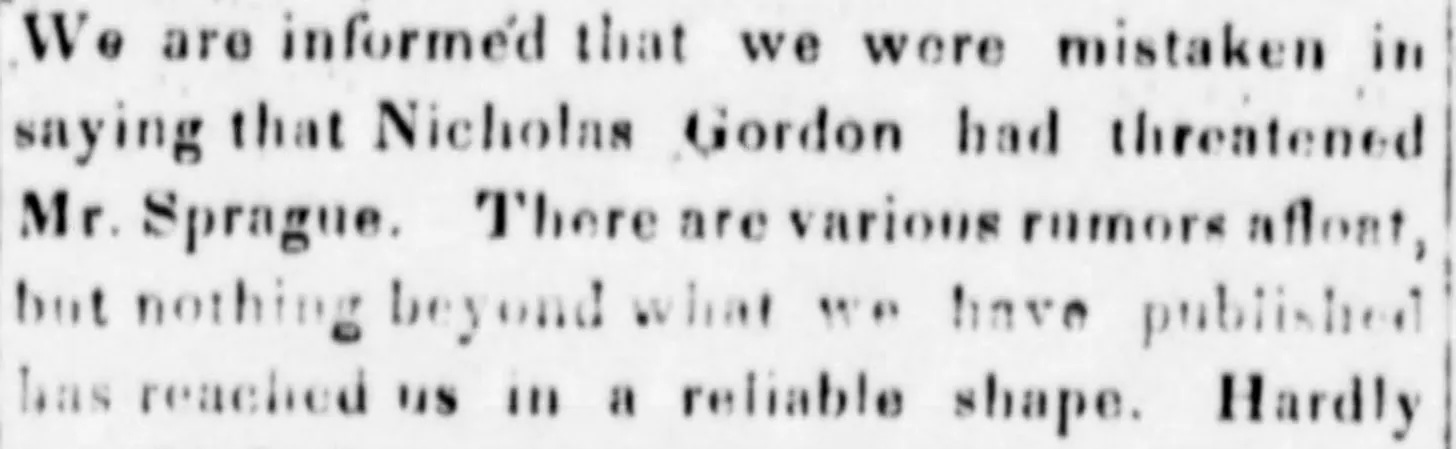
Some witnesses reported that Gordon threatened Sprague, though this has been contested.
Murder of Amasa Sprague: How was Amasa Sprague killed?
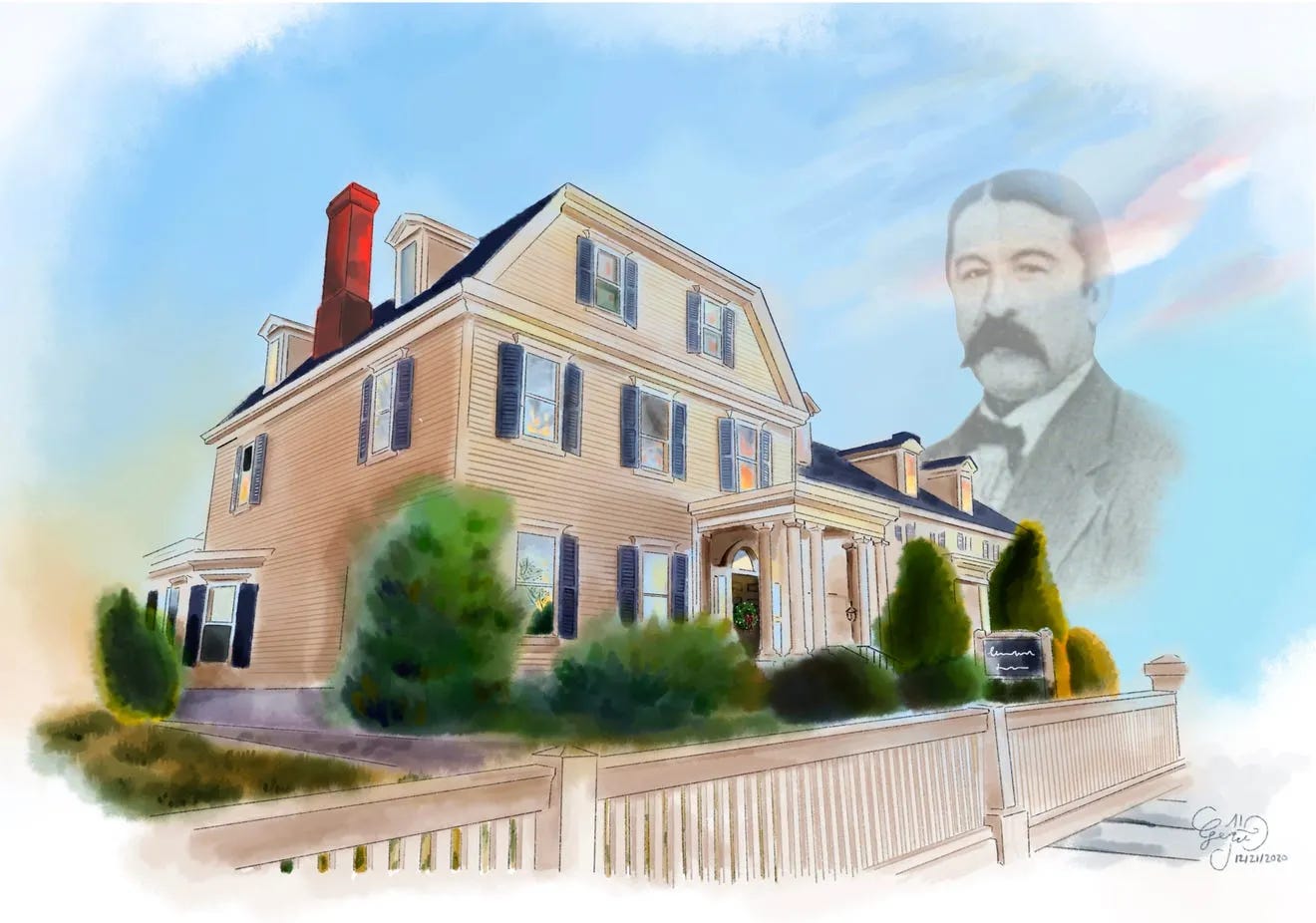
On December 31, 1843, Amasa Sprague left his mansion to check the livestock on a farm he owned in neighboring Johnston.
Several hours later, Sprague’s battered body was discovered by a handyman servant, Michael Costello, returning from work at the mansion. Sprague had been beaten so savagely that at first, Costello did not even recognize him.6
Sprague had been shot in the forearm and pistol-whipped so ferociously that the gun had broken apart and been left at the scene. The brutality of the crime and the fact that cash and a watch were left on the body seemed to rule out robbery as a motive.
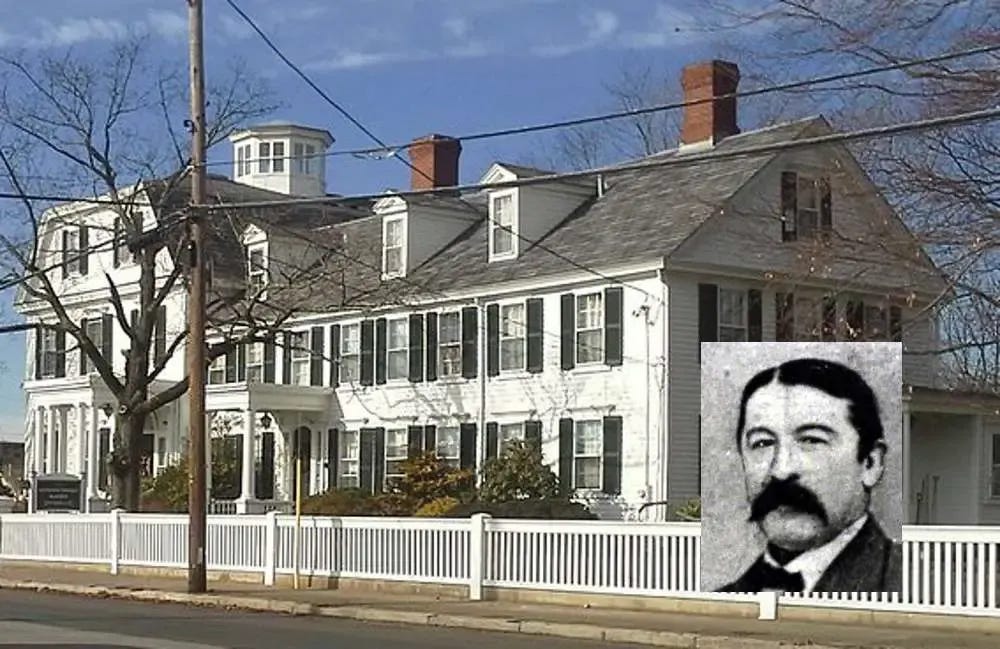
It was New Year's Eve, and according to later accounts, his wife's birthday and the couple's wedding anniversary. Sprague's body was carried home and laid out in the parlor of the mansion that still stands on Cranston Street.
Gordon Brothers Indicted
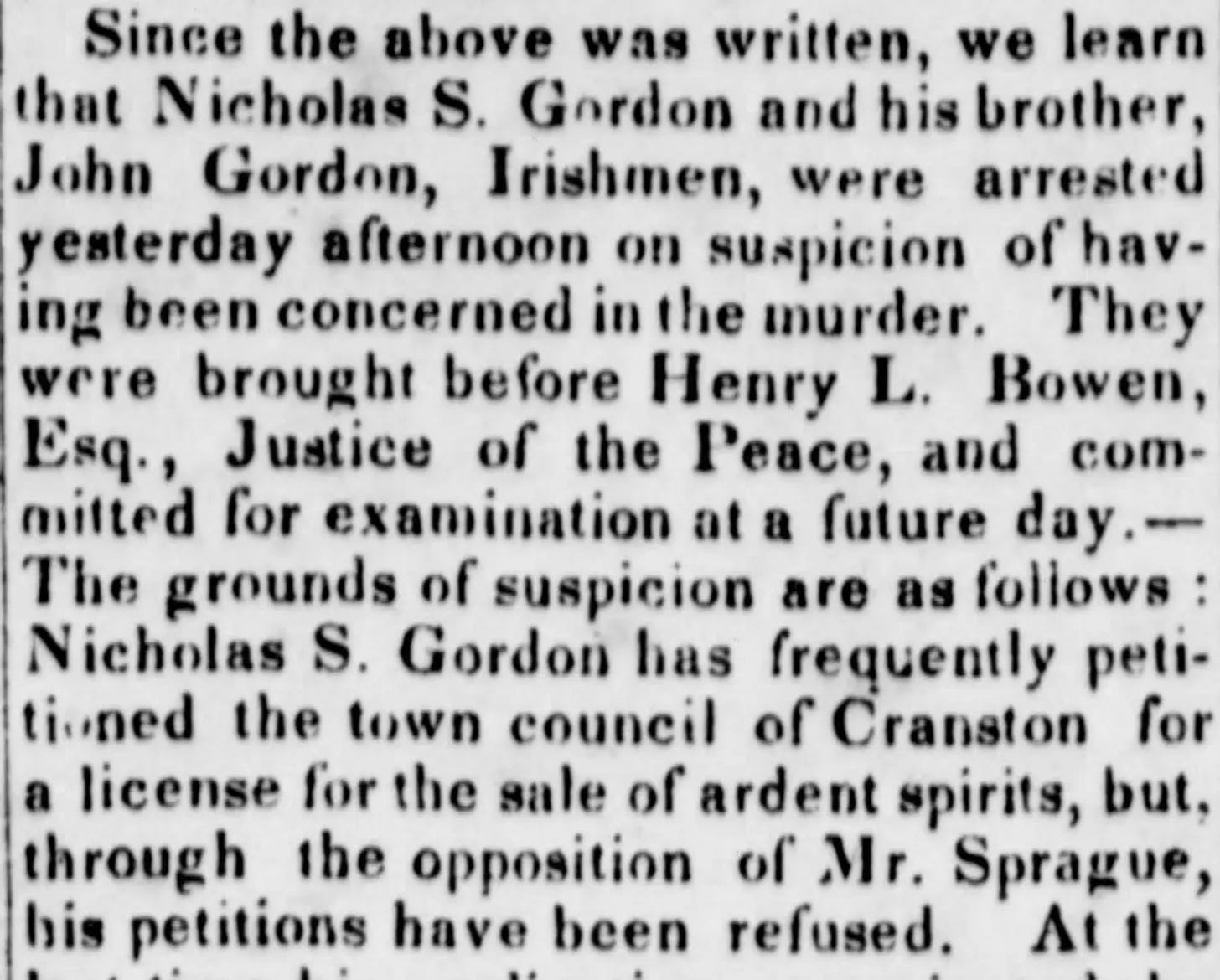
Despite a lack of any evidence or eyewitnesses, Nicholas Gordon was arrested the day after the murder. John and William were indicted for the murder, while Nicholas was charged with being an accessory before the fact. Nicholas had been attending a Christening in Providence at the time of the murder.
The dragnet was so indiscriminate that, according to the New England Historical Society, police even took the family dog into custody on the theory that it had bitten Sprague's neck. The defense described the animal as old and toothless.
Immediately after the murder, biased newspapers like the Providence Journal ran disparaging articles about the Gordon family in an attempt to sway public opinion.
The Gordons had the support of the local Irish and Italian immigrant communities, as well as the labor and workers’ rights movements.
Investigation and Trial
William Sprague resigned from the Senate to head the investigation into his brother’s murder, creating a massive conflict of interest.7 Rather than being held at the Sheriff’s office, collected evidence was stored at the Sprague mansion.
In a blatant show of bias, the presiding judge, Chief Justice Job Dufree, instructed the jury to give more credence to the testimony of the prosecution’s witnesses. Any evidence that was unfavorable to the prosecution was excluded.
We know this from Durfee’s own hand. In 2008, several hundred pages of the chief justice’s notes came to light after a University of Rhode Island clerk revealed she had rescued them decades earlier from a pile of discarded papers in the attic of a Tiverton house. URI labor historian Scott Molloy called it the most important find of his career. The notes confirm that during the first trial, Durfee told jurors to give greater weight to Yankee witnesses than Irish ones. The papers went to the Rhode Island Historical Society.
Many of the witnesses for the prosecution contradicted one another. According to Caranci, a local prostitute who supposedly knew the Gordon brothers testified against them despite misidentifying William as John.8
An unidentified coat that was found at the crime scene, a worn blue coat, bloodied at the breast and elbow, according to the trial record was said to belong to John, even though it was at least two sizes too big for him.
All of the “evidence” against the Gordon brothers was entirely circumstantial, with the primary piece being the gun that was found at the scene. It was known that Nicholas Gordon owned a handgun he kept in his store for protection.
After the murder, the gun went missing. The prosecution argued that the missing gun must have been the murder weapon used by the Gordons. Prosecution witnesses also testified that a set of running boot tracks in the snow led from the scene toward the back door of Nicholas Gordon's house.
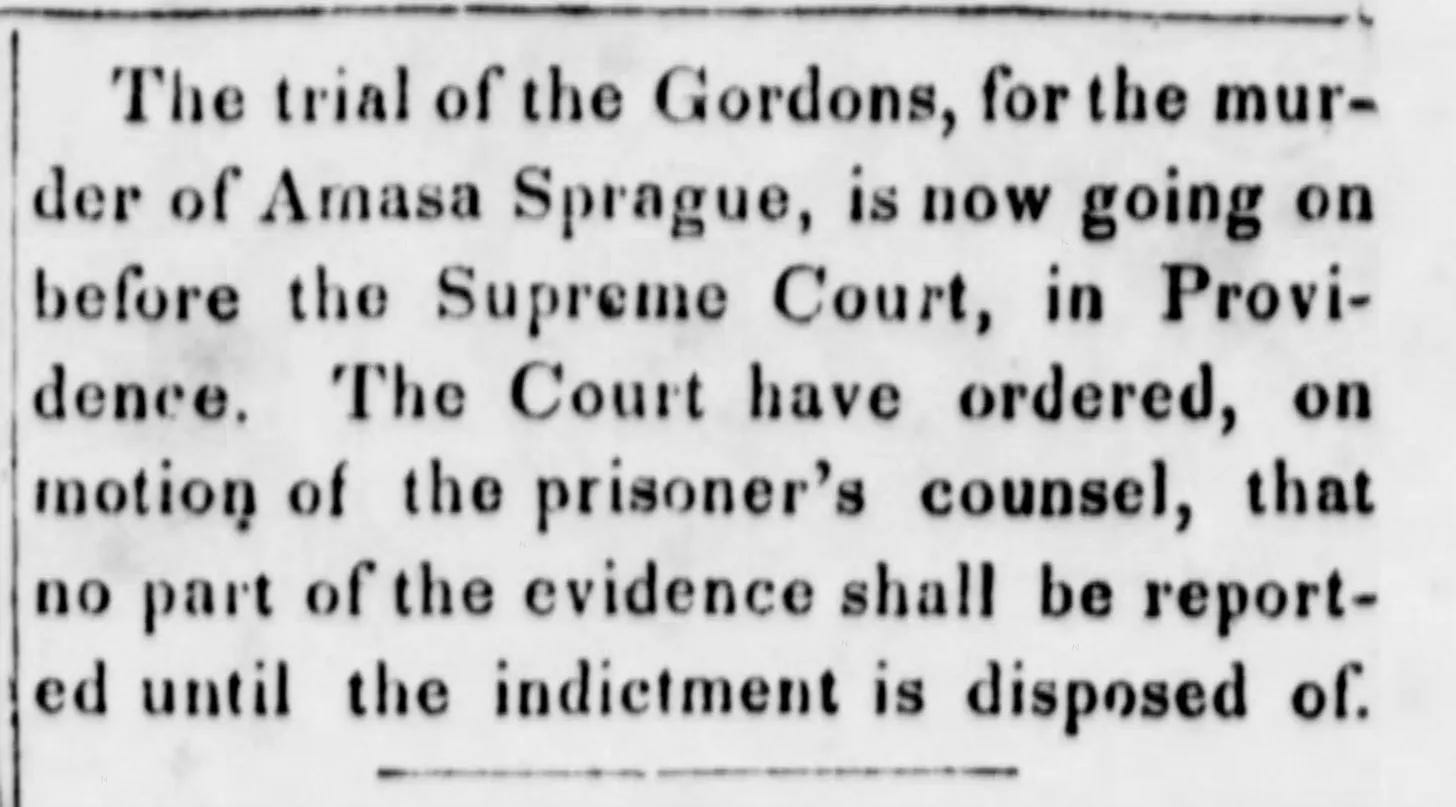
Nicholas, who had been tried separately, had a hung jury and was scheduled to be tried again after the conclusion of his brothers’ trial. Despite the unfair nature of the trial, on April 17, 1844, William Gordon was found not guilty.
However, 29-year-old John Gordon, who was prone to alcoholic blackouts and did not have an alibi at the time of the murder, was found guilty. His execution was set for February 1845.
As the verdict came down, John reportedly turned to his brother and told him it was William who had hanged him.
Then, weeks before John was set to be executed, William Gordon made a startling confession. William admitted to taking Nicholas’s gun and hiding it out of fear. According to later accounts, he had tucked it beneath the attic floorboards, not realizing its disappearance would throw more suspicion on his brother. He then turned it over to the authorities.
Gordon's supporters saw this as proof that the broken pistol at the scene belonged to someone else, since Nicholas's gun had been in the house all along. Not every source agrees, an 1889 history of the Providence police maintained the gun was Nicholas's. This new information was not allowed to be presented in court, and was not reported on by the anti-Irish Catholic newspapers.
With this revelation, Gordon’s attorney, John Knowles, filed a petition with the appeals court, which also happened to be the State Supreme Court that had just tried the case. This was another blatant conflict of interest.
Governor James Fenner declined to intervene, and the General Assembly, by a narrow margin, refused to postpone John’s execution until Nicholas’s second trial was concluded to see if a conspiracy was proven.9
The Hanging
After exhausting all petitions and appeals, John Gordon was hanged in the yard of the state prison in Providence on February 14, 1845. In his final words, he cited the words of Jesus saying, “I forgive them for they know not what they do.”
The prison stood on the ground now occupied by the Providence Place Mall. Members of the city's elite were invited inside the walls to watch, while by Scott Molloy's account some 1,000 Irish gathered outside. A traveling Catholic priest, Father John Brady, heard Gordon's last confession and, at the scaffold, rebuked the officials around him. Gordon was blindfolded with a handkerchief his mother had provided.
In his final words, he reportedly cited the words of Jesus saying, "I forgive them for they know not what they do." Another account records a simpler plea: that all good Christians would pray for him.
Did John Gordon confess?
Possibly, and it is the part of the story usually left out. Sheriff Roger Williams Potter, who carried out the hanging, later reported that Gordon admitted to being an accomplice in Sprague’s killing, while insisting he had not shed any of Sprague’s blood.10 No other record confirms the claim, and Father Brady’s defiance at the gallows suggests the priest believed him. Even the pardon’s champions have never claimed Gordon was provably innocent; their case is that he never received a fair trial.
Aftermath
John Gordon’s funeral was attended by Irish communities and supporters from all over Rhode Island and neighboring states. The procession deliberately detoured past the State House and the homes of the Yankee elite.
Though he was later freed after another deadlocked jury, by then Nicholas Gordon was a broken man. The stress of imprisonment and the ruin of his family had taken its toll. He began drinking heavily and died eighteen months later.
No one else was ever charged. The killing of Amasa Sprague remains, formally, one of Rhode Island's oldest unsolved cases.
Seven years later, due in large part to the travesty of the trial and execution of John Gordon, the state of Rhode Island became the second state in the nation to abolish capital punishment.11
Though it was later amended in 1872 to allow the death penalty for murders committed while incarcerated, no one was executed, and in 1984, the General Assembly removed the death penalty from the Penal Code.
Why did Rhode Island pardon John Gordon?
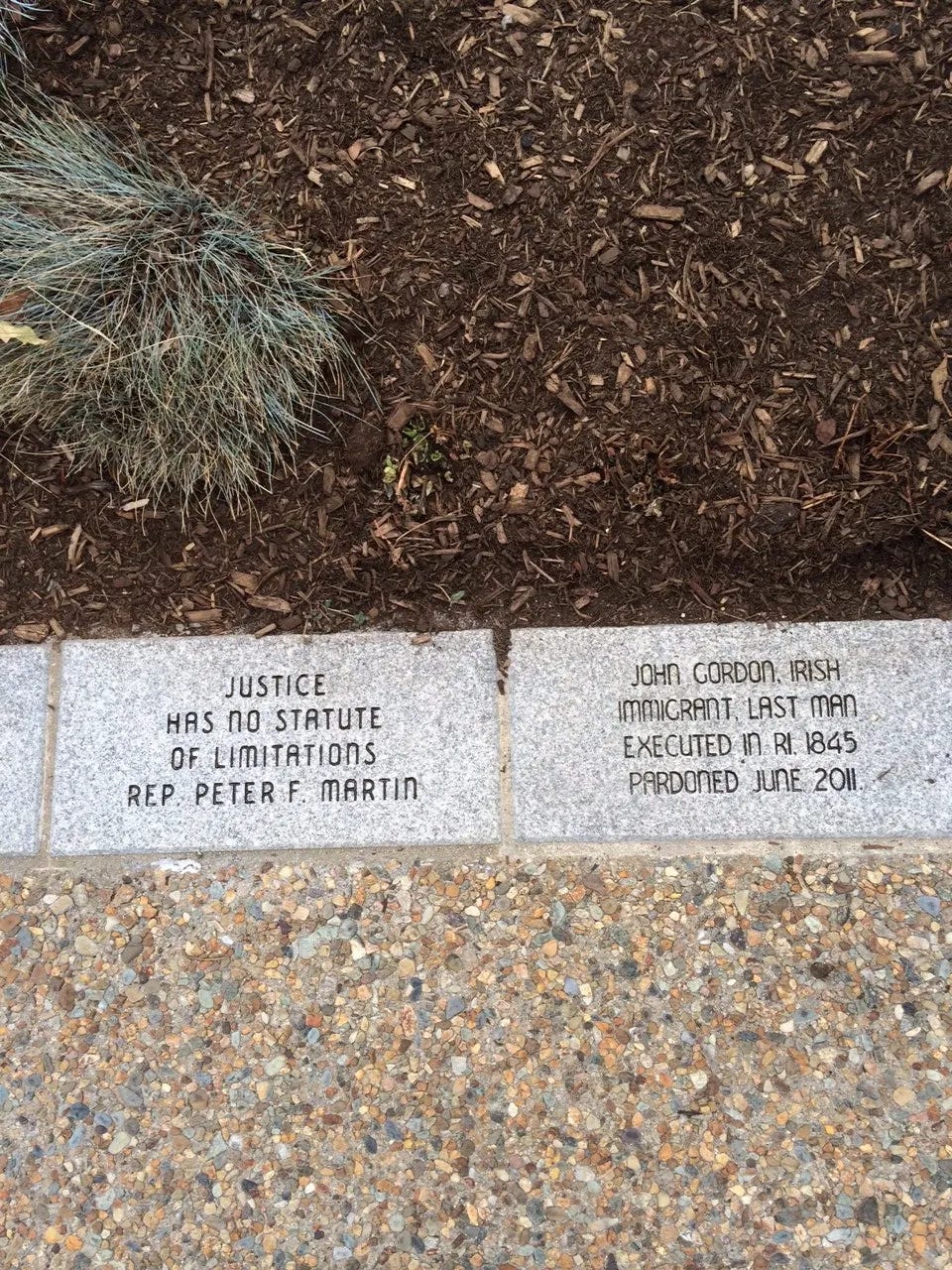
Because the state concluded his trial had been fundamentally unfair. In 2011, after a stage play revived the case, the General Assembly asked Governor Lincoln Chafee to grant a posthumous pardon. Chafee signed it on June 29, 2011, at the Old State House, in the room where Gordon’s trial is believed to have been held, saying Gordon had been put to death after “a highly questionable judicial process.”
The story of John Gordon has inspired several literary works, including the book “The Hanging & Redemption of John Gordon, The True Story of Rhode Island’s Last Execution,” Written by author Paul Caranci.
It was also the basis for the 2011 play “The Murder Trial of John Gordon,” written and directed by Ken Dooley, who first heard of Gordon as a boy through his grandmother's songs about "Poor Johnny Gordon." In fact, this play helped spark the legislation that led to the posthumous exoneration and pardon of John Gordon.
On June 29, 2011, a ceremony was held during which John Gordon was officially pardoned. The legislation had been initiated by State Representative Peter F. Martin and Senator Michael J. McCaffrey, and was signed by Governor Lincoln Chafee.
“Today, we have righted a wrong, and we have done the just thing,” said Representative Martin.
In 2014, Ireland's Taoiseach, Enda Kenny, singled out the pardon for praise during a visit to Rhode Island's Irish Famine Memorial.12
Where is John Gordon buried?
In October, 2011, a memorial headstone was erected for Gordon at St. Mary's Cemetery in Pawtucket, reading “Forgiveness is the Ultimate Revenge.’’13
State of Rhode Island, "Governor Lincoln D. Chafee Pardons John Gordon," press release, June 29, 2011, https://www.ri.gov/press/view/14182.
Paul Caranci, "The Execution of John Gordon, a Victim of Anti-Irish Catholic Prejudice," Small State Big History, September 24, 2021, https://smallstatebighistory.com/the-execution-of-john-gordon-a-victim-of-anti-irish-catholic-prejudice/.
"Personal Papers of 19th Century Judge Shed Light on Last R.I. Trial to End in Execution," Rhody Today, University of Rhode Island, June 3, 2008, https://www.uri.edu/news/2008/06/personal-papers-of-19th-century-judge-shed-light-on-last-r-i-trial-to-end-in-execution/.
Death Penalty Information Center, "Rhode Island," https://deathpenaltyinfo.org/state-and-federal-info/state-by-state/rhode-island.
Ken Dooley, "John Gordon," Small State Big History, September 17, 2021, https://smallstatebighistory.com/john-gordon/.
Edward C. Larned and William Knowles, reporters, The Trial of John Gordon and William Gordon, Charged with the Murder of Amasa Sprague, before the Supreme Court of Rhode Island, March Term, 1844, 2nd ed. (Providence: Sidney S. Rider, 1884), 15, 19, 22.
Leslie Landrigan, "The Murder of Amasa Sprague," New England Historical Society, https://newenglandhistoricalsociety.com/murder-amasa-sprague-irishman-persecuted-crime/.
Paul F. Caranci, The Hanging and Redemption of John Gordon: The True Story of Rhode Island's Last Execution (Charleston, SC: The History Press, 2013).
Scott Molloy, interview, "1845: John Gordon, the Last Hanged in Rhode Island," Executed Today, February 14, 2012, https://www.executedtoday.com/2012/02/14/1845-john-gordon-last-hanged-rhode-island/.
Henry Mann, Our Police: A History of the Providence Force from the First Watchman to the Latest Appointee (Providence, 1889), as cited in "John Gordon (convict)," Wikipedia, https://en.wikipedia.org/wiki/John_Gordon_(convict).
"Irishman Pardoned after 166 Years," Irish Echo, July 2011, https://www.irishecho.com/2011/7/irishman-pardoned-after-166-years.
Simon Carswell, "Government in Talks to Set Up Direct Flight between Shannon and Rhode Island," Irish Times, September 24, 2014, http://www.irishtimes.com/news/world/us/government-in-talks-to-set-up-direct-flight-between-shannon-and-rhode-island-1.1940633.
"State's Last Executed Man Finally Gets a Proper Burial," Cranston Patch, September 2011, https://patch.com/rhode-island/cranston/states-last-executed-man-finally-gets-a-proper-burial.
"police even took the family dog into custody on the theory that it had bitten Sprague's neck. The defense described the animal as old and toothless...."
This was par for the course for the Irish in North America at that time, as they faced prejudice and discrimination akin to that faced by Blacks and Asians during that century. Canada's notorious Donnelly family faced similar prejudice in rural Ontario that led to their deaths in a mass killing.