


A Hundred Years Since Magic's Most Famous Death
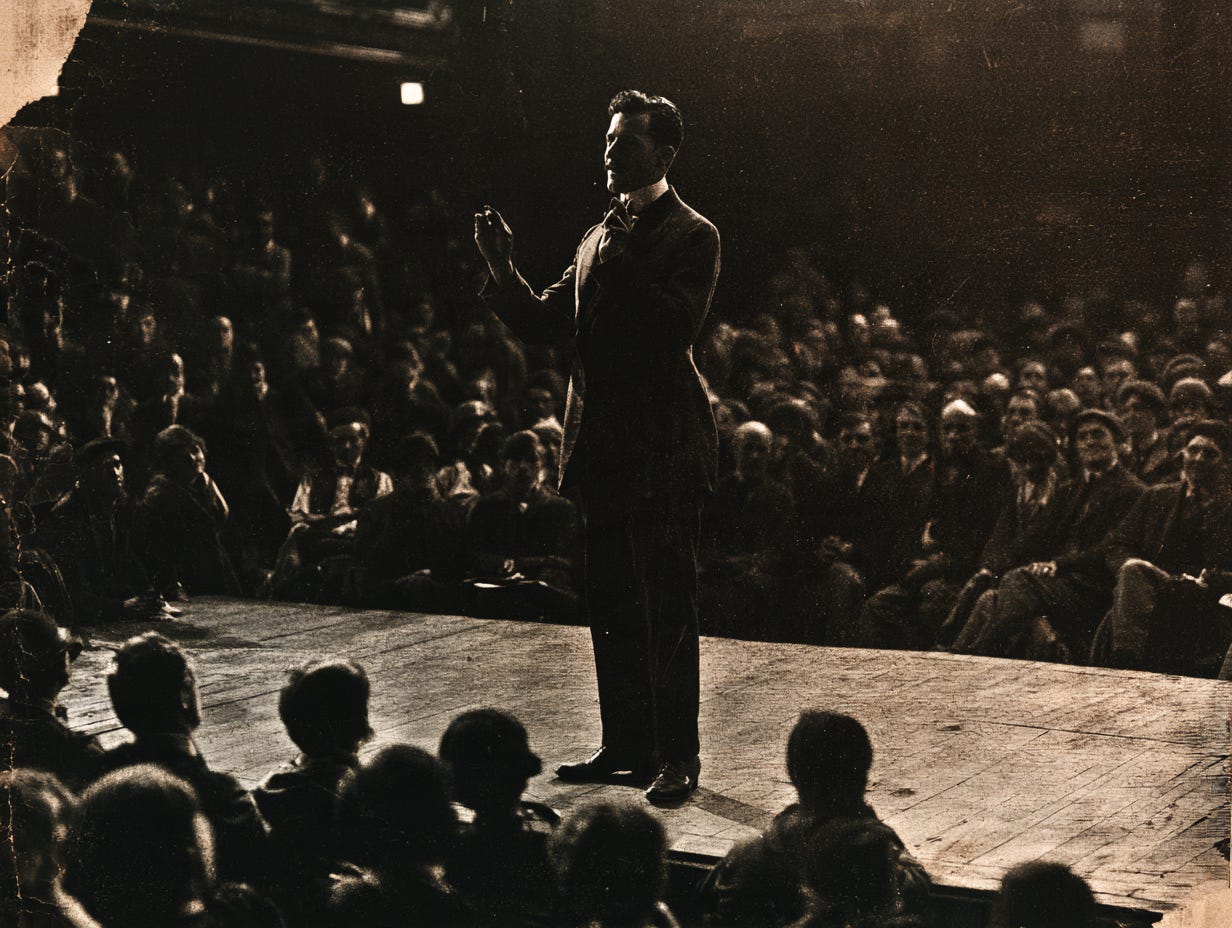
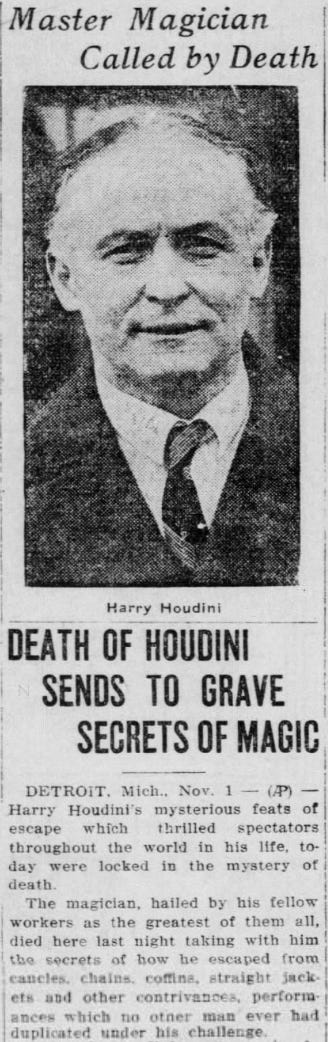
On Halloween night, 1926, the world's most famous magician died in a Detroit hospital bed, undone not by a water torture cell or a straitjacket but by his own appendix and, perhaps, by a college student's fist. A hundred years later, on October 31, 2026, magicians in Detroit and Appleton are marking the centennial of Harry Houdini's death, and the argument that started at his deathbed still hasn't been settled.1
The Man Who Couldn't Be Held
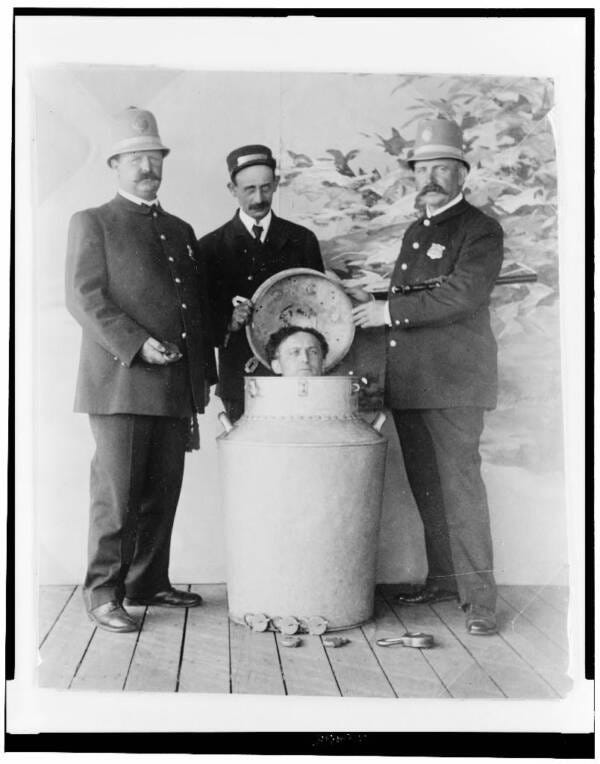
He was born Erik Weisz in Budapest on March 24, 1874, and remade himself in America as Harry Houdini. Known as the Handcuff King, he was known as the man who escaped straitjackets over city streets and for climbing out of a locked crate dropped into a river.2 By 1926 he was 52, still performing, and waging a second career as a crusader against fraudulent spiritualists who claimed to speak with the dead. That crusade made him enemies, a detail that would later feed the wilder theories about his death.
The Montreal Dressing Room
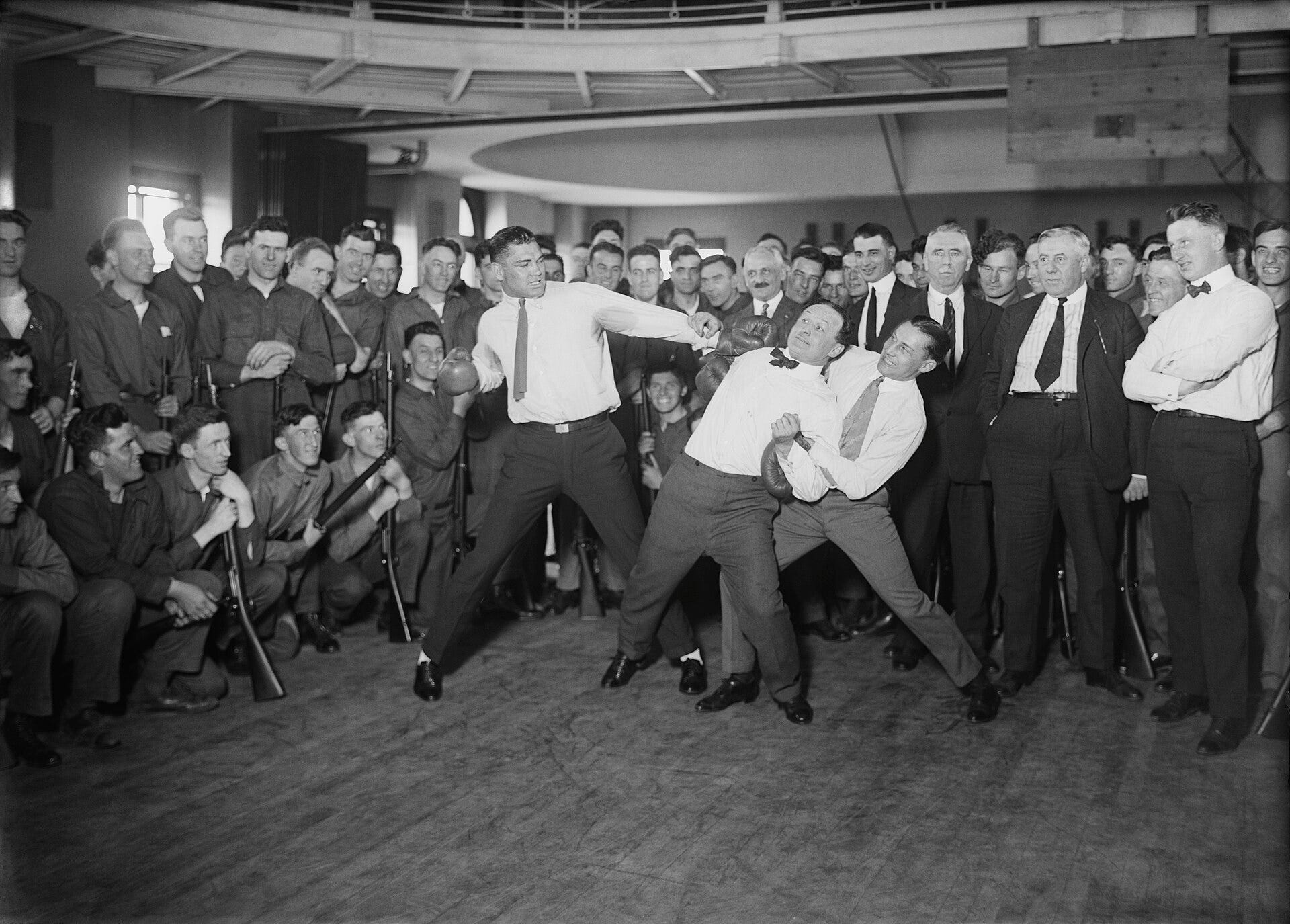
On October 22, 1926, Houdini was resting in his dressing room at the Princess Theatre in Montreal when a McGill University student named J. Gordon Whitehead came in with a question. Houdini had long claimed he could absorb any blow to the stomach. Whitehead asked whether it was true, and then, before Houdini could rise or brace himself, drove several hard punches into his abdomen. A witness, student Sam Smilovitz, remembered "four or five terribly forcible, deliberate, well-directed blows." Houdini, reclining and unprepared, waved him off and finished the conversation. He had been in abdominal pain for days already.
The Last Performance
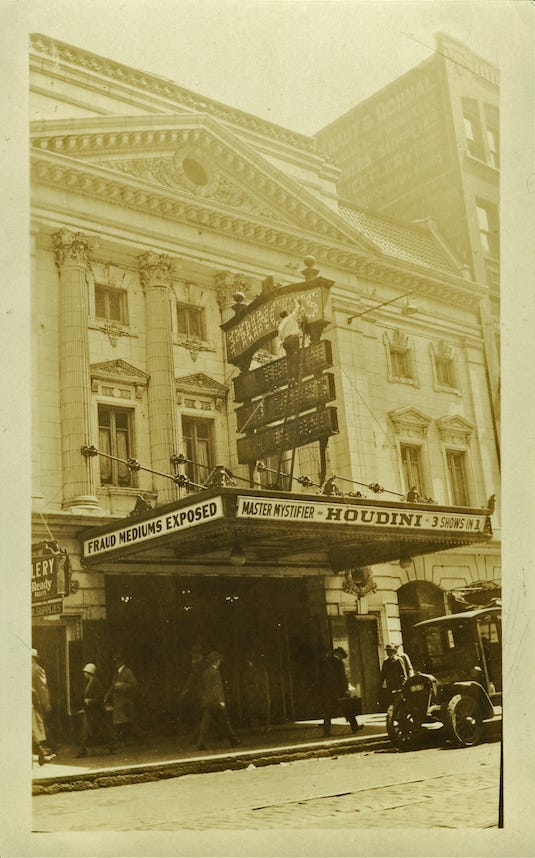
Houdini did not stop. He boarded an overnight train for Detroit, a trip of roughly fifteen hours, and arrived burning with a fever later put as high as 104 degrees. A doctor who examined him diagnosed acute appendicitis and told him to go straight to a hospital. Houdini refused, reportedly answering, "I'll do this show if it's my last."3 On October 24, 1926, he took the stage at the 1,400-seat Garrick Theatre in Detroit. He pushed through a performance of about two and a half hours, the water-torture-cell escape the most punishing part of it, and by the final curtain he needed his assistants to help him stand. He collapsed after the show. It was the last performance of his life.

The Week at Grace Hospital
He was taken that night to Grace Hospital, at Willis and John R. Surgeons found that his appendix had already burst; they removed it, but peritonitis, and the sepsis that followed, had spread beyond what 1926 medicine could reach. A second operation and an experimental serum bought only days, and for most of a week he rallied and sank by turns. On Sunday, October 31, 1926 on Halloween day Harry Houdini died at 1:26 in the afternoon, fifty-two years old. His reported last words were, "I'm tired of fighting."
Did the Punch Kill Him?
This is the question that has never fully closed. The doctors of 1926 connected the blows to the ruptured appendix, and Houdini's life insurer accepted that logic, paying his widow a double-indemnity settlement for accidental death. For decades the "punch that killed Houdini" was simply the story. Modern medicine is more skeptical. A blow directly causing appendicitis "traumatic appendicitis" is extraordinarily rare, documented only a handful of times. The likelier reading is that Houdini was already suffering from appendicitis when Whitehead hit him, and that the punches, by giving his pain an obvious external cause, led him to wave off the symptoms and keep working until it was too late. In that version the fist didn't rupture the appendix so much as it helped kill the man by convincing him to ignore his own body. The debate, cause, or grim coincidence, is the real mystery, and it is more interesting than the myth.
The Theory That Won't Die
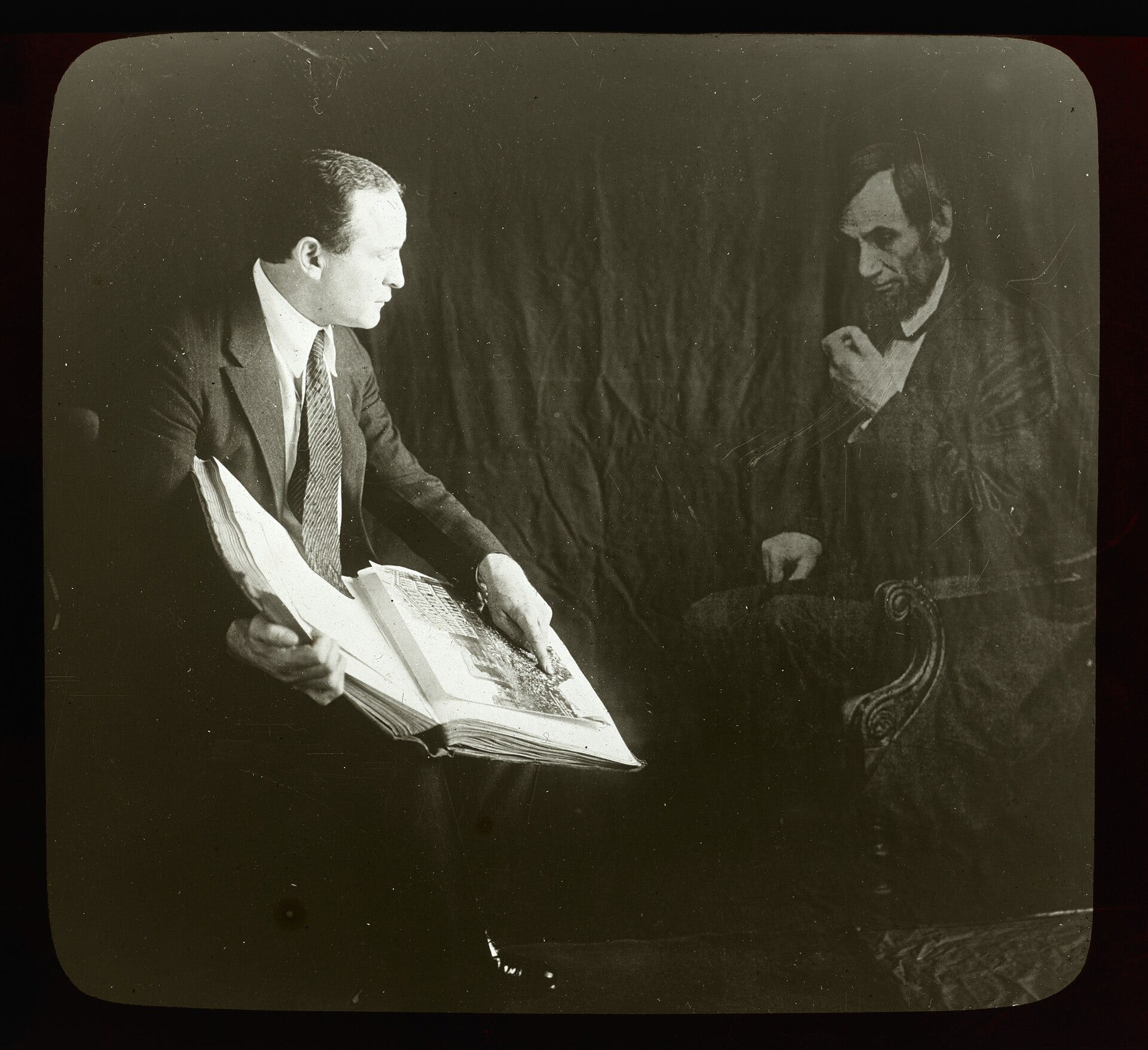
Because Houdini had spent years humiliating spiritualist mediums, a darker story took hold: that vengeful spiritualists arranged his death, with Whitehead as their instrument. There is obviously no evidence for it. Whitehead acted in the open, in front of witnesses, and was never charged; no plot was ever shown. But the resentment behind the theory was real. In his last years Houdini had waged a very public war on fraudulent mediums, exposing their tricks on stage, in print, and as part of a Scientific American committee that stripped the era's most celebrated psychics of their mystique. The campaign even cost him his friendship with Sir Arthur Conan Doyle, the creator of Sherlock Holmes and a devout believer in spirit contact. To the spiritualists Houdini had made fools of, his death on the most haunted night of the year could be read as a kind of verdict. The theory survives because it is satisfying, not because it is supported — a fitting epitaph for a man who spent his life proving that the supernatural was sleight of hand.
The Halloween Seances
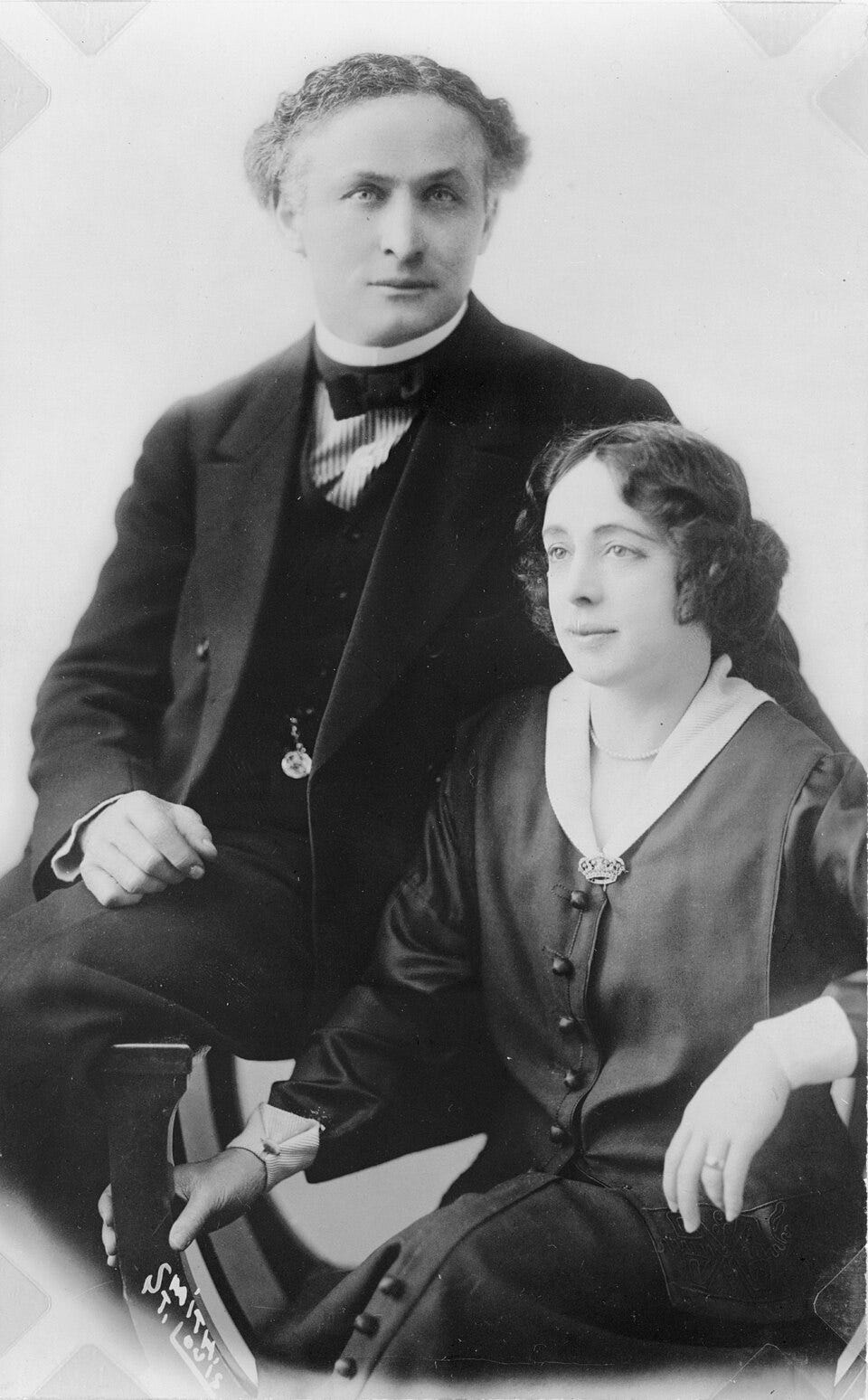
Houdini and his wife, Bess, had agreed on a secret code, the words "Rosabelle believe", so that if anyone could reach across death, they would know it was really him. For ten years Bess held a seance every Halloween and waited. He never came through. In 1936 she put out the candle for the last time, saying ten years was long enough to wait for any man. Magicians still hold the seance each Halloween, now as tribute rather than hope.
The Funeral
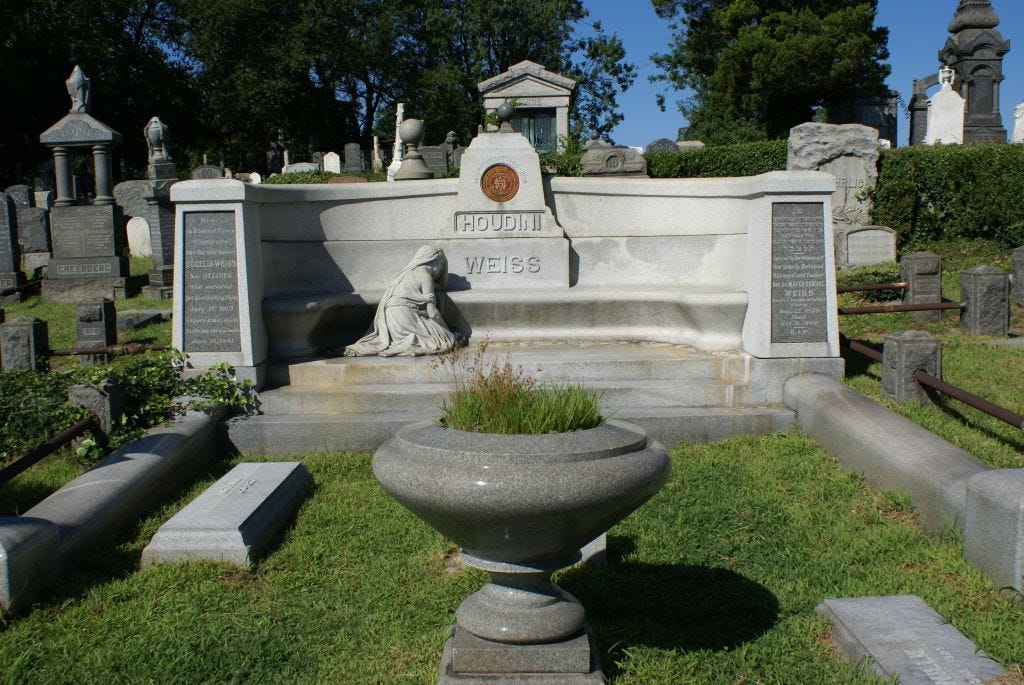
Houdini’s body was carried home to New York by train. On November 4, 1926, some two thousand mourners crowded his funeral, and he was buried at Machpelah Cemetery in Queens and laid by his own arrangement, in the bronze coffin he had built for a buried-alive escape he never got to perform. Fellow magicians broke a ceremonial wand over the grave, a rite the Society of American Magicians still performs for its dead today.
A Century On
The centennial has brought Houdini back into the daylight. Detroit, where he died, is marking 100 years with museum events and escapes.4 Appleton, Wisconsin, which claims him as a hometown son, has declared a "Year of Houdini," installed a historical marker, and drawn magicians for record-setting escapes.5 A hundred years after a student's punch and a burst appendix ended him on the one night of the year built for the uncanny, the greatest escape artist who ever lived is still, in his way, refusing to disappear.
Andrews, Evan. "What Killed Harry Houdini?" History.com. https://www.history.com/articles/what-killed-harry-houdini.
"Harry Houdini." Wikipedia, Wikimedia Foundation. https://en.wikipedia.org/wiki/Harry_Houdini.
"Magician Harry Houdini died in Detroit 100 years ago this Halloween." FOX 2 Detroit (Associated Press), Oct. 2026. https://www.fox2detroit.com/news/magician-harry-houdini-died-detroit-100-years-ago-halloween.
"Detroit marks 100 years since Houdini's death with a week of spooky spectacle." ClickOnDetroit, Oct 15, 2026. https://www.clickondetroit.com/live-in-the-d/2026/10/15/detroit-marks-100-years-since-houdinis-death-with-a-week-of-spooky-spectacle/.
"Appleton launches 'Year of Houdini' celebration leading up to the 100th anniversary of his death." NBC 26, Oct 30, 2025. https://www.nbc26.com/appleton/appleton-launches-year-of-houdini-celebration-leading-up-to-100th-anniversary-of-his-death.