


Background
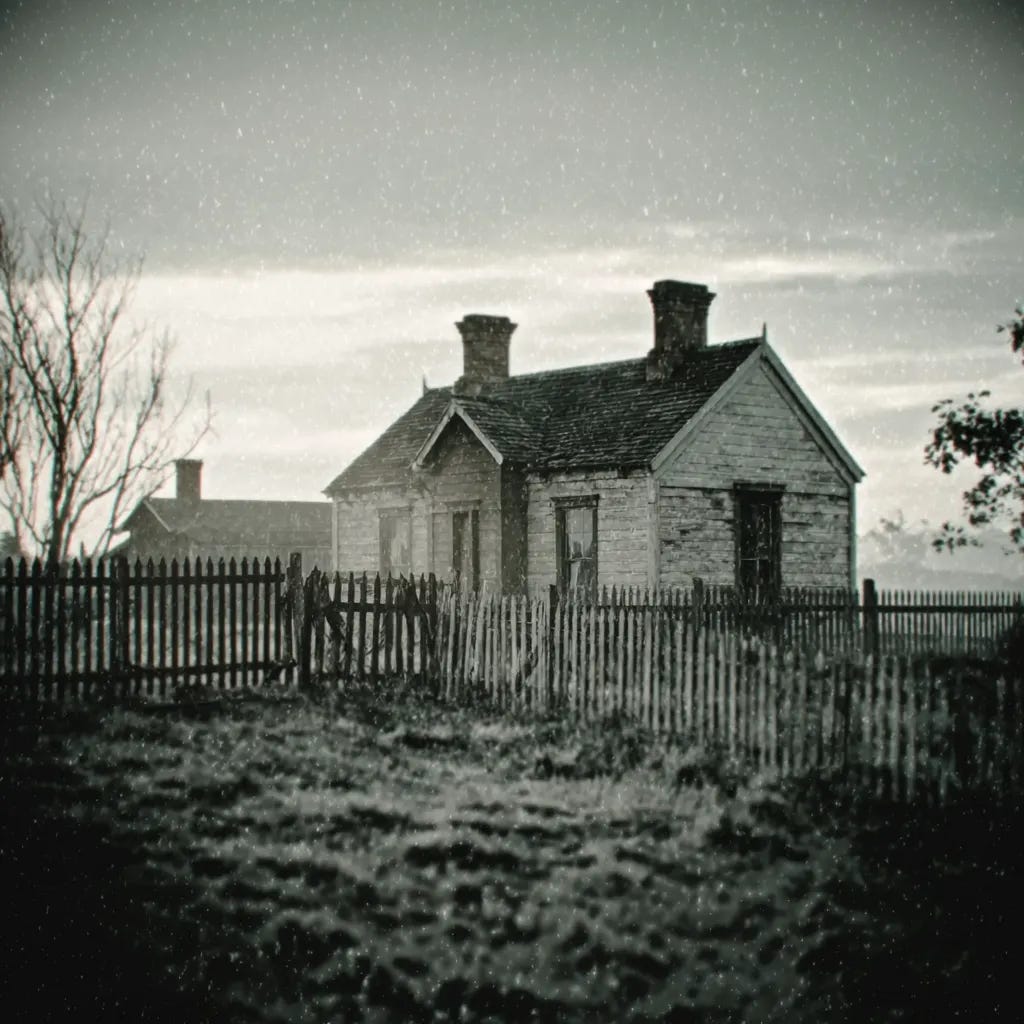
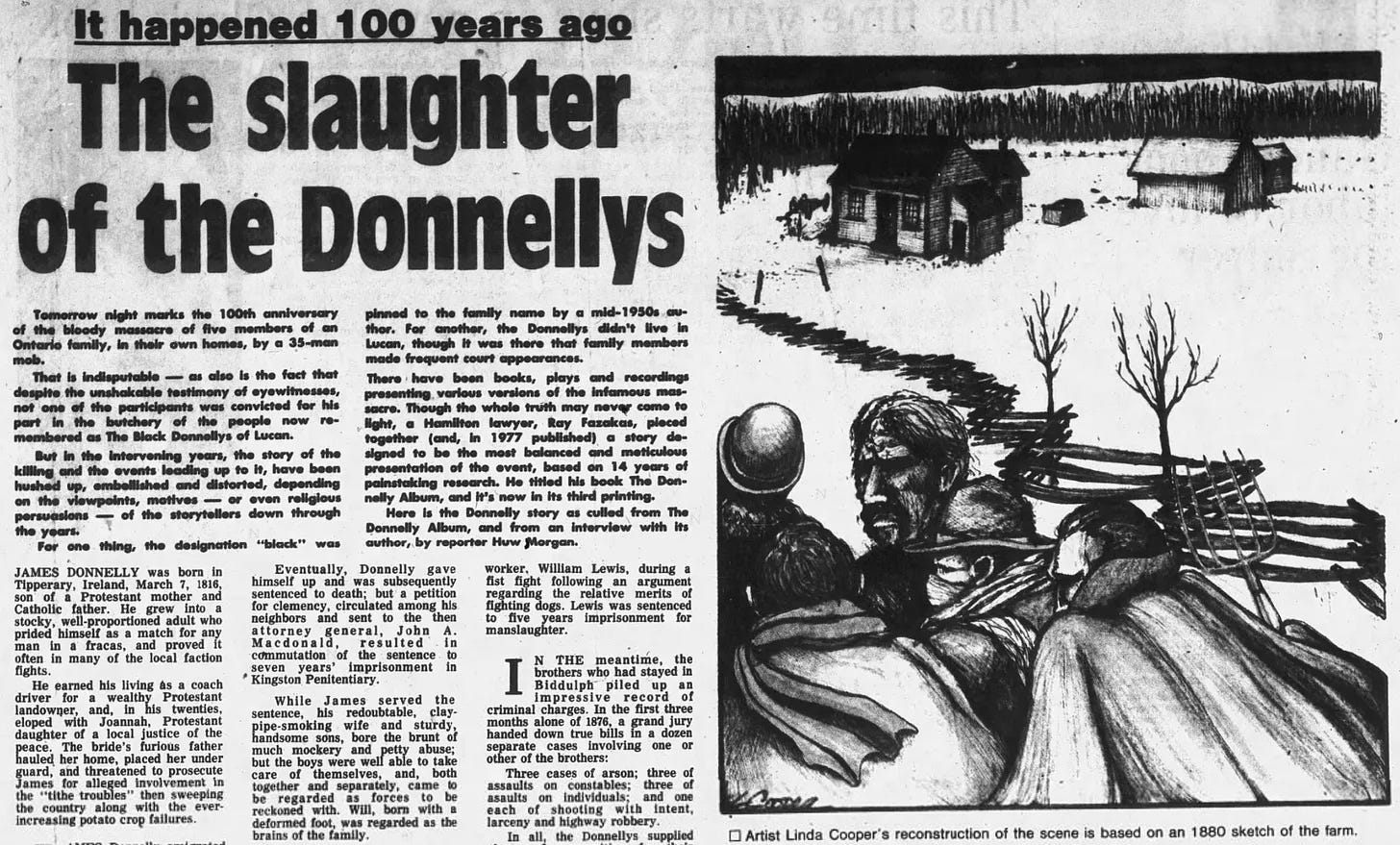
In 1880, citizens of Biddulph Township, a small settlement in Upper Canada (later Ontario), were shocked by the massacre of five members of the Donnelly family. Two women and three men were brutally attacked by a mob intent on vigilante “justice.”
Most of the victims were bludgeoned to death in a drunken frenzy, with even the local constable taking part. For years afterward, the attack was suppressed because many people had relatives who either took part in the attack or were members of the so-called Peace Society.
The Donnellys
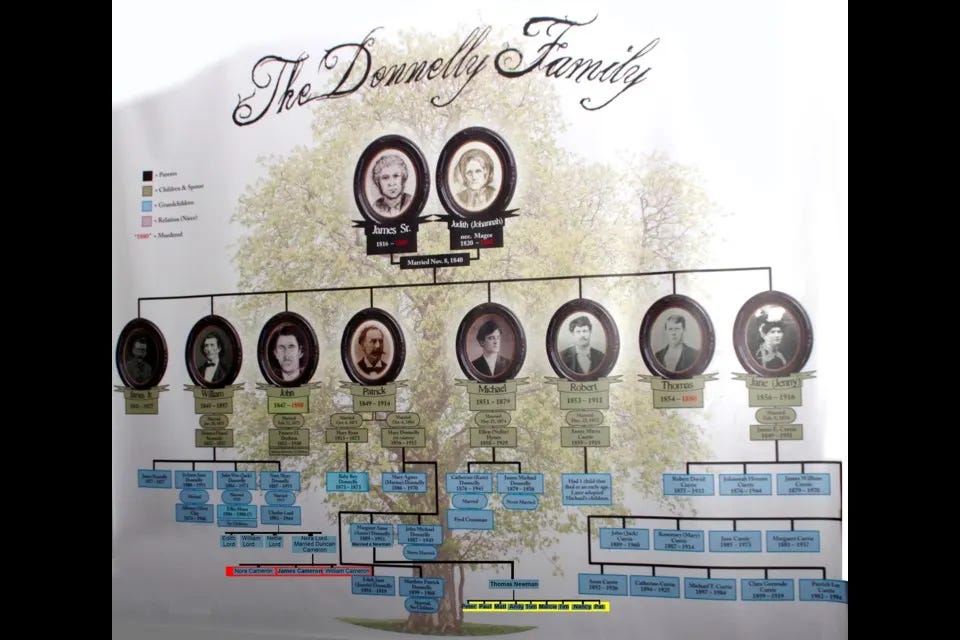
During the Great Famine of the mid-19th century, the Donnelly family, like many of their countrymen, left Ireland for a new start and a better life. The Donnellys were Irish Catholics who settled near Biddulph Township sometime around the 1840’s near a town named Lucan. The family consisted of James, his wife, Johannah, their first son, James, born in Ireland, and seven children born in Canada: William, John, Patrick, Michael, Robert, Thomas, and Jennie.
The Donnellys were known as “Blackfeet” Irish, Catholics who lived peacefully without resisting the English or Protestants. The nickname followed them to Canada, where they were known as the “Black” Donnellys. In contrast, “Whiteboys” were Catholic Irish who opposed English occupation. “Black” Irish were often considered traitors, more despised than Protestants.
The family settled in an area with a high concentration of Irish Catholic immigrants in a predominantly Protestant area. There were already plenty of bitter feelings between the settlers based on religious differences, and the arrival of the Donnellys would further increase tensions.
Growing Tensions
Part of the problem was that the Donnellys settled on land they didn’t own. At that time, many people gained land and farms through “squatting,” the practice of taking over land without legal ownership. The law at the time allowed “adverse possession,” meaning squatters could often gain legal rights to the land by making improvements.
The Donnelly family settled on land belonging to the Canada Company. They worked the land, making improvements, felling trees, and building a home over the next ten years. The only problem was that the land belonged to a man named James Grace. Another immigrant, Patrick Farrell, leased part of the land from the Donnellys.
In 1856, Grace wanted his land back. He brought an ejectment to the Court of Common Pleas in Huron County. His claim was that both the Donnellys and Farrell were squatting on his land. The judge recognized the years of the Donnellys’ work and granted them fifty acres. He split the rest of the lot to Patrick Farrell, leading to bitter feelings.
Imprisonment of James Donnelly
On June 27, 1857, violence erupted during a barn-raising. James Donnelly (the father of the clan) and Patrick Farrell got into a fist fight. Farrell suffered a blow to the head and died two days later. Fearing the worst, James went into hiding. He managed to evade the law for two years until he eventually surrendered. A judge sentenced him to hang for the murder of Farrell.
His wife, Johannah, fearing to face life alone with eight children, petitioned the courts for clemency. To her relief, and James’, the sentence was reduced to seven years in the Kingston Penitentiary.
While James was in prison, his sons began to develop a bad reputation among local law enforcement, allegedly being involved in numerous assaults and altercations.
Stagecoach Feud
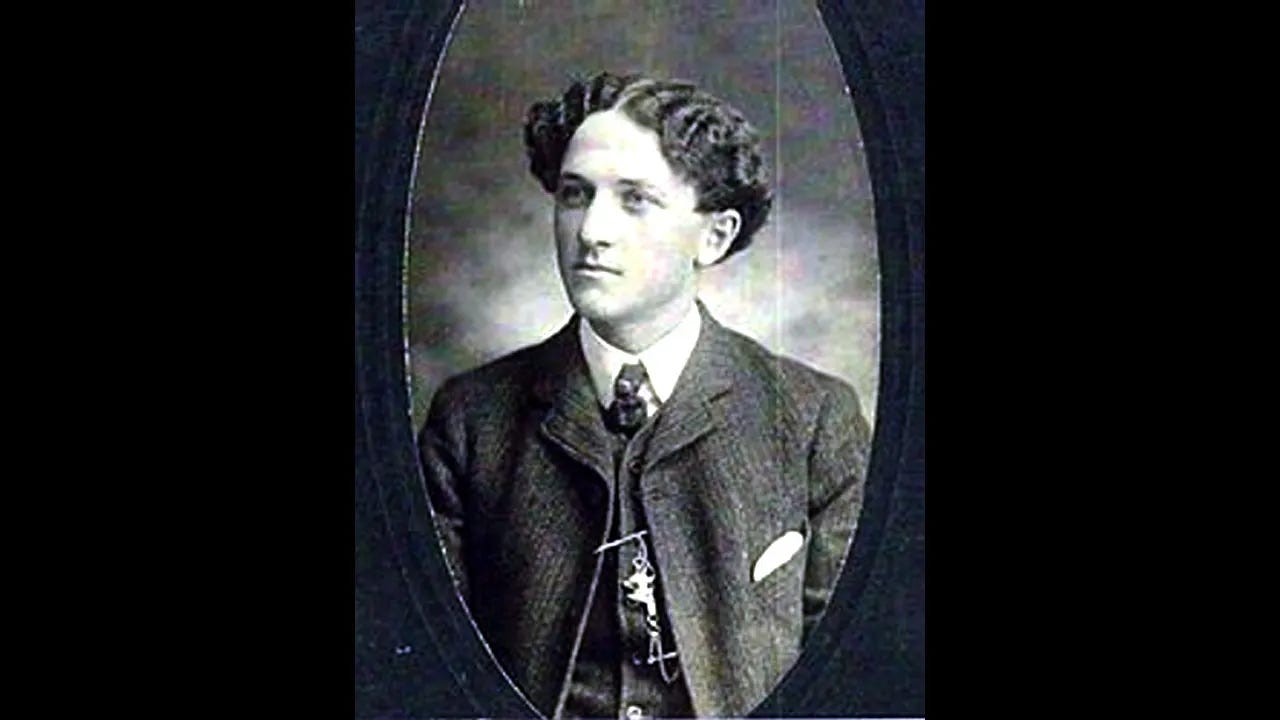
In 1873, the Donnelly brothers, William, Michael, John, and Thomas, began a stagecoach line that quickly outrivaled any other stage line in the area. Soon, other stage lines began to feel pressure from the competition. In October 1873, Hawkshaw Stage Line sold out to Patrick Flanagan, a man determined to drive the “Black” Donnellys out of business.
Shortly after, the great “Stagecoach Feud” began. Stages were smashed or burned, horses beaten or killed, stables burned to the ground. While most of the violence was blamed on the Donnellys and gave the family a further bad reputation, there were few, if any, actual convictions.
Although there were few formal charges, the Donnellys were a source of constant friction in the area.
Peace Society Vigilantes
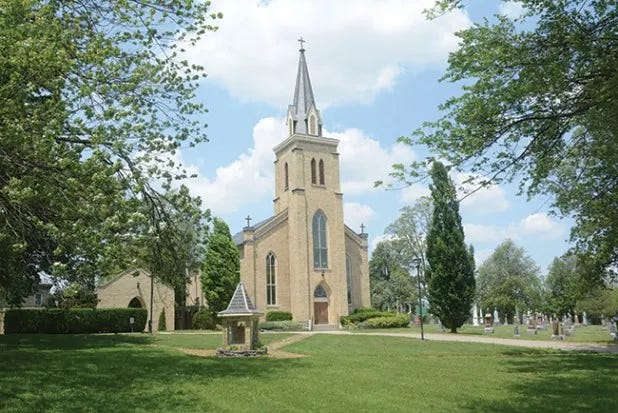
In June 1879, Father John Connolly, the priest at St. Patrick’s Roman Catholic Church, hoped to ease some of the tensions in the area. He established a Peace Society Association in Biddulph and invited everyone to pledge their support. One condition he set was that anyone who joined would consent to having their homes searched for stolen property. To no one’s surprise, the Donnellys refused.
This caused the Donnellys to leave St. Patrick’s and join another nearby church. They viewed Father Connolly as part of the problem rather than the solution. James and his family disagreed with Father Connolly’s hardline anti-Protestant stance, as many of the Donnellys ’ friends and neighbors were Protestant.
In August 1879, a militant splinter group broke away from the Peace Society. They became known as the Vigilance Committee Society. Most members, including Constable James Carroll, had strong grievances against the Donnelly family.
On the evening of February 3, 1880, the members of the Vigilance Committee gathered at the Cedar Swamp Schoolhouse in Biddulph. Earlier that month, a man named Patrick Ryder’s barn burned down. Like many arsons in the area, the Donnellys were blamed, though there was no evidence to confirm this.
Father Connolly of St. Patrick’s Church offered a reward for any guilty parties to be found and punished. But this didn’t go far enough for the members of the Vigilance Committee. They decided to take the law into their own hands.
Several of the Donnelly sons had been seen at a wedding when Ryder’s barn burned. Their father, James Donnelly, sent a letter to a lawyer in London, Ontario, who would defend them in the case against Mr. Ryder. James planned to file countercharges against Ryder.
After mailing his father’s letter, John Donnelly left to spend the night with his brother, Will, who promised to loan the family a cutter to travel to the trial the next day. The trial was scheduled for February 4th.
First Attack
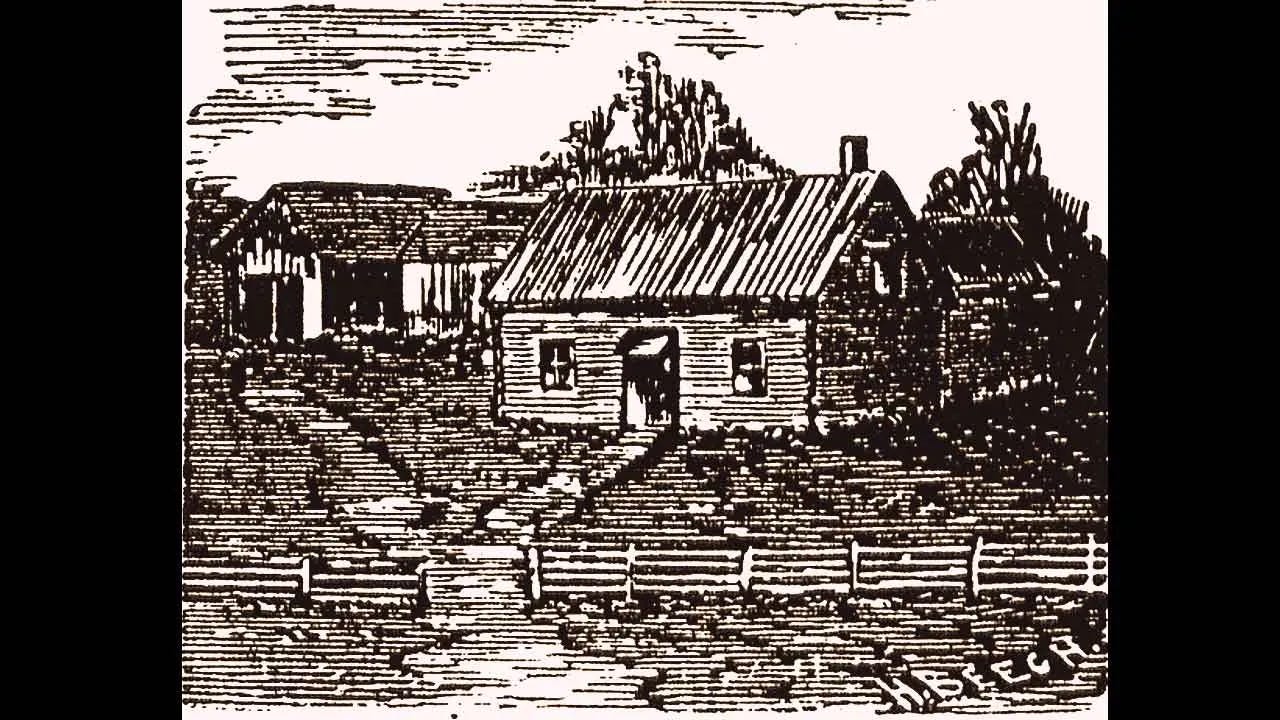
Around 1 a.m., on February 4th, after drinking heavily to work up their courage, a gang of more than twenty-five men marched to the Donnelly homestead. They carried firearms, a pitchfork, an axe, shovels, clubs, and shortened wooden stakes made of cordwood.
The original plan had been to take the members of the family, hang them until they confessed their wrongdoing against neighbors, and then free them to face legal punishment. The trouble was that no one quite figured out how to do this.
As the vigilantes arrived at the Donnelly homestead, they sent Constable James Carroll inside. He was given handcuffs by Constable Hodgins. Carroll then handcuffed Tom Donnelly while he was still in bed, sleeping. When Tom jolted awake, Carroll announced he was under arrest.
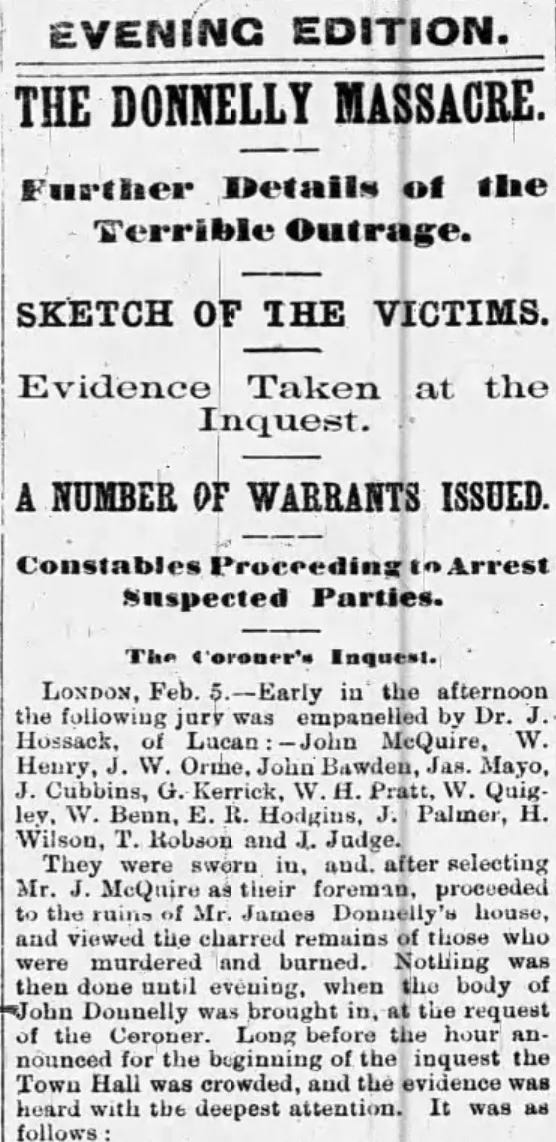
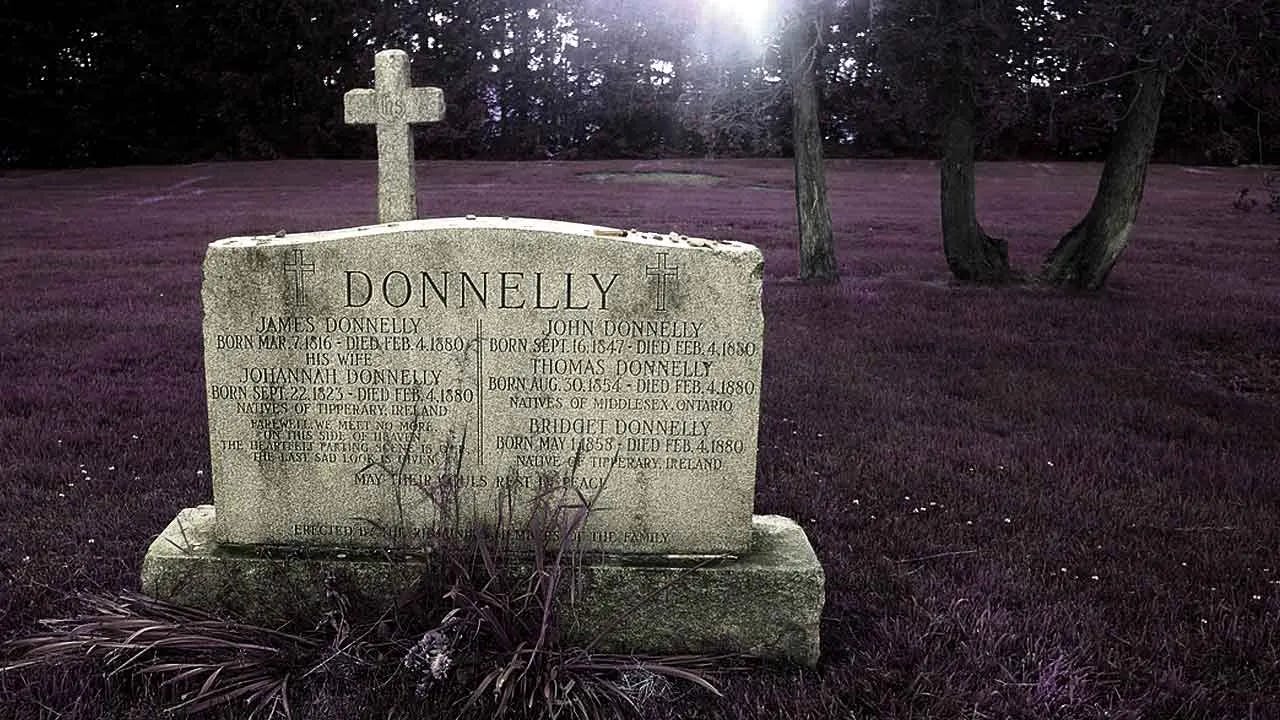
Tom’s cries of protest woke his father, James, his mother, Johannah, and her twenty-two-year-old niece, Bridget, who had spent the night. When Tom’s father, James, questioned why his son was being arrested, he was dragged into the kitchen and beaten to death with wooden clubs.
Johannah Donnelly fought hard for her life but was eventually beaten to the floor by Constable Carroll. She was left dead on the kitchen floor. The vigilantes then realized they could not find Bridget, who had hidden in the attic when the initial attack began. After searching the house, they found her and beat her to death.
After momentarily breaking free from the attackers, Tom Donnelly rushed out the door, but was met by one of the vigilantes, Tom Ryder, who thrust a pitchfork into his chest. He was then dragged back into the kitchen, where his skull was bashed with a shovel to ensure that he was dead. His handcuffs were then removed.
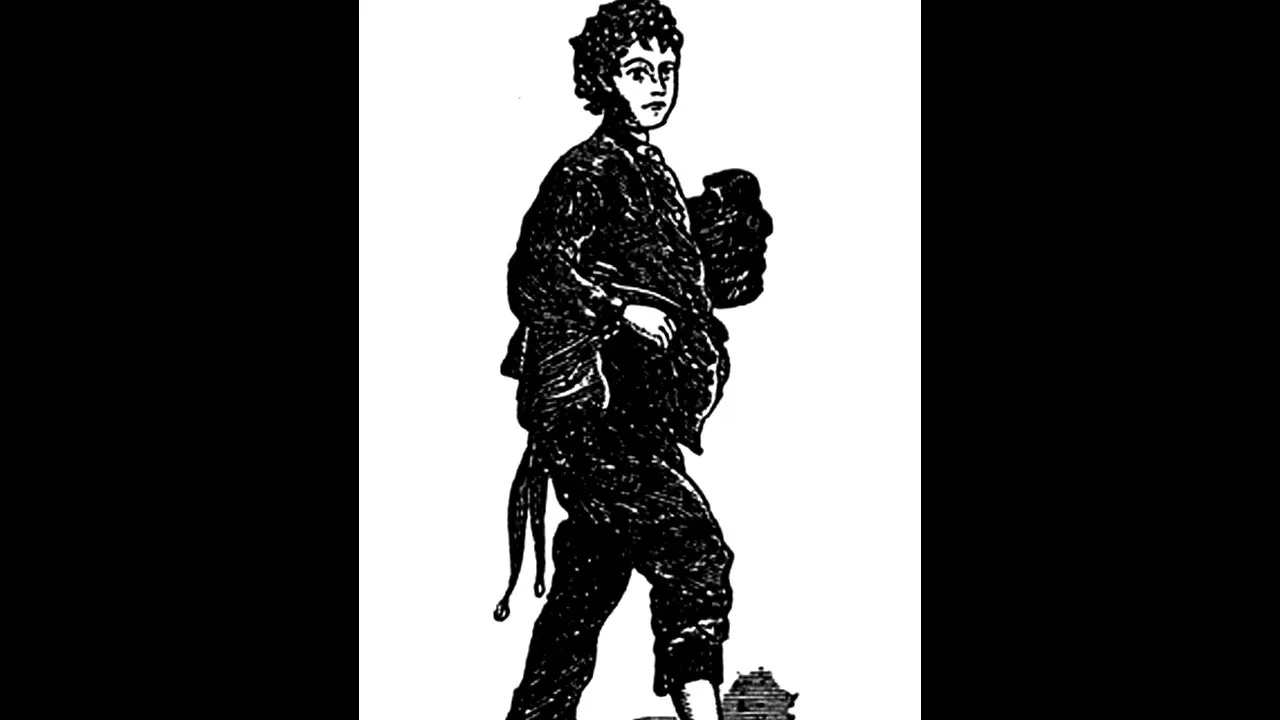
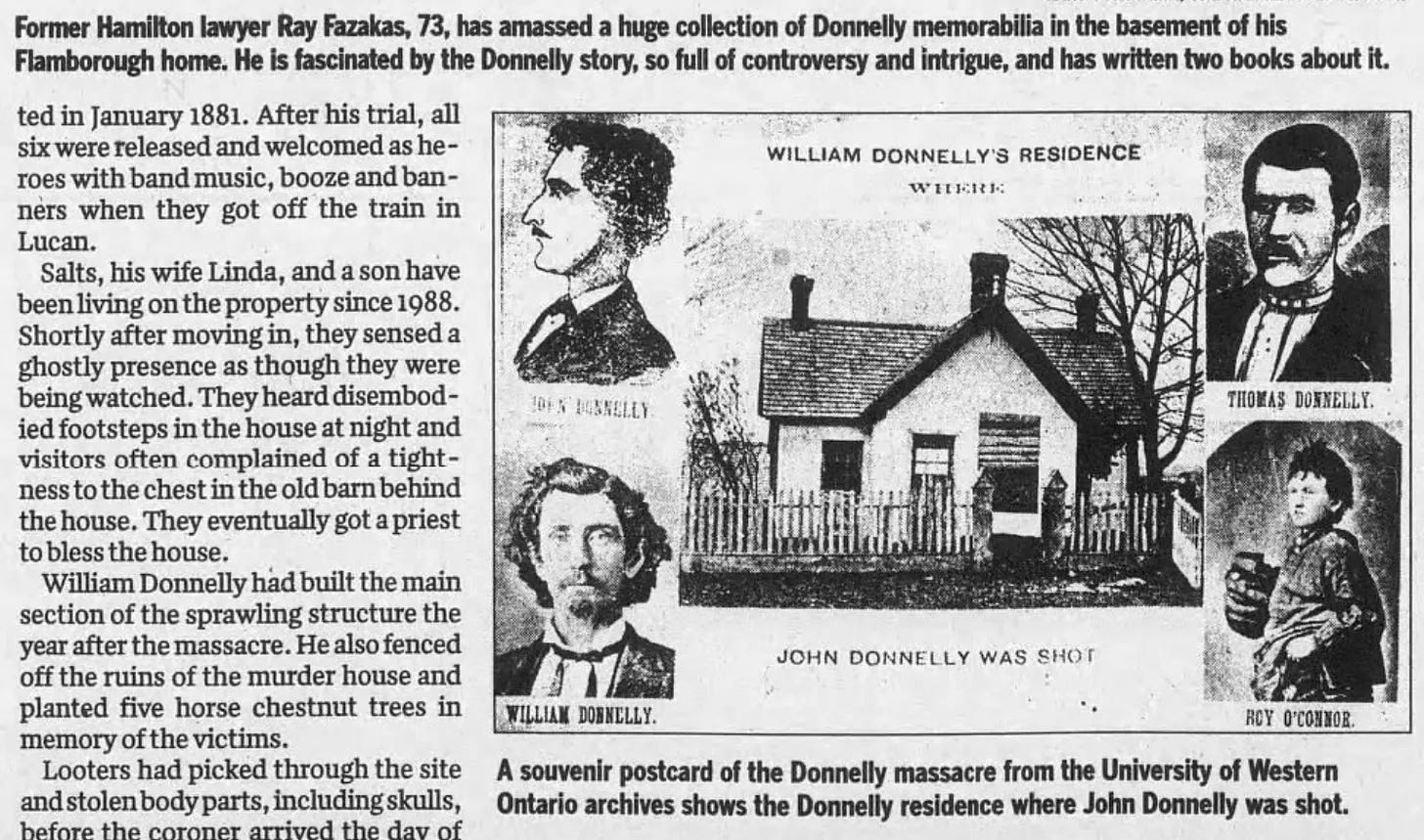
Leaving the bodies in the kitchen, the mob set fire to the house, burning the evidence. Or so they thought. What none of them knew was that young Johnny O’Connor, a neighbor, had spent the night to help with morning chores. At the first sign of commotion, he’d hidden under John Donnelly’s bed, a witness to the horrific events of the night. When the fire began, he was able to escape.
Second Attack
The vigilantes weren’t through yet. Their plan had been to eliminate all of the Donnellys on the same night, and they expected John Donnelly to be home, but found his bed empty.
They decided to go to Whalen’s Corner, the home of Will Donnelly, to kill him. By the time they arrived, the men were beginning to have second thoughts. They weren’t as daring as they’d been during the first massacre. Instead of storming the Will Donnelly homestead, they try to force him to come outside.
They thought that if they beat and killed his horse, he would come running out once he heard the animal in distress. However, because the stables were set far back from the house, no one inside heard the horse’s cries.
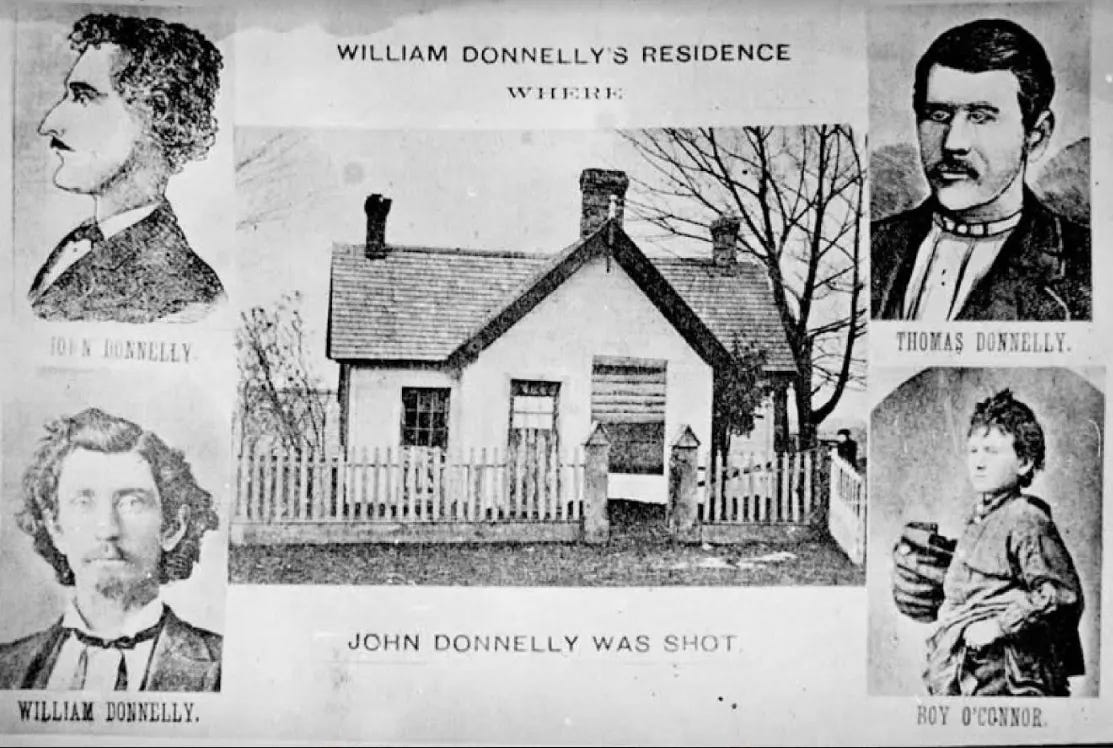
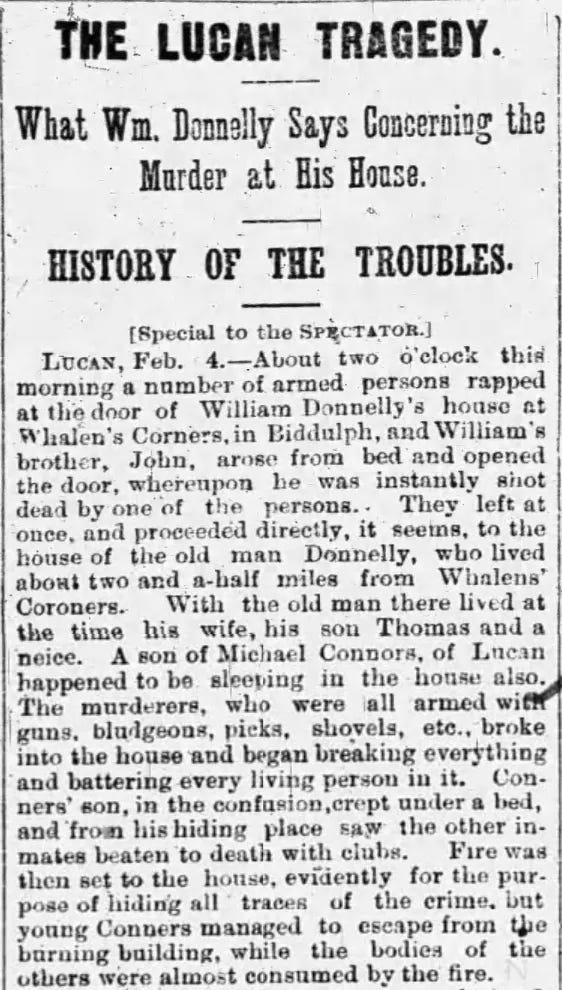
After the men began yelling Will’s name, John came to the door and was hit by dozens of bullets fired by the vigilantes. After he fell to the ground, John was shot seven more times. Norah Donnelly, Will’s wife, heard the shots, ran out, and tried to drag John’s body into the house.
Will stayed safely hidden and looked out the window, getting a good look at the attackers. Eventually, Norah and a hired hand managed to drag John into the house, where he died. Surprisingly, none of the attackers fired a shot at Norah.
After three hours of shouting, shooting, and torment, Jim Feeheley, one of the mob, announced, “There’s been enough bloodshed tonight. Let’s go home.”
Trials
While the vigilantes hoped to do their violence in secret, they left behind two credible witnesses – Johnny O’Connor, who witnessed the horrific scene at the Donnelly homestead, and Will Donnelly, who witnessed the murder of his brother.
There were two trials. Although Johnny O’Connor made an excellent witness, the vigilante society did everything to make him “forget” his testimony. They harassed his parents, going so far as to burn down one of his father’s rental properties. Still, Johnny never backed down. He knew what he’d seen, and he wasn’t afraid to say so.
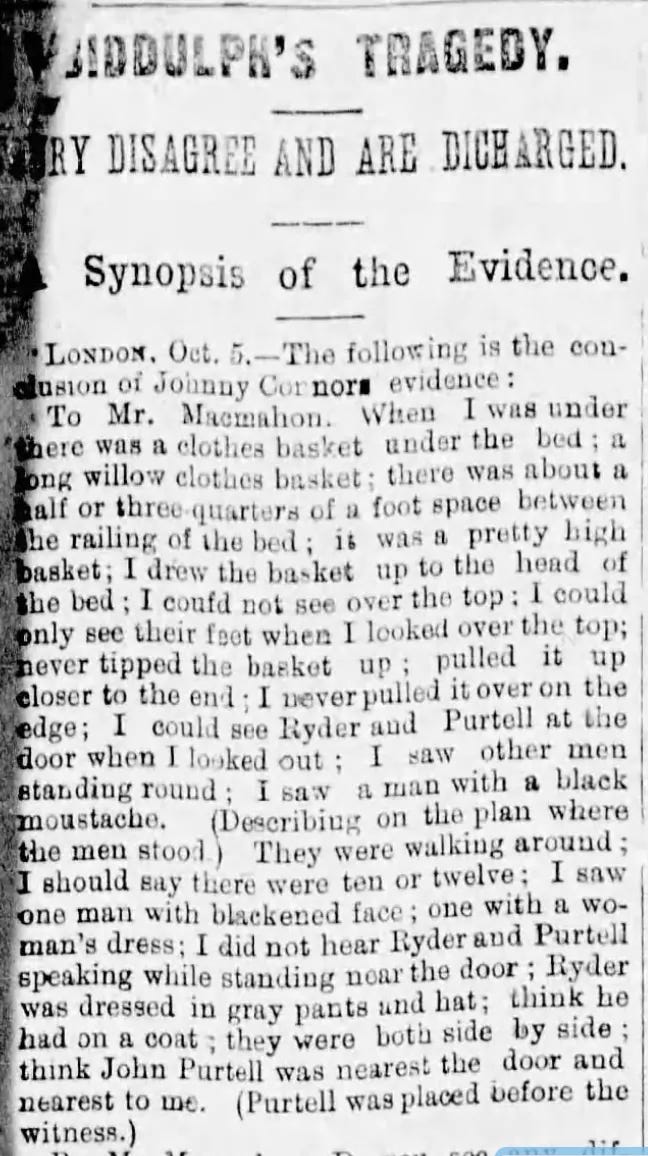
The first trial took place on Monday, October 4, 1880, in London, Ontario. Constable James Carroll stood trial for the murder of Johannah Donnelly. It ended in a hung jury. One juror went so far as to declare that he wouldn’t convict Carroll, even if he’d witnessed the killings himself. Ignoring the fact that Carroll bludgeoned Johannah to death in her own kitchen without being convicted of any crime.
The second trial ended in a not-guilty verdict as well. The prosecutor for the Crown, Charles Hutchinson, went so far as to state that hoping for a guilty verdict would be a waste of time and money. There were so many widespread negative feelings against the Donnellys; most people didn’t blame the Vigilance Society for their hatred. They considered it justice served, despite the brutality.
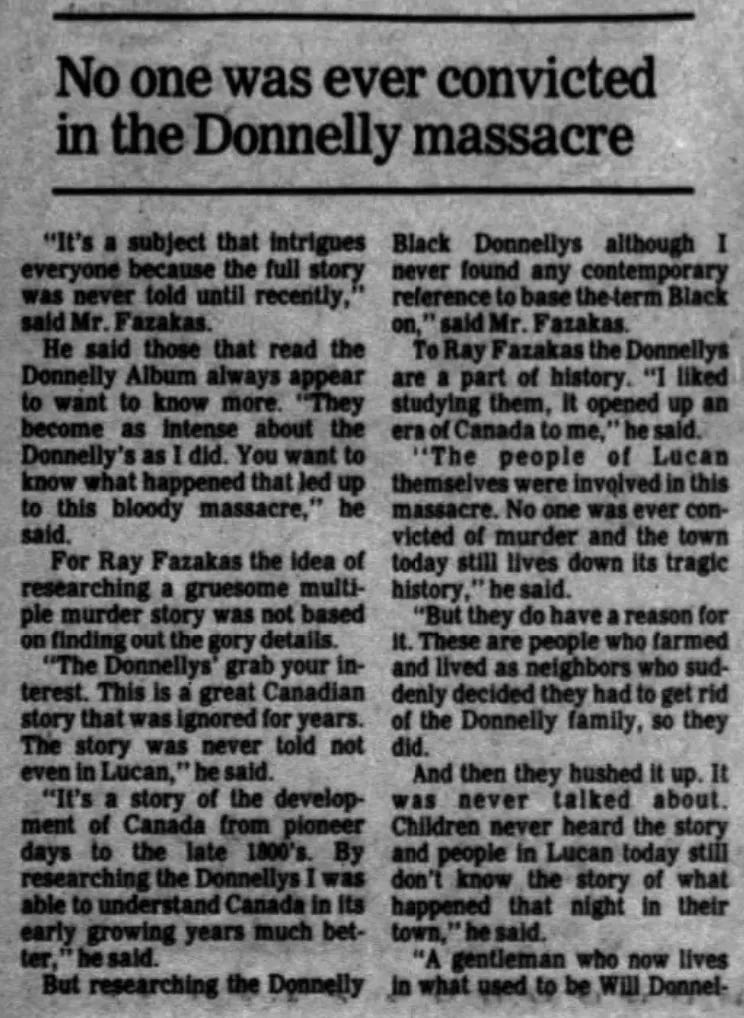
To date, no one has ever been convicted for the killings.
Aftermath
Although the story of the Donnellys and the massacre was widely known by word of mouth in Canadian folklore, it was often suppressed as well. In the area around Biddulph Township and Lucan, many townspeople tried to keep the story hidden. Even people born in the area never heard about the massacre until they were adults. The reason people spoke in whispers was the large number of ancestors who had taken part in the massacre or were involved in the Peace Society.
A newspaper headline from February 1880 had this to say about the event: “The massacre of the Donnelly family, in the township of Biddulph, by an armed mob, is a crime which has no parallel in the history of Canada.” It was the shameful secret no one wanted to admit had happened.
However, the legacy of the Donnelly massacre lives on in the numerous books, short stories, plays, songs, and other media that have immortalized the family’s troubled and violent history. There have also been numerous reported sightings of ghosts and other supernatural phenomena near the site of the massacre, further adding to the mystery of the Donnelly legend.
Sources:
The Massacre of the “Black Donnellys” The Massacre — The Black Donnellys: Canada’s Tragic Roustabouts — Crime Library. (2015). Crimelibrary.org. https://crimelibrary.org/notorious_murders/family/ donnelly/5.htm
Episode 126: The Black Donnellys Scott, E. (2025, July). Episode 126: The Black Donnellys. Historical TrueCrime. https://www.historicaltruecrime.com/post/episode-126-the-black-donnellys
Canadian Folklore: “Black” Donnellys Wilson, T. (2022, November 11). Canadian Folklore: “Black” Donnellys. Wanderlust Canadian. https://www.wanderlustcanadian.com/post/canadian-folklore-black-donnellys

The part that chills me most is that the local constable walked into the house with the mob. When law enforcement joins the lynch party, "vigilante justice" stops being a contradiction — it becomes policy. And then two trials, two acquittals, nobody ever convicted. The Donnellys' real crime seems to have been refusing to be driven off. A whole township decided murder was easier than a courtroom.