

Behind The Veil: The Mystery of Germany's "Dark Countess"
For years, a wealthy and mysterious couple lived in the town of Hildburghausen, Germany. The woman, known as "The Dark Countess", lived in total secrecy with her true identity remaining a mystery

Background
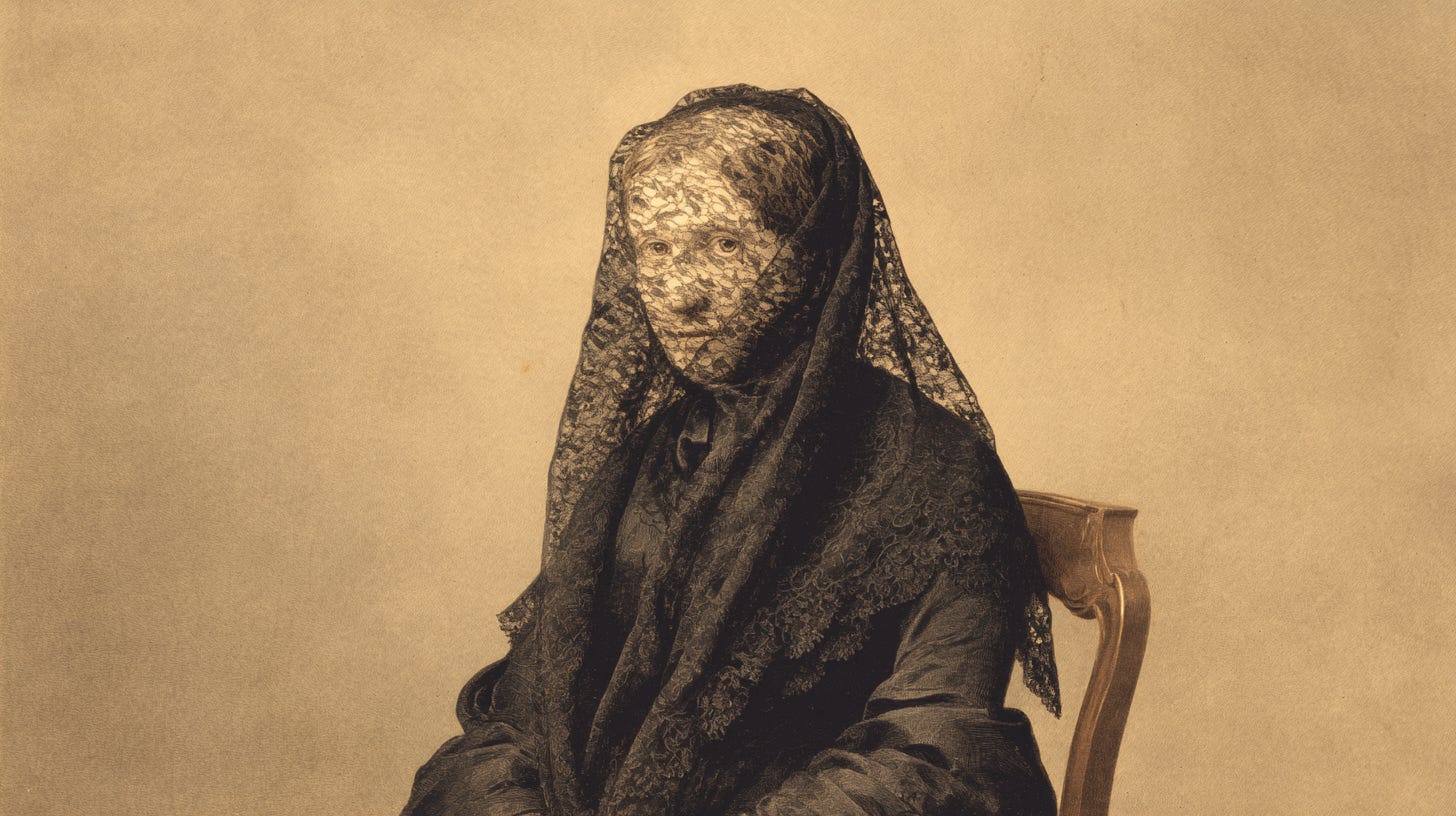
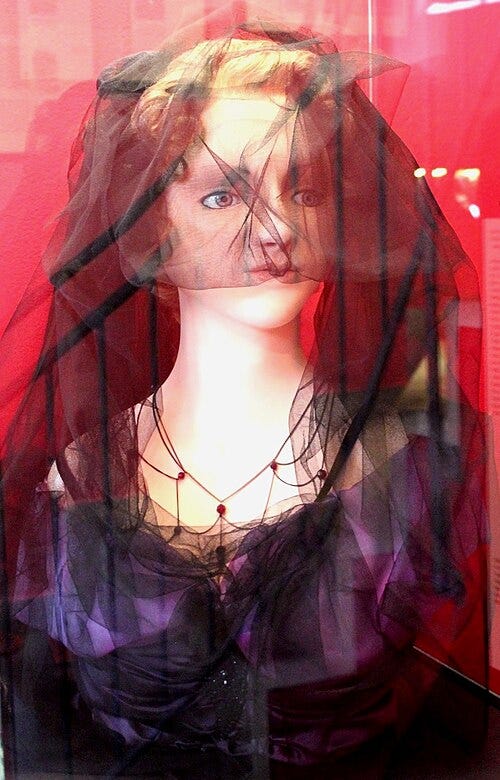
On February 7, 1807, a strange couple arrived in Hildburghausen, a quiet town in Thuringia, Germany. The man called himself Count Vavel de Versay. However, the woman with him gave no clear identity at all. Instead, she remained hidden beneath layers of dark clothing, her face veiled, avoiding visitors and living almost completely cut off from the outside world.
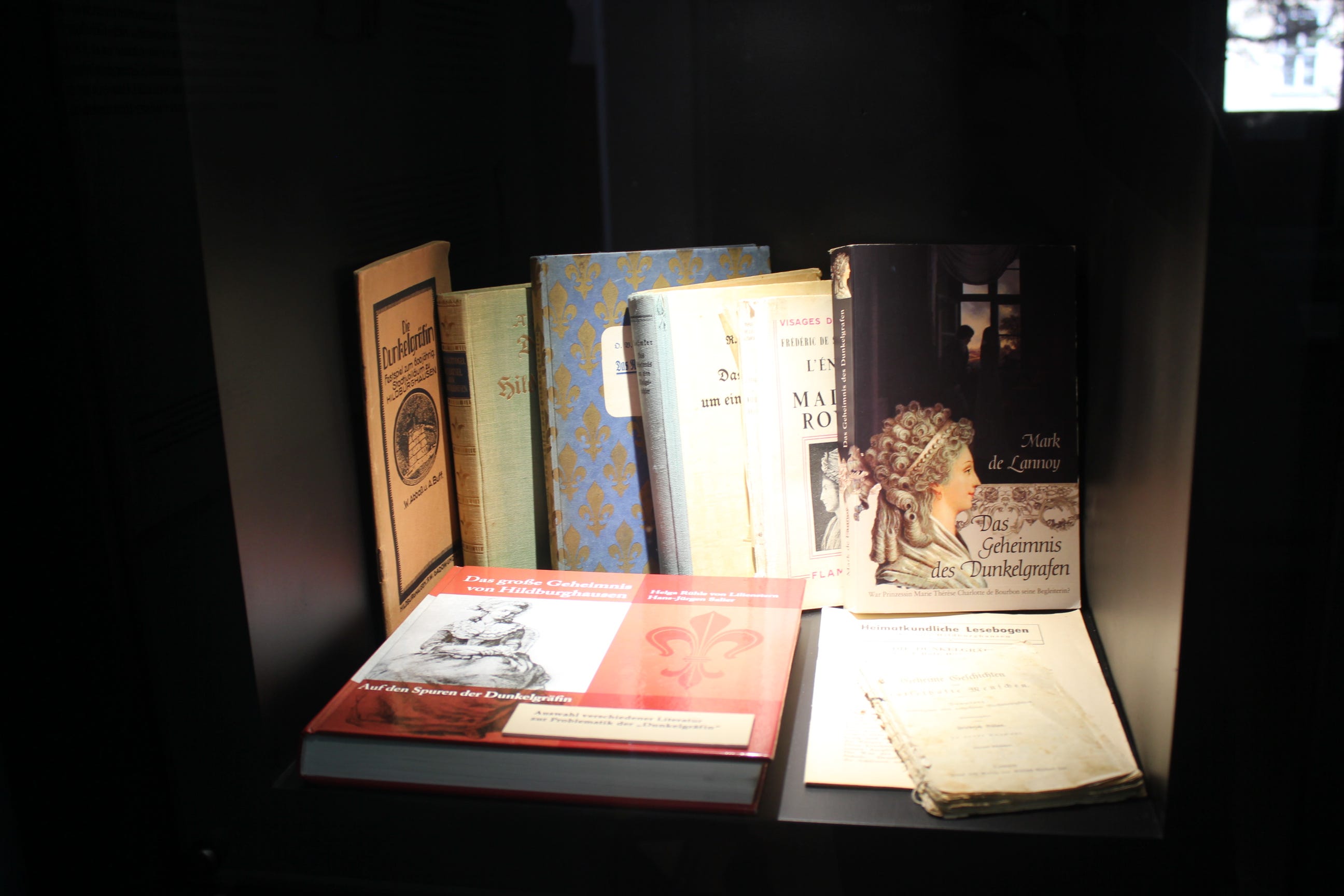
Soon, locals gave the pair names that matched their strange behavior: the Dunkelgraf and Dunkelgräfin, the Dark Count and the Dark Countess. Their secretive and strange behavior may have remained nothing more than local gossip if not for one extraordinary rumor.
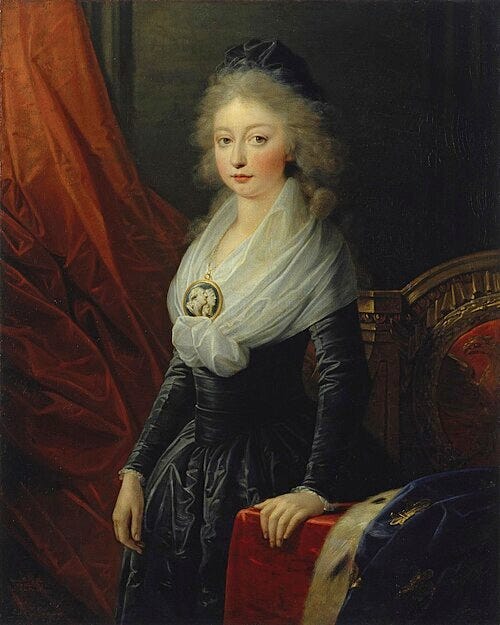
Some believed the veiled woman was none other than Marie-Thérèse Charlotte, the daughter of King Louis XVI and Queen Marie Antoinette, believed to have somehow survived the horrors of the French Revolution and returned to royal life.
A Mysterious Couple
The Dark Countess arrived in Hildburghausen on February 7, 1807. From the beginning, the couple drew attention because they seemed wealthy enough to live comfortably, but showed no interest in ordinary social life.
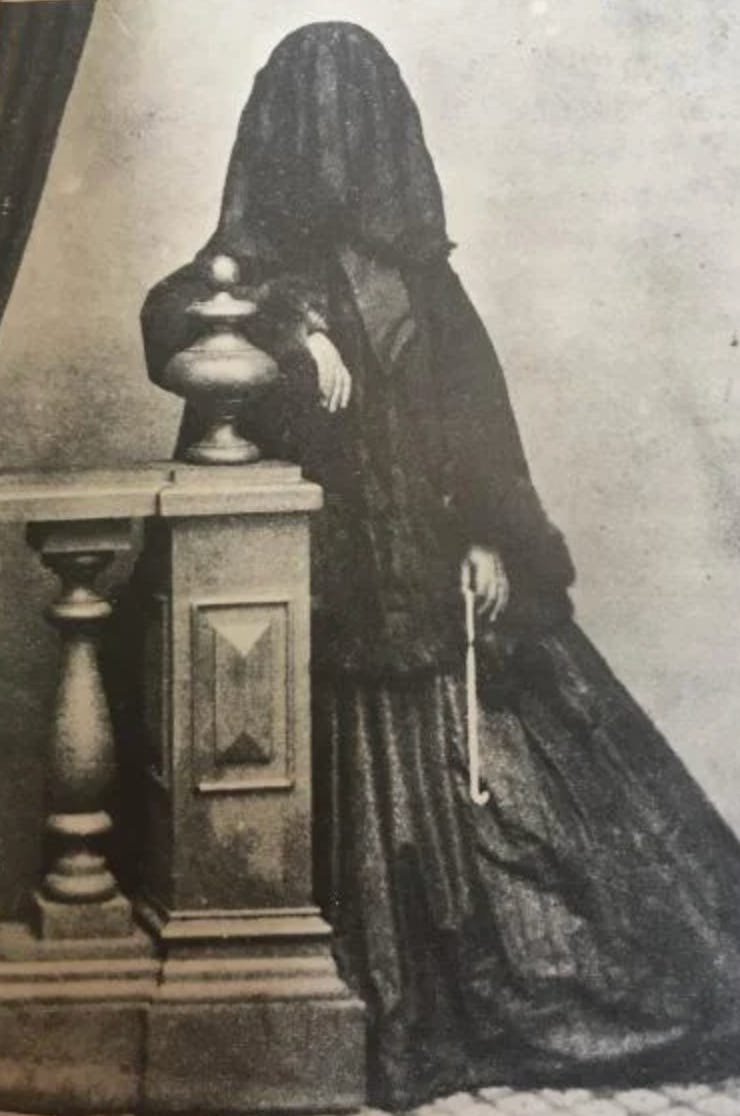
The man handled nearly all outside communication, while the woman remained almost invisible. She rarely appeared in public, and when she did, her face was covered. If she needed to travel, she usually did so in a closed carriage. This kind of secrecy was difficult to ignore in a small town. People knew the couple was there, but they did not know who they really were.
In 1810, the couple moved to the nearby secluded castle of Eishausen. The location offered them even more privacy, and they remained there for the rest of their lives. There, the Dark Countess continued her isolated existence, protected by the man who seemed determined to keep her identity hidden.
Years passed, but the mystery did not fade. If anything, the longer her identity remained hidden, the more people wondered what kind of secret required such careful protection.
Count Vavel de Versay
The man who called himself Count Vavel de Versay was later identified as Leonardus Cornelius van der Valck, born in Amsterdam in 1769, and had once served as secretary in the Dutch embassy in Paris from 1798 to 1799.
This background only made the mystery more intriguing. In the years after the French Revolution, Paris was full of exiles, political secrets, and individuals connected to the fallen French monarchy.
Van der Valck’s role in the Dark Countess’s life was unusual. He wasn’t a lover, nor was he introduced as her husband. Instead, he seemed more like a guardian than a companion. He managed her affairs, protected her privacy, and controlled access to her with extreme care. Whatever bound them together was strong enough for him to dedicate decades of his life to preserving her secrecy.
If the woman had been hiding alone, people might have assumed she was simply eccentric, ill, or troubled. But she was not alone. She had a protector with diplomatic experience who treated her identity as something that had to be guarded.
The Woman Behind the Veil
The mysterious woman known only as the Dark Countess was eventually identified as Sophie Botta, a single woman from Westphalia. Her earlier life remained difficult to trace, and the name did not answer the most obvious question: why had she lived for so long behind a veil?
She may have suffered from illness, disfigurement, emotional trauma, social disgrace, or some private scandal. She may simply have wanted to disappear from public life. Not every hidden person is hiding a royal secret. Still, her behavior was extreme. She avoided visitors, hid her face, and lived under the protection of a man who refused to reveal much about her.
Her secrecy was not casual. It was disciplined and carefully maintained. The mystery was not only that she had a hidden past. It was that every part of her life seemed arranged to prevent anyone from discovering it.
The Princess at the Center of the Legend
One of the most enduring theories about the Dark Countess was that she was actually Marie-Thérèse Charlotte, the surviving daughter of Louis XVI and Marie Antoinette.
Marie-Thérèse Charlotte was born at Versailles in 1778, into one of the most powerful royal families in Europe. But her life was marked by the brutal tragedies of the French Revolution. Her father was executed in January 1793. Her mother was executed later the same year, and her younger brother died in captivity in 1795.
By the time Marie-Thérèse was released from prison, she had lost nearly her entire family. According to accepted history, she left France, later married Louis Antoine, Duke of Angoulême, and remained a known figure in Bourbon royal circles until her death in 1851.
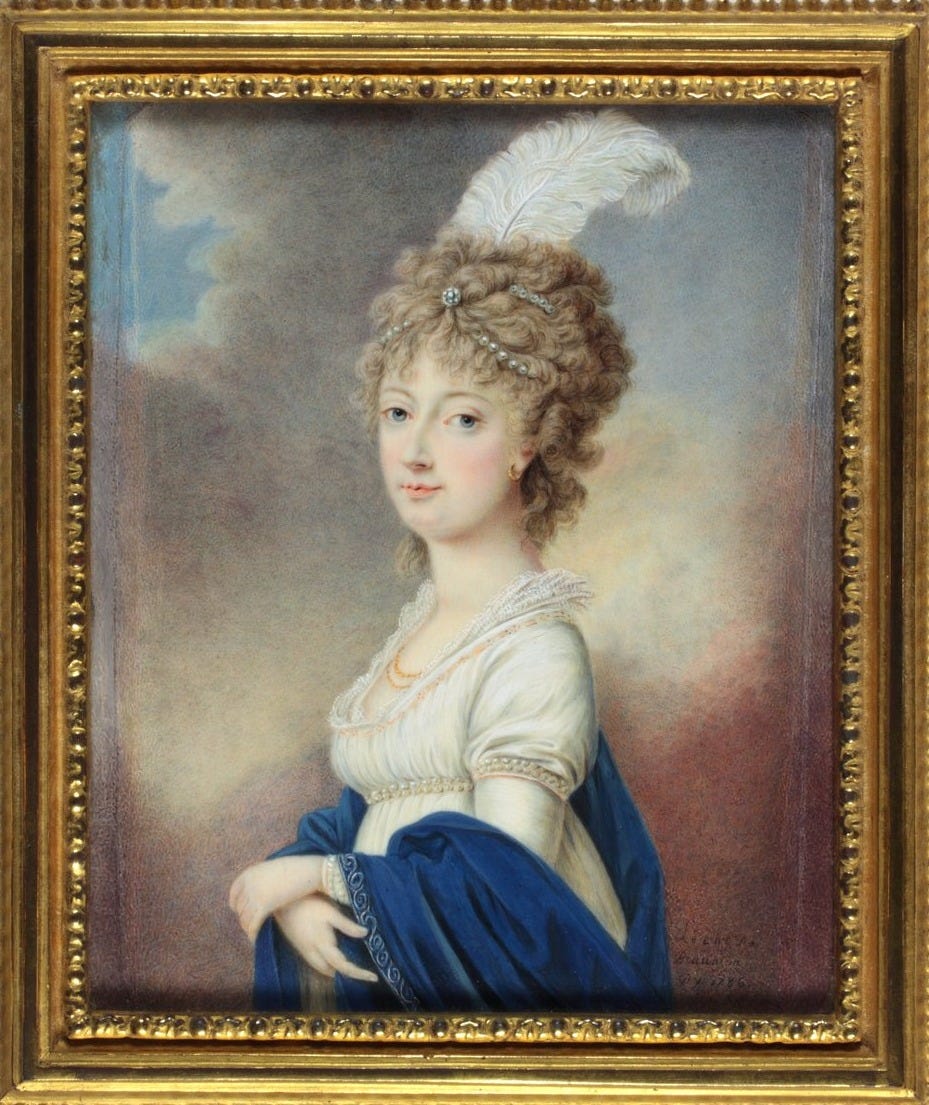
The royal identity theory challenged that version of events. Supporters of the theory believed the real Marie-Thérèse never returned to public life. Instead, they claimed she was secretly replaced by another woman, often named as Ernestine de Lambriquet, while the true princess was hidden away.
According to this theory, the woman who later appeared as the Duchess of Angoulême was not the real Marie-Thérèse. The real one, broken by trauma or protected for unknown reasons, became the veiled woman of Hildburghausen.
The theory survived because it connected two mysteries that seemed to fit together. On one side, there was the tragic history of Marie-Thérèse, a royal survivor who lost everything. On the other side, there was the Dark Countess, whose identity remained guarded by a man with diplomatic ties to post-revolutionary Paris.
For those who believed this theory, all of the pieces seemed to fit. From the release of Marie-Thérèse from prison, followed by the sudden, unexplained appearance of the strange and enigmatic Countess and the overly protective Van der Valck. The French Revolution had created enough chaos that almost anything seemed possible.
Some also pointed to claims that Marie-Thérèse seemed different after her release from prison. They argued that her personality, behavior, or appearance had changed. However, a young woman who survived imprisonment, the execution of both parents, and the death of her brother would obviously not emerge unchanged.
A Death Without Answers
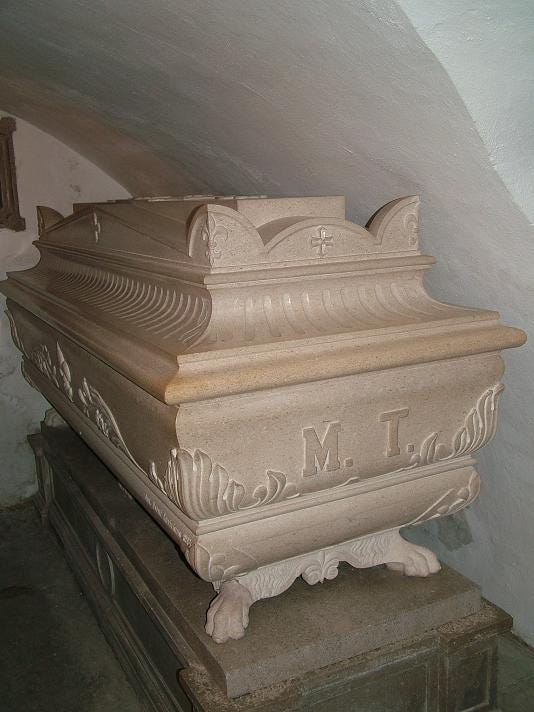
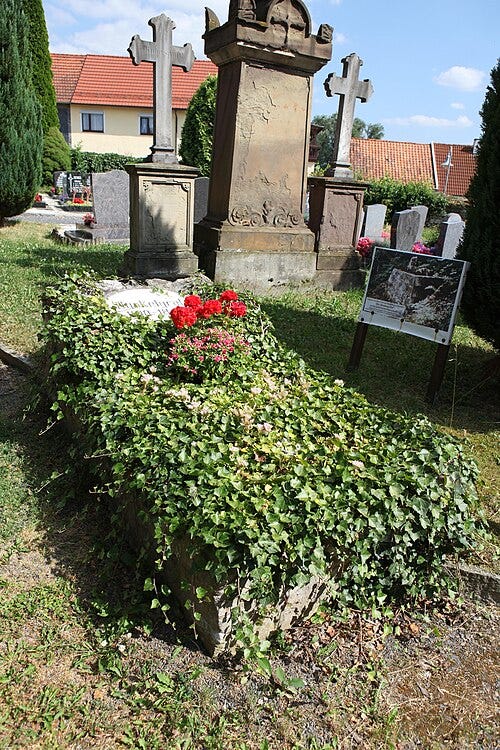
On November 28, 1837, the mysterious Dark Countess died. Her burial was unusually quick, and some accounts suggest it may have taken place without a religious service. Van der Valck gave her name as Sophie Botta, and a doctor reportedly estimated that she appeared to be about 60 years old. She was buried on Schulersberg hill, in a garden she had purchased years earlier.
However, even in death, the mystery did not end. After decades of secrecy, a simple name felt inadequate to capture the life she had lived. It did not explain the veil, the isolation, or the intense devotion of the man who guarded her.
Her protector and guardian, Van der Valck, died at Eishausen on April 8, 1845, and was buried in the churchyard. Whatever secrets he had about the Countess’s identity or past went with him to the grave.
The castle where the couple had lived was later demolished in 1873, removing the physical center of the story. What remained were records, rumors, graves, and a mystery that continued to attract attention long after both figures were dead.
DNA Testing
On October 15, 2013, the remains believed to belong to the Dark Countess were exhumed so researchers could finally test the most famous claim about her identity. If she truly was Marie-Thérèse Charlotte, her mitochondrial DNA should match the maternal line connected to Marie Antoinette.
Researchers compared DNA from the Dark Countess’s remains with maternal-line reference samples connected to Marie Antoinette’s family, including DNA linked to Louis XVII’s heart and a living maternal descendant.
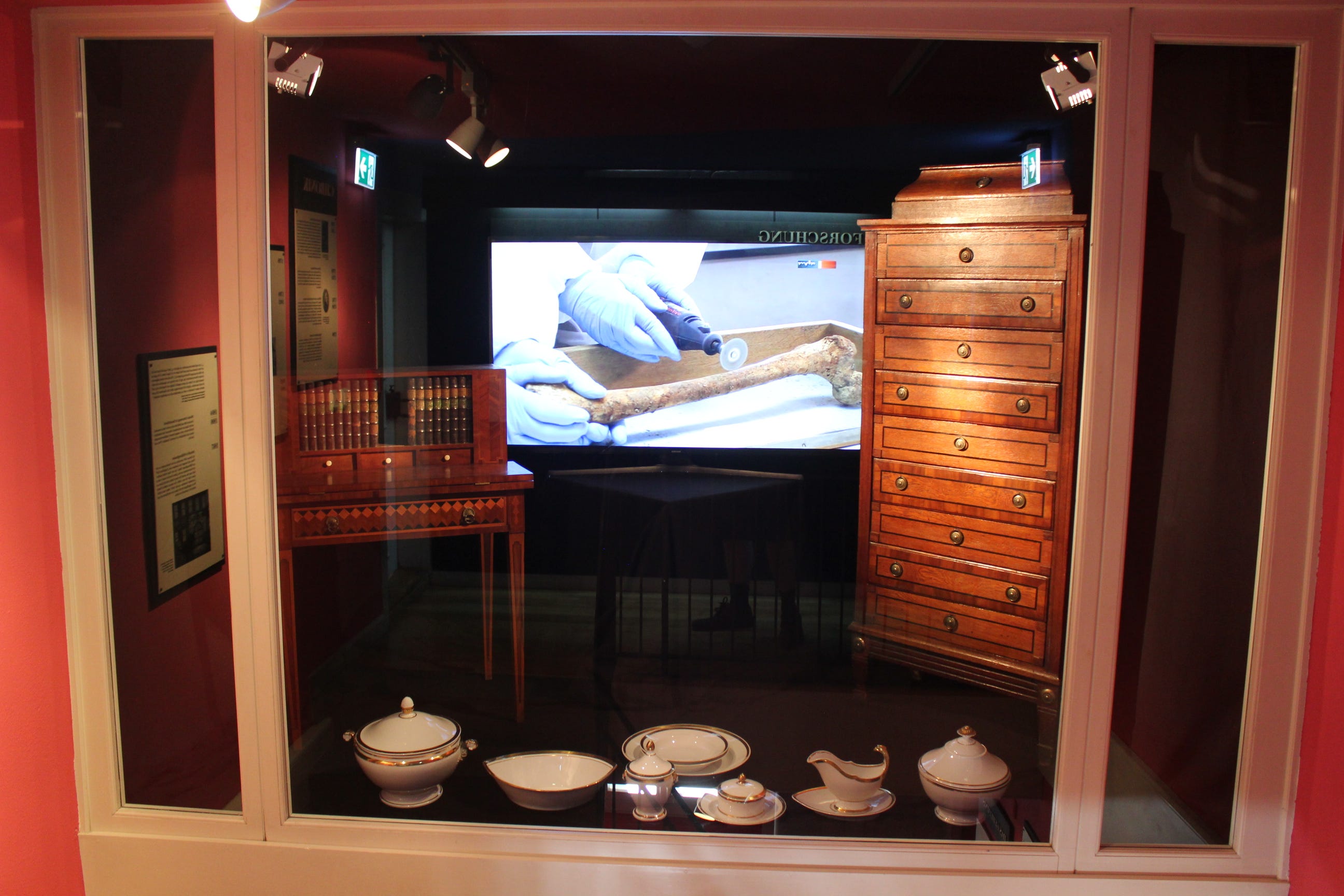
After samples were taken, her remains were reburied in Hildburghausen on November 7, 2013. The tests concluded that the Dark Countess was not Marie-Thérèse Charlotte.
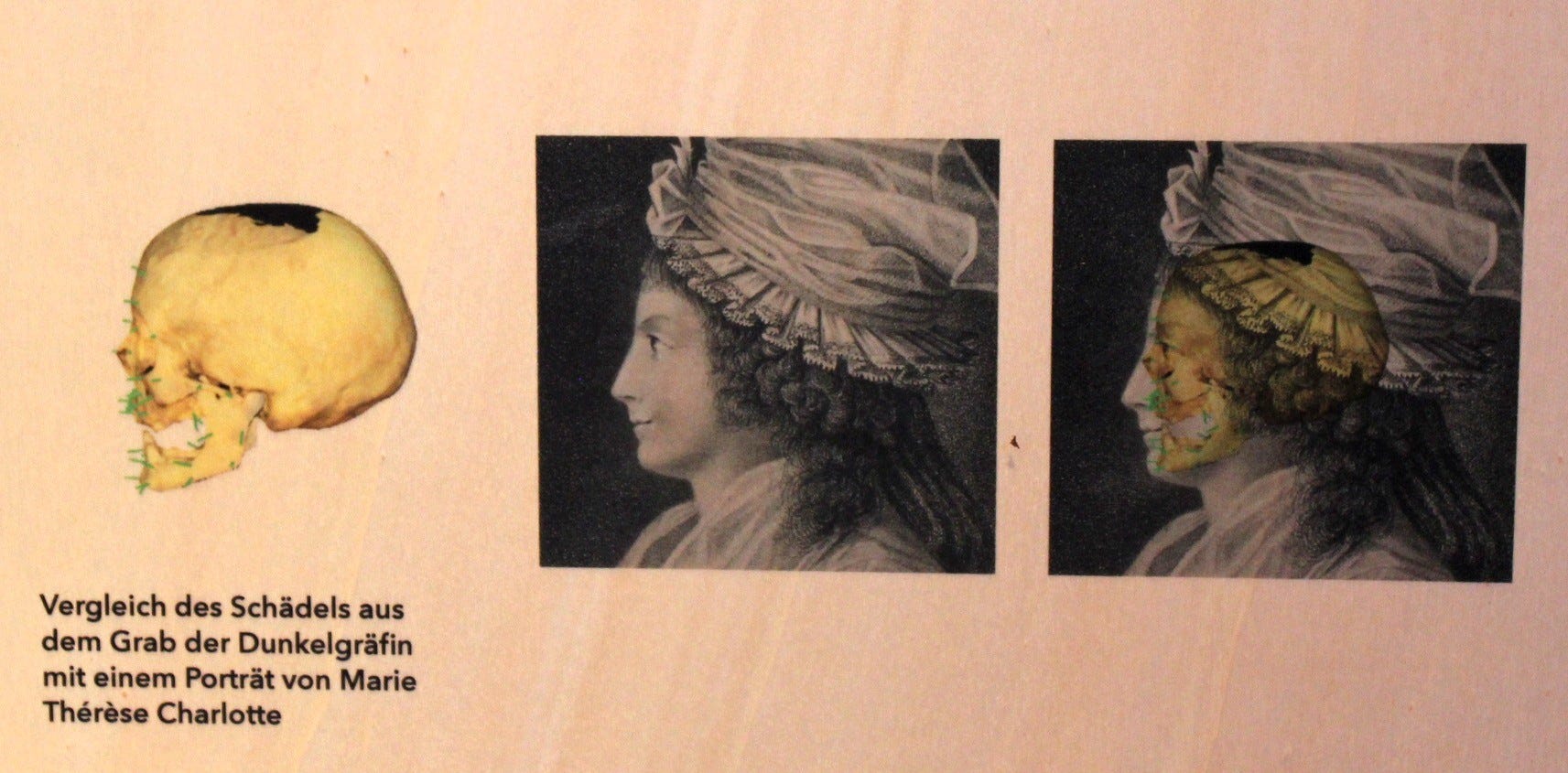
A reconstruction of her facial features was also studied and compared with known portraits and facial records of Marie-Thérèse. The reconstructed proportions did not match, further weakening the theory that the veiled woman was the daughter of Louis XVI and Marie Antoinette.
The Dark Countess was almost certainly not Marie-Thérèse Charlotte. The accepted life of Marie-Thérèse is far better supported, and the DNA evidence works against the substitution theory. The idea of a royal switch may be fascinating, but it relies on too many assumptions with little evidence.
The Mystery Remains
Though the DNA testing helped prove who the Dark Countess was not, it unfortunately could not shed light on who she actually was. Even if she was likely not French royalty, she was still a real woman who lived an unusually hidden life. She still had a past that remains unclear, and a protector whose fierce loyalty has never been fully explained.
In the end, the Dunkelgrafen mystery is not about a princess lost to history. It is about a woman who became unforgettable because no one could truly identify her.

Sources:
“Molecular genetic analysis on the remains of the Dark Countess: Revisiting the French Royal family.” National Library of Medicine, 24 August 2015, https://pubmed.ncbi.nlm.nih.gov/26344900/
“Molecular genetic analysis on the remains of the Dark Countess: Revisiting the French Royal family.” Science Direct, November 2015, https://www.sciencedirect.com/science/article/abs/pii/S1872497315300612
“Madame Royale: Daughter of France.” Château de Versailles, https://en.chateauversailles.fr/discover/history/great-characters/madame-royale
“Scientists resolve myth about the identity of the Dark Countess.” Strange Remains, 13 March 2016, https://strangeremains.com/2016/03/13/scientists-resolve-myth-about-the-identity-of-the-dark-countess/